Author: bjukuri

  • Their Faith Won’t Let Them.

    The strength of Faith and its solid hold it has on someone will stand in the way of reality.  

    What I have come to know, as I dialogue with folks from within the church about victim stories of abuse; is that it will not matter how horrific and detailed; what matters more is the power of their faith.

    How many within the church would be willing to leave….for any reason?

    How many would be able to lay down their faith in order to save a child from a life of abuse?

    It seems like a no-brainer; but it isn't.

    I could share names and give bullet points of abuse – but it isn't the words of the victims that need to be stronger; but a faith weaker.

    Isn't that amazing?

    It isn't what will be gained with the new knowledge, but rather what they will lose.

    By taking a step back from the she said, he did – we can see the two sides.

    There is a very strong belief and faith against those who are speaking 'ill' of it.

    Those who are 'insulting' and 'against' the church or wanting to hold the church accountable for a 'few' irresponsible adults.

    There is a swirling of two very powerful energies within the church; mixing and blending into a very odd mixture

    For a lack of a better word – The Brainwashed Faithful and the Negative Energies that have been shunned. 

    The epic battle of Good and Evil are not even there.

    For the good folks are participants unbeknownst.

    I think, if it was between to opposing forces there would be a chance.

    But the dance that evil needs to flourish is the blind silence of many.

    The very trait of many victims is to not recall – to have blocked it out- and the terror and fear that arises when abuse is mentioned; has them turning away in disbelief.

    Some have criticized me for me being so openly against the church – and its true.  I can't find a redeeming quality there.

    The brick wall that arises again and again IS their faith.

    Faith in what, I am not so certain – but anything that opposes it doesn't stand a chance.

    I had thought, that perhaps they needed pictures of the literal abuse taking place in order to move.  I have forgotten the power of their faith.

    It doesn't matter how articulate, young or old the voice is – it will be weaker than their faith.

    Truth has no power where their faith is concerned.

    Their faith and those who preach it reign supreme.

    When Tom Rosemurgy asked me in one of our first meetings; "What could we on the outside have done to wake you up to the abuse in your life" I was empty of ideas.  

    Nothing came to me.

    It isn't the colorful detailed descriptions of each abuser and their victims.

    It is to tear down a faithful mind.

    How do you do that?

    How do you un-condition a conditioned mind.  Un-wash the brainwashed?

    The un-natural conditioning of their minds is the perfect companion to abuse.

    For they won't leave it; no matter what.

    Not the family and not the church.  

    Their faith won't let them.

    IMG_5474


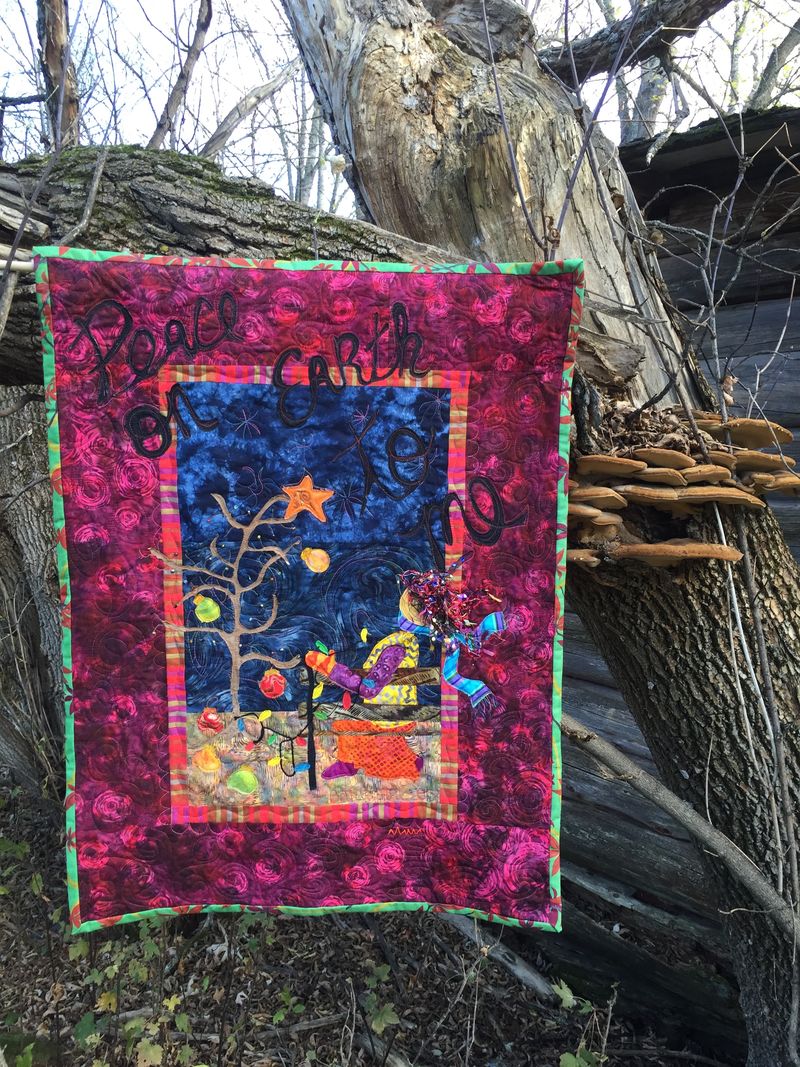
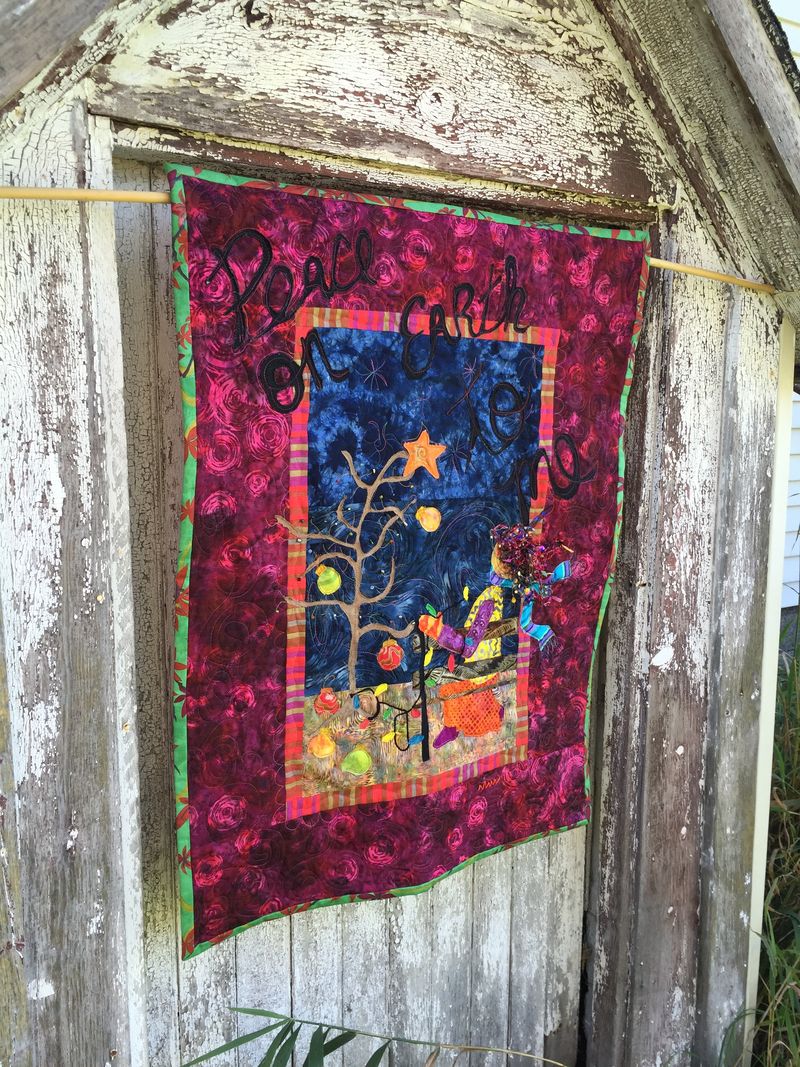
  • Peace on Earth to Me!

    While listening to a novel, it came to me how I have changed myself twice in my life;  

    Once…to survive sexual abuse, I fled reality and lived an awkward life one step removed from reality; where my mind created stories about life…and I had very little contact with real reality.  I became someone different in order to keep the abuse at bay and to keep 'loving' parents.  It required that I would leave out parts of reality…the parts that would taint the family's image.  My mind began this process to protect me from knowing.  

    And the second, when reality came crashing in…when someone dared to speak of the darkness that tainted our family.  I woke up to reality and had to change to fit it.  I had to become one with reality; no matter how ugly and grief-stricken it was…or how much I would have to lose.  I had to lose it all to become who I am. 


    The grief I felt yesterday was the losses I have lived through. 

    How both of my transformations of self were so very costly.

    It leaves you without a home to return to.  A familiar landscape that welcomes you home.  It is to be without a hearth to rest upon.

    The emptiness and separateness, the belonging nowhere, often times is overwhelming.

    The novel was of the Jewish people returning to their homes after the war…to find nothing there.  No family.  A home; but with strangers inside.  They had to begin a new life; with so much missing.

    I don't understand what they lost. For, most lost loving parents. Parents that would have died to see their child spared.  They lost loving families.

    What I know of breaking the cycle of abuse in families is the loneliness of building a new legacy.  To be the generation that ends it, you start out on your own.

    Alone.

    You may have companions for awhile; but be prepared to end up alone.

    This is why most families of abuse continue passing the abuse on; no one wants to be alone.  Their needs are stronger than the need to change the legacy.

    There isn't a literal war that separates us.  

    The enemy lives within the family.  

    We become the enemy.

    I had to transform myself to stay in the family as a child.  And, then in order to stand against abuse; I had to transform myself to be different than family.

    To not be the enemy of my own children.

    The Jewish people lost all their valuables, their pictures, their family members.

    I have all they lost.

    I could return home.  

    The family is there.  

    But, they are hollow or empty of what I seek.

    Deaf to what I hear.

    Blind to what I see.

    Uncomprehending to what I say.

    It is to be a foreigner in your own home.

    There is no welcome there or feelings of comfort and peace for me.

    There is no going home again.

    It is to begin the process so someday my children, grandchildren, and their children  will know what home and love is.

    The loneliness I am forging through today is so they don't have to.

    The love begins with me.

    And, as I look forward and be here now….there is love.

    A love of value.

    A love of truth.

    A love of reality.

    A love of courage.

    A love of self, life, creativeness, freedom….

    While I have lost much….I have gained more.

    I have transformed abuse back to love.

    IMG_5430

    Peace on Earth to Me…

    IMG_5444


  • Not against Us.

    Some pages I earmarked from "Big Magic" by Elizabeth Gilbert.

    "But I see it differently.  I think perfectionism is just a high-end, haute couture version of fear.  I think perfectionism is just fear in fancy shoes and a mink coat, pretending to be elegant when actually it's just terrified. Because underneath that shiny veneer, perfectionism is nothing more than a deep existential angst that says, again and again, "I am not good enough and I will never be good enough."

    I knew this to be true.  How so many are stopped before they begin; due to the fear. What I didn't know was that it was personal fear of not being good enough…NOT that their Art wouldn't be good enough.   It isn't about the art….it is about how you feel about being you.

    And, this page….

    "It has taken me years learn this, but it seems to be the case, that if I am not actively creating something, then I am probably actively destroying something (myself, a relationship, or my own peace of mind.)"

    We can use our imagination to create something or to destroy something.  I am choosing more and more often to be creative.  I don't like how destroying thoughts feel inside of me.  Think on this….

    And,

    "By completely absorbing our attention for a short and magical spell, it can relieve us temporarily from the dreadful burden of being who we are.  Best of all, at the end of your creative adventure, you have a souvenir – something that you made, something to remind you forever of your brief but transformative encounter with inspiration."

    I truly believe that the more we are in the flow of creativity, the less we feel overwhelmed.  It is to give our minds, bodies and souls a break from life destroying thoughts.  The more you create, the more you think about what else you can create.

    And, lastly…(although I am not done yet….)


    "Choosing your Delusion"

    "Is this delusional?"

    "Is it delusional to me to place an infinite trust in a force that I cannot see, touch, or prove – a force that might not even actually exist?"

    "Okay, for the sake of argument, let's call it totally delusional."

    "But is it any more delusional than believing that only your suffering and pain are authentic? Or that you are alone – that you have no relationship whatsoever with the universe that created you? Or that you have been singled out by destiny as specifically cursed? Or that your talents were given to you for the mere purpose of destroying you?"

    "What I'm saying is this: If you're going to live your life based on delusions (and you are, because we all do), then why not at least select a delusion that is helpful?"

    "Allow me to suggest this one:"

    "The work wants to be made, and it wants to be made through you."


    I love this idea, that we can be plugged into a delusional stream…..and we may as well make it positive and one that is for us….not against us.  

    IMG_5404


  • Toxic Doses of Religion

    A young friend sent me the following link…

    http://www.salon.com/2014/11/01/the_sad_twisted_truth_about_conservative_christianitys_effect_on_the_mind_partner/


    A great article on the effects of strict religions. 

    What struck me was this…

    "A symptom like one of these clearly has a religious component, yet many people instinctively blame the victim. They will say that the wounded former believer was prone to anxiety or depression or obsession in the first place—that his Christianity somehow got corrupted by his predisposition to psychological problems. Or they will say that he wasn’t a real Christian. If only he had prayed in faith believing or loved God with all his heart, soul and mind, if only he had really been saved—then he would have experienced the peace that passes all understanding."

    "But the reality is far more complex. It is true that symptoms like depression or panic attacks most often strike those of us who are vulnerable, perhaps because of genetics or perhaps because situational stressors have worn us down. But certain aspects of Christian beliefs and Christian living also can create those stressors, even setting up multigenerational patterns of abuse, trauma, and self-abuse. Also, over time some religious beliefs can create habitual thought patterns that actually alter brain function, making it difficult for people to heal or grow."

    "The purveyors of religion insist that their product is so powerful it can transform a life, but somehow, magically, it has no risks. In reality, when a medicine is powerful, it usually has the potential to be toxic, especially in the wrong combination or at the wrong dose. And religion is powerful medicine!"

    Here is what I have known, but just couldn't articulate; the toxic dose of religion and its consequences.

    My other concern was the child's brain….and how we are born in captivity; that we don't get to mindfully choose a religion – we are saturated in it.  And the ultimate cost this has on the individual and their sense of self.  

    What is so frustrating, is that when you are talking to those who haven't left the church, is that due to their upbringing, you are speaking to someone who has been traumatized…whose view of the world is skewed; coming from whence they came.


    "In this discussion, we focus on the variants of Christianity that are based on a literal interpretation of the Bible. These include Evangelical and fundamentalist churches, the Church of Latter Day Saints, and other conservative sects. These groups share the characteristics of requiring conformity for membership, a view that humans need salvation, and a focus on the spiritual world as superior to the natural world. These views are in contrast to liberal, progressive Christian churches with a humanistic viewpoint, a focus on the present, and social justice."


    Religion Exploits Normal Human Mental Processes.


    "To understand the power of religion, it is helpful to understand a bit about the structure of the human mind. Much of our mental activity has little to do with rationality and is utterly inaccessible to the conscious mind. The preferences, intentions and decisions that shape our lives are in turn shaped by memories and associations that can get laid down before we even develop the capacity for rational analysis."


    "Aspects of cognition like these determine how we go through life, what causes us distress, which goals we pursue and which we abandon, how we respond to failure, how we respond when other people hurt us—and how we respond when we hurt them. Religion derives its power in large part because it shapes these unconscious processes: the frames, metaphors, intuitions and emotions that operate before we even have a chance at conscious thought."


    Some Religious Beliefs and Practices are More Harmful Than Others.


    "When it comes to psychological damage, certain religious beliefs and practices are reliably more toxic than others."


    "Janet Heimlich is an investigative journalist who has explored religious child maltreatment, which describes abuse and neglect in the service of religious belief. In her book, Breaking their Will,Heimlich identifies three characteristics of religious groups that are particularly prone to harming children. Clinical work with reclaimers, that is, people who are reclaiming their lives and in recovery from toxic religion, suggests that these same qualities put adults at risk, along with a particular set of manipulations found in fundamentalist Christian churches and biblical literalism."


    1) Authoritarianism,creates a rigid power hierarchy and demands unquestioning obedience. In major theistic religions, this hierarchy has a god or gods at the top, represented by powerful church leaders who have power over male believers, who in turn have power over females and children. Authoritarian Christian sects often teach that “male headship” is God’s will. Parents may go so far as beating or starving their children on the authority of godly leaders. A book titled, To Train Up a Child,by minister Michael Pearl and his wife Debi, has been found in the homes of three Christian adoptive families who have punished their children to death.


    2) Isolation or separatism,is promoted as a means of maintaining spiritual purity. Evangelical Christians warn against being “unequally yoked” with nonbelievers in marriages and even friendships. New converts often are encouraged to pull away from extended family members and old friends, except when there may be opportunities to convert them. Some churches encourage older members to take in young single adults and house them within a godly context until they find spiritually compatible partners, a process known by cult analysts as “shepherding.” Home schoolers and the Christian equivalent of madrassas cut off children from outside sources of information, often teaching rote learning and unquestioning obedience rather than broad curiosity.


    3) Fear of sin, hell, a looming “end-times” apocalypse, or amoral heathens binds people to the group, which then provides the only safe escape from the horrifying dangers on the outside. In Evangelical Hell Houses, Halloween is used as an occasion to terrify children and teens about the tortures that await the damned. In the Left Behind book series and movie, the world degenerates into a bloodbath without the stabilizing presence of believers. Since the religious group is the only alternative to these horrors, anything that threatens the group itself—like criticism, taxation, scientific findings, or civil rights regulations—also becomes a target of fear."

    What many will not even be able to bring in, IS the effects of being raised in the FALC or similar religions.  It definitely comes with a price tag on the human psyche. And you know nothing different.  It is the air you have been breathing since a very small child.   

    Here is more:


    Children are Targeted for Indoctrination Because the Child Mind is Uniquely Vulnerable.


    Here I am, a fifty-one year old college professor, still smarting from the wounds inflicted by the righteous when I was a child. It is a slow, festering wound, one that smarts every day—in some way or another…. I thought I would leave all of that “God loves… God hates…” stuff behind, but not so. Such deep and confusing fear is not easily forgotten. It pops up in my perfectionism, my melancholy mood, the years of being obsessed with finding the assurance of personal salvation.”


    "Nowhere is the contrast of viewpoints more stark than in the secular and religious understandings of childhood. In the biblical view, a child is not a being that is born with amazing capabilities that will emerge with the right conditions like a beautiful flower in a well-attended garden. Rather, a child is born in sin, weak, ignorant, and rebellious, needing discipline to learn obedience. Independent thinking is dangerous pride."


    "Because the child’s mind is uniquely susceptible to religious ideas, religious indoctrination particularly targets vulnerable young children. Cognitive development before age seven lacks abstract reasoning. Thinking is magical and primitive, black and white. Also, young humans are wired to obey authority because they are dependent on their caregivers just for survival. Much of their brain growth and development has to happen after birth, which means that children are extremely vulnerable to environmental influences in the first few years when neuronal pathways are formed."

    "By age five a child’s brain can understand primitive cause-and-effect logic and picture situations that are not present. Children at this have a tenuous grip on reality. They often have imaginary friends; dreams are quite real; and fantasy blurs with the mundane. To a child this age, it is eminently possible that Santa Claus lives at the North Pole and delivers presents if you are good and that 2000 years ago a man died a horrible death because you are naughty. Adam and Eve, Noah’s ark, the Rapture, and hell, all can be quite real. The problem is that many of these teachings are terrifying."

    "For many years, one conversion technique targeting children and adolescents has been the use of movies about the “End Times.” This means a “Rapture” event, when real Christians are taken up to heaven leaving the earth to “Tribulation,” a terrifying time when an evil Antichrist will reign and the world will descend into anarchy."

    "When assaulted with such images and ideas at a young age, a child has no chance of emotional self-defense. Christian teachings that sound truewhen they are embedded in the child’s mind at this tender age can feel true for a lifetime. Even decades later former believers who intellectually reject these ideas can feel intense fear or shame when their unconscious mind is triggered."

    Harms Range From Mild to Catastrophic.

    "One requirement for success as a sincere Christian is to find a way to believe that which would be unbelievable under normal rules of evidence and inquiry. Christianity contains concepts that help to safeguard belief, such as limiting outside information, practicing thought control, and self-denigration; but for some people the emotional numbing and intellectual suicide just isn’t enough. In other words, for a significant number of children in Christian families, the religion just doesn’t “take.” This can trigger guilt, conflict, and ultimately rejection or abandonment."

    "Others experience the threats and fear too keenly. For them, childhood can be torturous, and they may carry injuries into adulthood."

    "Still others are able to sincerely devote themselves to the faith as children but confront problems when they mature. They wrestle with factual and moral contradictions in the Bible and the church, or discover surprising alternatives. This can feel confusing and terrifying – like the whole world is falling apart."

    Delayed Development and Life Skills.Many Christian parents seek to insulate their children from “worldly” influences. In the extreme, this can mean not only home schooling, but cutting off media, not allowing non-Christian friends, avoiding secular activities like plays or clubs, and spending time at church instead. Children miss out on crucial information– science, culture, history, reproductive health and more. When they grow older and leave such a sheltered environment, adjusting to the secular world can be like immigrating to a new culture. One of the biggest areas of challenge is delayed social development."


    It affirms what I have experienced and witnessed in so many who have left the church or as you speak to those still inside….

    There is a new term for it;

    "Religious Trauma Syndrome (RTS) is a new term, coined by Marlene Winell to name a recognizable set of symptoms experienced as a result of prolonged exposure to a toxic religious environment and/or the trauma of leaving the religion. It is akin to Complex PTSD, which is defined as ‘a psychological injury that results from protracted exposure to prolonged social and/or interpersonal trauma with lack or loss of control, disempowerment, and in the context of either captivity or entrapment, i.e. the lack of a viable escape route for the victim’."

    "Though related to other kinds of chronic trauma, religious trauma is uniquely mind-twisting. The logic of the religion is circular and blames the victim for problems; the system demands deference to spiritual authorities no matter what they do; and the larger society may not identify a problem or intervene as in cases of physical or sexual abuse, even though the same symptoms of depression and anxiety and panic attacks can occur."

    This what a toxic dose of religion can do to a body, mind and soul.  

    "Religious trauma is difficult to see because it is camouflaged by the respectability of religion in culture. To date, parents are afforded the right to teach their own children whatever doctrines they like, no matter how heinous, degrading, or mentally unhealthy. Even helping professionals largely perceive Christianity as benign. This will need to change for treatment methods to be developed and people to get help that allows them to truly reclaim their lives."


    One of the most exasperating ideals is to see the toxicity of religion…when it is so protected and placed away from normal scrutiny.  It gets left to do as it will; under the auspices of faith.

    Who wants to question a church/religion and place themselves between God and servant?  To challenge their minds and what they believe and the cost of their ticket to heaven?   To show them that their religion not only has negative affects psychologically, it also has created the perfect victim for abuse, because of it.

    The circuitous flow is hard to disrupt…

    This is the why I have turned away from religion; I overdosed on it.

    The toxicity of the FALC is beyond what my mind can sometimes hold.

    I appreciate this article for helping to clarify what I know to be true….in my experience.  

    Thanks to my young friend, who like me….has left the church.  And, is trying to find balance and restore wholeness after being subjected to toxic doses of religion.
     

    IMG_5390


  • From Elizabeth Gilbert's book "Big Magic"….

    "A Trick"

    "So, yeah – here's a trick: Stop complaining."

    "Trust me on this. Trust Werner Herzog on this, too."

    "There are so many good reasons to stop complaining if you want to live a more creative life."

    " First of all, it's annoying. Every Artist complains, so its a dead and boring topic. (From the volume of complaints that emerges from the professional creative class, you would think these people had been sentenced to their vocations by an evil dictator, rather than having chosen their work with a free will and open heart.)"

    "Second, of course it's difficult to create things; if it wasn't difficult, everyone would be doing it, and it wouldn't be special or interesting."

    "Third, nobody ever really listens to anybody else's complaints, anyhow, because we're all too focused on our own holy struggle, so basically you're just talking to a brick wall."

    "Forth, and most important, you're scaring away inspiration.  Every time you express a complaint about how difficult and tiresome it is to be creative, inspiration takes another step away from you, offended.  It's almost like inspiration puts up hits hands and says, "Hey, sorry, buddy! I didn't realize my presence was such a drag. I'll take my business elsewhere."

    "I have felt this phenomenon in my own life, whiner I start complaining.  I have felt the way my self-pity slams the door on inspiration, making the room feel suddenly cold, small and empty.  That being the case, I took this path as a young person: I started telling myself that I enjoyed my work. I proclaimed that I enjoyed every single aspect of my creative endeavors- the agony and the ecstasy, the success and the failure, the joy and the embarrassment, the dry spells and the grind and the stumble and the confusion and the stupidity of it all."

    "I even dared to say this aloud."

    "I told the universe (and anyone who would listen) that I was committed to living a creative life not in order to save the world, not as an act of protest, not to become famous, not to gain entrance to the canon, not to challenge the system, not to show the bastards, not to prove to my family that I was worthy, not as a form of deep therapeutic emotional catharsis….but simply because I liked it."

    "Try saying this: "I enjoy my creativity."

    "And, when you say it, be sure you actually mean it."

    " For one thing, it will freak people out. I believe that enjoying your work with all your heart is the only truly subversive position let to take as a creative person these days.  It's such a gangster move, because hardly anybody ever dares to speak of creative enjoyment aloud, for fear of not being taken serious as an artist. So say it. Be the weirdo who dares to enjoy."

    "Best of all, though, by saying that you delight in your work, you will draw inspiration near. Inspiration will be grateful to hear these words coming out of your mouth, because inspiration – like all of us – appreciate being appreciated.  Inspiration will over hear your pleasure, and it will send ideas to your door as a reward for your enthusiasm and your loyalty."  

    "More ideas than you could ever use."

    "Enough ideas for ten lifetimes.      

    Elizabeth


    What I loved, while reading this, is that I am a gangster.  For I truly LOVE playing with my Art.  

    I love picking out fabrics, finding ones that surprise me, delight me, and make me feel inspired.   

    I love working to put fabrics together, waiting for the moment when it seems to click, when the right combinations work with each other.

    I love to see what art will unfold.

    I love to see, sometimes even months later….the depth and meaning that snuck in.

    I love to see others enjoy my work.

    I love when others don't see my work….too.

    I love it when I find art that inspires my own.

    I love how my creativity has changed and grown like its own entity.

    I truly LOVE creativity.

    Mine, and others.

    I love how inspiration is drawn to those who love it.  

    As it should be!

    IMG_5283

    The dance of inspiration; begins with Love – moves with Love….

    IMG_5347

    I love the flow of inspiration, the magic, the unknown, the uncertainty and surprises that arise, when you keep playing.

    It truly feels like you are playing with a part of the Universe, a playful mate, who comes and dares you to try this and that, and maybe some of this….if you are open and not working to do art.

    I know, that when I try, nothing happens….

    These delightful creative playmates only appear when I am knocking off, when I am escaping from work and life, and enter my studio like it is a playground.  

    When I slip away from my adult chores and being…

    I LOVE My Lady….her message, her designs, her ability to grab me from the seriousness of life, the pain and the struggle….to play and enjoy life.

    IMG_5371

    Truly for me, Art is the opposite of work.  


  • Something to be Nostalgic for…

    More from Brene Brown's book – "Rising Strong"...under the heading "Rumbling with Nostalgia.

    "…When, I wiped the nostalgia off my history to uncover the real trauma behind many of those stories, I began to understand why we didn't talk about emotions growing up. Of all the things trauma takes away from us, the worst is our willingness, or even out ability, to be vulnerable. There's a reclaiming that has to happen."

    "Sometimes, the deep love we feel for our parents or the sense of loyalty to our family often create a mythology that gets in the way of our efforts to look past the nostalgia and toward truth. We don't want to betray anyone – we don't want to be the first to get curious and ask questions or challenge the stories.  We ask ourselves, How can I love and protect my family if I'm rumbling with these hard truths?  For me, the answer to that questions is another question: How can I love and protect my family if I'mnot rumbling with these hard truths?"

    "We know that genetics loads the gun and environment pulls the trigger.  In order to teach our children about rising strong, we first need to teach them the truth about their history. I've told both my kids, "Drinking may not be the same for you as it is for your friends.  Here's what you need to know and understand." I also don't frame my wild stories as war stories from "the good ole days."  Yes, I have wonderful family memories and stories of crazy adventures that I love to share, but when it comes to addiction, medical histories, and mental health, I believe that nostalgia is deadly."

    "Stephanie Coontz, author of The Way We Never Were: American Families and the Nostalgia Trap, puts her finger on some of the real dangers of nostalgia. She writes, "There's nothing wrong with celebrating the good things in our past.  But memories, like witnesses, do not always tell the truth, the whole truth and nothing but the truth. We need to cross-examine them, recognizing and accepting the inconsistencies and gaps in those that make us proud and happy as well as those that cause us pain." 

    "Coontz suggests that the best way to reality-check our nostalgic ideas is to uncover and examine the tradeoffs and contradictions that are often deeply buried in all our memories. As an example, Coontz writes:

    "I have interviewed many white people who have found memories of their lives in the 1950s and early 1960s.  The ones who never cross-examined those memories to get at the complexities were the ones most hostile to the civil rights and the women's movements, which they saw as destroying the harmonious world they remembered. But others could see that their own good experiences were in some ways dependent on unjust and social arrangements, or on bad experiences for others.  Some white people recognized that their happy memories of childhood included a black housekeeper who was always available to them because she couldn't be available to her own children."

    "Coontz is careful to point out that the people who rumbled with their nostalgia didn't feel guilt or shame about their good memories – instead, their digging made them more adaptable to change. She concludes, "Both as individuals and as a society, we must learn to view the past in three dimensions before we can move into the fourth dimension of the future."   

    "There is a line in director Paolo Sorrentino's gorgeous and haunting film The Great Beauty that illuminates the pain often underlying nostalgia.  One of the main characters, a man reconciling his past while longing for love and relevance in his present life, asks, "What's wrong with feeling nostalgic?  It's the only distraction left for those of us who have no faith in the future." Nostalgia can be a dangerous distraction, and it can underpin a feeling of resignation or hopelessness after a fall.  In the rising strong process, looking back is done in the service of moving forward with an integrated and whole heart."  Brene


    When we bring up the discussion about sexual abuse in our childhoods, this is what we are up against…nostalgia – and our inability to be vulnerable, as well as being unfaithful to the love of parent and disloyal to the family.

    I agree wholeheartedly with Brene - How can I love and protect my family if I'm not rumbling with these hard truths?

    This is the oxymoron we are all faced with as we try and unscramble our childhood memories; those laced with sexual abuse.  

    We want to protect our families; while we are tearing them apart to sort out the abuse.  We want to love and protect our own children…yet, as we do so, it appears we are destroying the good memories of our own family.

    The exact thing can be said about religion…for most feel that their church is their extended family – my church family.

    How can you love and be loyal to the church while dissecting it for abuse?

    This is another road block into the unveiling of truth.

    And another road barrier is to be vulnerable.  

    I had to look that up to make sure I had it correctly.

    "Susceptible to physical or emotional attack or harm."

    I can see for victims, it is hard to be open to further attack or harm…to be, I guess, a willing victim.

    This is what we are asking children and adult-children of abuse to do. 

    I certainly changes the stories we have told ourselves…and our family…when you add abuse to the stories we tell.

    Again, how can you love and protect your family IF you leave out the truth about the abuse?  How can you even say, you love and protect, them if you are not sharing this truth?  

    Hiding the truth about sexual abuse or physical and emotional abuse; will not eradicate it.  It doesn't protect your family.  It doesn't ensure more love.  

    In fact it does the complete opposite…it leaves your family more vulnerable.

    How interesting.  

    If you are not vulnerable and honest, you will leave your family vulnerable.

    In dysfunctional families it seems everything we think we are doing and what we are holding on to, is often the opposite of what we think.

    It truly felt like I was being completely unloving and disloyal as I added truth to my childhood.

    As I sit here today, my nostalgia is overshadowed still with the new truths of the past  10 years.  The integrating what I thought and what is, hasn't settled down it nostalgia in the way, nostalgia feels.

    I had to look up nostalgia….

    "a sentimental longing or wistful affection for the past, typically for a period or place with happy personal associations."

    Another tragedy of sexual abuse in childhood….nostalgia.

    We may not know this feeling….a childhood of happy personal associations.

    Thinking of this.  I thought I was a non-sentimental person. For these feelings escaped me.

    Now, I believe they were not there to be had.

    Being sexually abused as a child removes the nostalgia from our life experience. 

    However, I feel like this time in my life will be my nostalgia someday.  

    I am in a good place in my story. 

    Where love, peace and joy are present.  

    Where I am awake and aware.  

    Where I have a voice and choice. 

    Where I am less afraid and say yes more.

    Where I am excited and okay with uncertainty.

    Where I know how strong I am.

    And, how resilient.

    Perhaps the further down the journey of life we go, the more we appreciate all the bends life takes us on.

    I know where I have been and I have confidence that I will be given who and what I need for each part of my journey forward.

    I will do my best to make this moment….something to be nostalgic for…


    IMG_5010


  • Accepting a new reality.

    About Forgiveness….from Brene Brown's book "Rising Strong".

    "Rumbling with Forgiveness"

    "I've been engaged in a full professional rumble with the concept of forgiveness for ten years.  It has been glaringly absent from my work and all of my books.  Why?  Because I couldn't get to saturation – I couldn't find a meaningful pattern in all of my data."

    "I got very close before I wrote "The Gifts, but right as the book was going to press, I did three interviews, and what I learned during those interviews fell completely outside the pattern.  Ordinarily, that would be fine: Most research methodologies allow for what we call outliers.  If there are one or two small exceptions in the data, that's okay as longs the majority fall within the pattern. In grounded theory, though, there can be no outliers. Every story matters, and for your hypothesis to be valid, all your categories and properties must fit, be revenant, and resonate with  your data. If something doesn't work, you're not there yet. It's incredibly frustrating , but sticking to this principle hasn't failed me yet."

    "Then, several years ago, I was at church listening to Joe talk about forgiveness.  He was sharing his experience of counseling a couple who were on the brink of divorce after the woman discovered that her husband was having an affair. They were both devoted by the potential end of their marriage, but she couldn't forgive him for betraying her, and he couldn't seem to forgive himself, either.  Joe looked up and said, "In order for forgiveness to happen, something has to die.  If you make a choice to forgive, you have to face into the pain. You simply have to hurt."

    "I instantly buried my head in my hands.  It was as if someone had finally put the right sequence of numbers into a giant combination lock that I had been carrying around for years. The tumblers started turning and falling into place. Everything was clicking.  That was the piece that was missing. Forgiveness is so difficult because it involves death and grief.  I had been looking for patterns in people extending generosity and love, but not in people feeling grief.  At that moment it struck me: Given the dark fears we feel when we experience loss, nothing is more generous and loving that the willingness to embrace grief in order to forgive. To be forgiven is to be loved."

    "The death or ending that forgiveness necessitates comes in many shapes and forms.  We many need to bury our expectations or dreams.  We many need to relinquish the power that comes from "being right" or put to rest the idea that we can do what's in our hearts and still retain the support and approval others.  Joe explained, "Whatever it is, it all has to go. It isn't good enough to box it up and set it aside.  It has to die. It has to be grieved. That is a high price indeed.  Sometimes, it's just too much."

    "I spent the next couple of years revising the data through this new lens of forgiveness, this time including an ending, and the grief associate with that ending. I recoded and reworked my research, did more interviewing, and read through the literature.  I wasn't surprised to find a growing number of empirical studies showing that forgiveness positively correlates with emotional, mental, and physical well-being. A strong and clear pattern was emerging. This pattern would be affirmed when I read The Book of Forgiving: The Fourfold Path for Healing Ourselves and Our World by Archbishop Desmond Tutut and his daughter, the Reverend Mpho Tutu."

    "Archbishop Tutu served as the chair of South Africa's Truth and Reconciliation Commission, and Reverend Mpho Tutu an Episcopal Priest, is the executive director of Desmond & Leah Tutu Legacy Foundation.  The Book of Forgiving is one of the most important books I've ever read.  I honestly did not have the words to adequately describe it to people after I finished it.  It not only confirmed what I had learned about forgiveness from Joe, but also supported everything I learned about vulnerability, shame, courage, and the power of story.  The book outlines a forgiveness practice that includes telling the story, naming the hurt, granting forgiveness and renewing or releasing the relationship Archbishop Tutu writes:

    "To forgive is not just to be altruistic.  It is the best form of self-interest. It is also a process that doesn't exclude hatred or anger. These emotions are all part of being human. You should never hate yourself for hating others who do terrible things: The depth of your love is show by the extent of your anger."

    "However, when I talk of forgiveness, I mean the belief that you can come out the other side a better person.  A better person than the one being consumed by anger and hatred.  Remaining in that state locks you in a state of victimhood, making you almost dependent the perpetrator.  If you can find it in yourself to forgive, then you are no longer chained to the perpetrator. You can move on, and you can even help the perpetrator to become a better person, too."  

    So, forgiveness is not forgetting or walking away from accountability or condoning a hurtful act; its the process of taking back and healing our lives so we can truly live. What the Tutus found in their work on forgiveness validates not just the importance of naming our experiences and owning our stories but also how rumbling with the process can lead to clarity, wisdom and self-love. So often we want easy and quick answers to complex struggles. We question our own bravery, and in the face of fear, we back down too early."  Brene 


    What I know to be true, in my experience, is this is forgiveness.  You are to literally sit with the loss and death of what was….and grieve.  It will then change OR renew relationships, and they might die.  This is a huge process to facilitate within yourself.

    This isn't what I was taught in the FALC religion…or in my childhood home.

    Imagine having this tool as a child and the freedom to use it?

    Imagine having it today…

    To me the great part of being sexual abused by someone you trust, and love, and are indebted to for food and shelter, is we are not able to end the relationship.

    We are instead forced to internalize our grief and carry on as if nothing traumatic has happened.

    It is the combination that destroys our soul.

    If you were abused by a stranger; you don't have to keep company with them….ever.

    The definition of Forgiveness above, is one that keeps reality real.  

    And, it empowers you….even if you have to face the grief accepting a new reality.

    IMG_5227


  • Say Your Name

    More from Brene Brown…. "Rising Strong"

    "Man in the Arena" by Theodore Roosevelt

    "It is not the critic who counts; not the man who points out how the strong man stumbles, or where the doer of deeds could have done better. The credit belongs to the man who is actually in the arena, whose face is marred by dust and sweat; who strives valiantly;….who at the best knows in the end the triumph of high achievement, and who at the worst, if he fails, at least fails while daring greatly."

    "While there are really no hard-and-fast absolutes in my field, there are truths about shared experiences that deeply resonate with what we believe and know. For example, the Roosevelt quote that anchors my research on vulnerability and daring gave birth to three truths for me:

    "I want to be in the arena.  I want to be brave with my life.  And when we make the choice to dare greatly, we sign up to get our asses kicked. We can choose courage or we can chose comfort, but we can't have both. Not at the same time."

    "Vulnerability is not winning or losing; its having the courage to show up and be seen when we have no control over the outcome. Vulnerability is not weakness; it's our greatest measure of courage."

    "A lot of cheap seats in the arena are filled with people who never venture onto the floor. They just hurl mean spirited criticisms and put-downs from a safe distance. The problem is, when we stop caring what people think and stop feeling hurt by cruelty, we lose our ability to connect. But when we're defined by what people think, we lose the courage to be vulnerable.  Therefore, we need to be selective about the feedback we let into our lives. For me, if you're not in the arena getting your ass kicked, I'm not interested in your feedback."  Brene


    This analogy best describes how I feel when I try to communicate with many folks from the FALC.   

    Not only are they in the cheap seats, many don't even use their names while commenting on the blogs. But, they are free to hurl feedback hiding behind an initial.

    It's no wonder I feel like I am laying on the arena floor dusty and spent….and look up to the cheap seats; which are hidden from my view and I am trying to do an authentic dialogue and it fails.  I forgot to remember; they haven't entered the arena floor. 

    I so love, that if you are not in the arena getting your ass kicked….your opinion doesn't count.  

    Say your name.

    Show your face.

    Be willing to be on the arena floor…..or be silent.

    The distance, and character, between those who have been on the floor, who use their real names, and those who are in the shadows is quite vast.

    Can there even be a real exchange under those circumstances?

    Don't we at the very least have to say our real name?

    Show up as ourself?

    Who are you if you can't enter the conversation about sexual abuse and religion without hiding yourself?

    I don't get this.

    I truly don't.

    Why is it, that you hide?

    To what end?

    And, while I and a few others stand on the floor of the arena, open and exposed, you feel the need to be in the shadows while criticizing our battles. 

    Can we really face abuse with faceless people?

    For the few who bring their faces…I respect you.

    And to the faceless ones; I am not interested in what you say…for how can I trust what you say, when I can't even see who you are.

    I believe our words are connected with our lives.

    If you disconnect your words from who you are….they are just words.

    To truly enter the arena of abuse; you have to say your name.

    IMG_5258


  • Rise Strong

    I am in awe of Malala; she was on Oprah's Soul Series.  

    http://www.oprah.com/own-super-soul-sunday/Oprah-and-Nobel-Peace-Prize-Winner-Malala-Yousafzai-Video

    What I know to be true, is she is right; they can kill her, but they will not stop the movement; her mission is to educate girls around the world.

    She also said, the only thing the Taliban killed was fear, weakness and hopelessness….and what was born, was Strength, Power and Courage.   

    I needed to hear this.  

    At times my voice, for children who were abused, are being abused and are living with the affects of abuse; seems faint and often is criticized.  That the rumble opposing me is loud and justified.

    By watching what one person who dares speak out can do….it inspired me and filled me with hope…and grace.  To dare speak up…

    I loved how she said, "She could either be silent and be killed, or speak out and be killed." And, she choose the second.   

    A great role model for us all…and something I needed to hear today.

    The more us women stand and raise our voices to end the suffering and injustice for women; it will change the future for generations to come.

    It was so telling to hear her father speak how he was raised his daughter different than most men. And, that choice allowed his daughter to use her voice when the time came.  To speak her opinions and feelings.

    Her being the bravest girl; began when her father valued her.

    This too, had me in tears.  Imagine what love can do.  Love, he says is Freedom.

    I agree.


    In Brene Brown's book "Rising Strong" – under the heading "The Badassery Deficit", she writes:

    " I know, badassery is a strange term, but I couldn't come up with another one that captures what I mean.  When I see people stand fully in their truth, or when I see someone fall down, get back up, and say "Damn. That really hurt, but this is important to me and I'm going in again" – my gut reaction is, "What a badass."

    "There are too many people today who instead of feeling hurt are acting out their hurt; instead of acknowledging their pain, they're inflicting pain on others. Rather than risking feeling disappointed, they're choosing to live disappointed.  Emotional stoicism is not badassery.  Blustery posturing is not badassery. Swagger is not badassery.  Perfection is about the furthest thing in the world from badassery."

    "To me the real badass is the person who says, "Our family is really hurting. We could use your support." And the man who tells his son, "It's okay to be sad. We all get sad. We just need to talk about it." And the woman who says, "Our team dropped the ball. We need to stop blaming each other and have some tough conversations about what happened so we can fix it and move forward." People who wade into discomfort and vulnerability and tell the truth about their stories are real badasses."

    "Daring is essential to solve the problems in the world that feel intractable: poverty, violence, inequality, trampled civil rights, and struggling environment, to name a few.  But in addition to having people who are willing to show up and be seen, we also need a critical mass of badasses who are willing to dare, fall, and feel their way through the tough emotion, and rise again.  And we need these folks leading, modeling, and shaping culture in every capacity, including parents, teachers, administrators, leaders, politicians, clergy, creatives, and community organizations… Brene

    Again, what inspiring words to read.  I really am a Badass…

    IMG_5246

    I am willing to feel the darkness…and rise strong!


  • Manifesto of the Brave and Brokenhearted…

    Manifesto of the Brave and Brokenhearted.  

    by Brene Brown


    There is no greater threat to the critics and cynics 

    and fearmongers

    Than those of us who are willing to fall

    Because we have learned how to rise

    With skinned knees and bruised hearts;

    We chose owning our stories of struggle,

    Over hiding, over hustling, over pretending.

    When we deny our stories, they define us.

    When we run from struggle, we are never free.

    So we turn toward truth and look it in the eye.

    We will not be characters in our stories.

    Not villains, not victims, not even heroes.

    We are the authors of our lives.

    We write our own darling endings.

    We craft love from heartbreak, 

    Compassion from shame,

    Grace from disappointment, 

    Courage from failure.

    Showing up is our power.

    Story is our way home.

    Truth is our song.

    We are the brave and brokenhearted.

    We are rising strong.


    From Brene Brown's book "Rising Strong- The Reckoning. The Rumble. The Revolution.

    IMG_5177

    I just received it, but hear Oprah read the Manifesto….and looked it up.  

    I agree with it.