Author: bjukuri

  • PTSD in Adult Survivors of Child Abuse (re-post)

    This post is the most popular on my blog.  Every day, many times a day, someone clicks on it.  

    Below is a post from my brother's blog.  I highly recommend reading the article he found on PTSD in Adult Survivors of Child Abuse.  It is a clear, but a very long piece.  It helps to show why we end up the way we end up.  


    I have been feeling the intense effects of PTSD this past week and wanted to blog about it.  I found this blog that "frames" the feelings perfectly:

    http://adultsurvivors.blogspot.com/

    Post Traumatic Stress In Adult Survivors Of Child Abuse

    "…Suppose that in the midst of a tornado a child sought comfort and protection from his parents and was told, "What tornado? It's a beautiful day…Go outside and play." That's how crazy and unsafe the world seems to some children. Some survivors have tried to tell the truth about the abuse and were called liars or accused of being responsible for the abuser's behavior."

    "When a victim or survivor is disbelieved, shamed, threatened into silence, or when the disclosure is minimized or becomes cause for punishment, the trauma inflicted by willful ignorance compounds the original trauma. Children can withstand a lot with the help of other people; conversely, the denial or rejection of children's normal thoughts and feelings about trauma can cause as much pain as the original trauma."

    "To minimize the damage of trauma, children also need protection from further harm. But in troubled families it is not in the abuser's best interest to teach the child how to prevent further abuse. The non-protective parent who denies or minimizes the abuse is usually passive. The child is usually left on his own to figure out the best way to protect himself."

    "Survivors rarely, if ever, benefited from the compassionate and reasonable reactions that would have lessened the effects of their troubled childhoods. Given the enormity of what didn't happen after their traumas, it isn't surprising that they entered adulthood numb and anxious, or both. Protective numbing and reactive anxiety are, after all, normal reactions to abnormal situations."

    "Clearly, people were not meant to be physically or sexually abused. Human beings are not equipped to understand abuse as it happens, not to feel the full force of their physiological response at the time. And they cannot, at that moment, find meaning in the experience of the abuse. Each of these important elements of accommodation can only happen later, in distinct stages."

    "Survivors commonly speak of how they endured trauma by pretending that their mind and spirit had gone to a safer place, leaving the body behind to endure the abuse."

    "Abused children abandon reality, dissociating mind from body so they won't be overwhelmed and their ability to cope won't be shattered. Even a relatively minor trauma can provoke dissociation until a person is later able to integrate the experience. "Later", in the case of chronic abuse, particularly where the child has no support, may mean years later."

    "In the short run, dissociation is a very effective defense, walling off what cannot be accommodated. Sometimes the actual memory of the abuse goes into deep freeze. An incident in the present may trigger strong feelings that really belong to an incident in the past. The survivor may become enraged by what merely annoys others, devastated when others are momentarily sad, panicked when others are just worried. Present events tap into a deep well of feelings whose source remains elusive."

    "When asked what the worst memory from their childhood is, many survivors reply, "My worst memory has yet to surface."

    "Sometimes only the feelings go into deep freeze. Some survivors have perfect, excruciating detailed recall of the abuse itself, but are numb to their feelings. Their hearts are in deep freeze. They do fine when they are not provoked to feel too much. They may avoid friendships and romance, or enter into them only on their own terms. They believe their feelings are as troublesome and overwhelming today as their parents once told them they were. They are numb to feelings as a way to keep control."

    "Many survivors ask, "If I don't remember the trauma, or if I don't have strong feelings about it, isn't that better?" Dissociation eventually takes far more effort than it is worth. The more we try not to, the more feelings and thoughts assert themselves, unconsciously demanding our attention. It takes an enormous toll to keep perfectly legitimate memories and feelings about childhood trauma in deep freeze. In the long run, one is better letting the thaw happen, and with the support of others, participating in some manner of "cure" that will allow life to go on."

    "Some survivors don't know they have a highly recognizable and treatable anxiety disorder called Post Traumatic Stress Disorder (PTSD), which has been associated with survivors of the Vietnam War, the Holocaust, mass murders, natural disasters, rape, kidnapping, accidents, torture, and other extraordinary events"

    "People with PTSD often re-experience the trauma in their minds. When the memory brings on a physiological response or feeling this is called an abreaction. (The release of emotional tension through the recalling of a repressed traumatic event.) Often the situation that brings on the abreaction is reminiscent of the original trauma."

    "An abreaction could be triggered by something someone says, circumstances such as the press of a crowd, being left totally alone, a darkened room…or even a particular time of the year, smells, touch, tastes…or other things associated with the trauma. Suddenly, the survivor is transported as if in a time machine to the event of the original trauma and reacts with the emotional intensity that would have been appropriate then, though not now. During an abreaction it is difficult to distinguish "what was" from "what is"."

    "Herein lies the Achilles Heels for survivors. They function well in many aspects of life until they encounter the events or circumstances that are likely to trigger abreactions: emotional vulnerability, physical illness or evasive medical procedures, struggles with authority figures, cultural oppression or abandonment, to name a few."

    "A person with PTSD lives with a persistent avoidance of stimuli associated with the trauma or numbing of general responsiveness. Survivors with PTSD may avoid any intimate connection, often resulting in feelings of detachment or estrangement from others. Survivors often have highly developed social skills and may seem to be extremely extroverted, but their dealings with others may preclude vulnerability. They can talk about movies or work or the weather, but they have difficulty expressing their feelings. O
    r, they may have constricted feelings. They may be unable to identify and express a wide range of emotions, particularly the anger, fear and sadness so closely associated with the original traumatic events."

    "Certain circumstances can make the disorder longer lasting and more severe. If a trauma is repeated, for instance, as in chronic physical or sexual abuse, then the disorder might persist more than it would after only one incident. Repitition does not make one immune to the consequences of trauma. Rather, it has a cumulative effect, as unresolved trauma is layered upon unresolved trauma."

    "Traumatic events that are human in origin seem to have more severe after-effects than natural disasters. Hurtful and frightening as it is to be raped by a stranger, or to be in the path of a natural disaster, the creation of a personal disaster by a loved one is vastly more bewildering and overwhelming."

    "Another circumstance that contributes to the persistence of PTSD is the victim's age. The younger the victim, the more vulnerable he is. The more developmental skills and life experiences uncontaminated by trauma a child has, the more he has to draw on in the face of trauma. When life goes well, and children are loved and protected, each day is like a deposit in a savings account. Neglect, repeated physical abuse or sexual assault…or other life-threatening events, make huge withdrawals on the account. The more a child has in the bank when the trauma occurs, the better the prognosis for a quick recovery. Small children who are repeatedly traumatized usually have few deposits and easily become emotionally bankrupt."

    "When the survivor is ready to deal with it, memories and feelings begin to reconnect. He or she remembers, with the mind and feelings, instead of dismembering through dissociation."

    "The beginning of reconnection is usually attributed to the fortuitous occurrence of a trigger – an event or circumstance obviously associated with or reminiscent of the original trauma. There must also always be the simultaneous occurrence of a positive trigger before the reconnection can begin. For instance, the survivor may have found someone trustworthy to talk to (therapist, friend, partner, support group) and may finally feel safe and sane enough to explore and accept her feelings."

    "The pain and disorientation can be balanced by focusing on the positive trigger. During this process, survivors should ask themselves, "Why now? Why didn't I remember this two years ago? Five years ago?" The answer lies in the conjunction of this trigger, along with the negative one, which tells the survivor "you can afford to reconnect now…you have the power, judgement, insight and support that you truly did not have as a child. It is safe enough."

    "Walling off parts of the trauma was once the solution to an unbearable situation. Eventually, it causes problems in the mind, heart and spirit, in ones relationships with the child within and others, and in ones work. Trauma, if left unresolved, is destined to be re-enacted in one of those vital aspects of the self."

    "To recognize that a mother is exploiting you for her own ends, or that a father is unjust and tyrannical, or that neither parent ever wanted you, is intensely painful. Moreover, it is frightening. Given any loophole, most children will seek to see their parent's behavior in some more favorable light. This natural bias of children is easy to exploit."

    "It is not just the child's body that is abused or neglected. Troubled families mess with a child's mind. Virtually all survivors believe that their ability to think, to intellectually master the challenges in their lives, was of of their greatest strengths as children. Like other coping mechanisms, their over-reliance on rationality fell into obsolescence and became one of their greater weaknesses."

    "Children struggle to make some sense of a loved ones abusive and neglectful treatment. If the child understood what abuse really was, a random and violent imposition of another's will onto a relatively helpless person, he would despair at such hopelessness and betrayal. Therefore, he uses every mental effort to make himself seem in greater control while transforming the abusive parent into the safe and loving caretaker he so desperately needs. Such lies of the mind require mental gymnastics."

    "Children don't do this thinking in a vacuum. In some situations they are told what to think. In most cases they are influenced by the abuser's faulty thinking and by the rationalization of the adults who passively enable the abuse to go on. Children hear what those powerful adults say and what they don't say."

    "On top of the abuse and neglect, denial heaps more hurt upon the child by requiring the child to alienate herself from reality and her own experience. In troubled families, abuse and neglect are permitted; it's the talking about them that is forbidden."

    "Minimization is a thinking error designed to protect the injured self, making one seem a little less injured. The need for it can lessen as the survivor can afford to embrace the full reality of the past. (Refraining from denial is an act of courage for survivors. They have to choose quite literally between being alienated from themselves and reality…or being alienated from family members who still deny abuse.)"

    "In troubled families, the thinking around who is responsible is convoluted at best. Abusive parents externalize, blaming other people, places and things for their behavior. They compensate by controlling everyone around them. But…in their heart of hearts…they feel out of control. They must blame others because it is too painful to take responsibility for their unhappiness. Children are easy targets because they cannot challenge their parent's thinking errors. Few children can argue when facing an enraged mother. Hearing accusations often enough, children come to believe that they are responsible for their parent's troubled behavior."

    "Unfortunately, children receive an internal psychological payoff when they believe the abuse is their fault…a false sense of power. The child can let the unfairness and danger of the violence shatter him, or he can tell himself, "I'm not frightened or angry or sad or helpless or innocent. There is nothing wrong with this situa
    tion. This is happening to me for a good reason. This is happening to me because I deserve it, because I provoked it, because I was put here on Earth to endure such things. There is really nothing out of the ordinary about this."

    "The child is doing the best he or she can do to make sense out of the abuse or neglect, by feeling guilty and responsible, thereby holding on to the illusion that he or she is in control of what is truly out of control. This illusion of power seems better than acknowledging that one has no power at all. Such pseudo logic quells feelings of hurt, rage, terror, confusion or sadness…rationalizing them into a deep freeze."

    "The child's sense of guilt and responsibility is useful to the abusive parent, who believes he isn't abusive..that it is the child who forces him into being abusive. The non protective adults want the child to bear the guilt so they won't have to face the harm their neglect is causing. So…the dance of the violent family begins: Children are responsible for adult's behavior…adults are responsible for nothing."

    "Faced with random, senseless abuse, a child begins to think herself as inherently unlovable."

    "Believing oneself to be guilty, responsible, or in control of others hurtful behavior can be a tenacious habit. Many survivors deal with any overwhelming experience – physical illness, abandonment by a friend or spouse, academic or job demands – by "comforting" themselves with the illusion that they are in fact in control and to blame. An enormous amount of energy is sapped by this irrational guilt."

    "Rarely do survivors see themselves as so powerful over the good in their own lives. Here, their parent's constant projection has left it's mark. Many survivors, convinced of their inherent worthlessness and inadequacy, look to other people, places and things for salvation. Only when they have the "perfect intimate partner, their dream house, or public recognition for their work" will they be redeemed. Of course, anything so powerful to save their lives might also destroy their lives, which brings the survivor back full circle to his original feeling of powerlessness. Responsible for all the pain in the world…he is inept at enjoying his own happiness."

    "Fantasy, as a coping mechanism can also be a weakness. Too often fantasies become more real than relationships. Survivors may fantasize a lot about what other people think or feel about them."

    "Trauma influences our ways of organizing in our minds what goes on out in the world. Survivors who have not fared well in life tend to think in sweeping generalities…people are either good or bad, with no gray area in between. Everything is "always" or "never", with no room for "doesn't matter much." In contrast, some survivors have thinking that is highly compartmentalized."

    "Children simply do not have the cognitive development or life experience for clear thinking in the face of trauma. Their thinking errors reflect their best attempt to comprehend the incomprehensible…when the truth wasn't offered or allowed. A first step to recovery, then, is to examine, challenge, and change these old ways of thinking about trauma."

    "The goal of sorting through the lies of the mind is to learn to take the abuse less personally, and thereby to feel safer. By looking back, the powerful adult mind can more objectively measure the powerlessness of the traumatized child."

    "Thinking clearly may not be the entire answer, but it is an excellent and necessary beginning. Emerson wrote: "It is the oyster who mends its shell with pearls." But, unlike oysters, we are not solitary creatures. We mend one another as well as ourselves. Pearls of wisdom help us to take the next step…to heal in the company of other people, feeling the effects of the trauma while we hold onto our life rafts."

    "Feelings begin in the body, not in the mind. Many survivors say, "I know what happened wasn't my fault, but I still feel somewhat unlovable and damaged. My self-worth is measured by how other people see me. My head knows that is wrong, but my heart feels differently. Thinking comes much more easily to me…it's still a big risk to feel. If I ever started to cry, I'd cry a river. If I ever felt the terror of it all, I'd disintegrate into nothingness."

    "Children don't innately know how to repress their spontaneous responses. They have to be taught, and troubled parents are perhaps the best teachers of all. There are three iron-clad rules in the abusive home: Don't talk. Don't trust. Don't feel. To break any of them means risking rejection or punishment."

    "One of the few predictable aspects of a violent family is the unpredictability of the parent's responses. Every time the child cries, he gets a different response. Soon he realizes that it is unsafe to cry. After a while, he keeps his feelings to himself and perhaps loathes spontaneity because it causes so much trouble."

    "Young children offer their feelings to adults as gifts, as their currency of exchange in intimacy. All they can do to be close to adults is to offer their feelings. When their feelings are ignored or rejected as wrong, bad, troublesome, sick, crazy or stupid…they feel rejected. The young mind reasons "since my feelings are unacceptable, I must be unacceptable, too."

    "Beyond teaching children to recognize and articulate their feelings, parents help children to contain and express feelings constructively. When children do not learn how to do this they may become overwhelmed by them, experiencing them as floods. They may come to fear or loathe their feelings."

    "Adults from abusive homes can also become pain-avoidant. Survivors attempt to control the people and events around them so that they will never feel pain again."

    "What is most tragic about pain-avoidant behavior is that it is a defense against something that has already happened and cannot be undone. A survivor cannot live fully in the present until he or she has the past in perspective. Sometimes being preoccupied and defensive abou
    t the pain waiting in the future is just a distraction from addressing the real pain in the past."

    "To be intimate is to risk pain. There are no guarantees. To miss years of loving to avoid the pain of loss is too high a price to pay."

    "Survivors attempt to flee from feelings about having been abused, from normal reactions to an abnormal situation. Because that situation was life-threatening in the past, some survivors mistakenly believe that to experience those feelings today would also be life-threatening, would bring on an emotional breakdown, a falling apart akin to death. They do not understand that the breakdown has already happened, when their feelings were preempted by shame."

    "A survivor can afford to look that "death" squarely in the face when he has people who will stand by him, as well as the insight and power he did not have as a child. When it is finally safe enough, the survivor will remember the memories and feel the feelings about the trauma. Such a "thawing out" is a second chance, an emotional reincarnation. Still…the first sensations that have been repressed or avoided all of ones life can feel like a tidal wave."

    "When he is ready, the thoughts and feelings return. In response to what has been uncovered, he often feels great anger at the betrayal itself and the injustice and randomness of the violence."

    "Underneath that anger is a terror and helplessness that is more difficult to experience than the anger. ("Maybe it wasn't as bad as I remember. Maybe I'm just exaggerating.") This can go on for a long time, but with the help of others, the survivor will eventually accept that the trauma was as bad as he knows it was."

    "Profound sadness follows. This compassionate acceptance of "poor me" and the mourning of the losses that the trauma created eventually lead to resolution."

    "When the losses engendered by trauma are fully mourned, the trauma loses its power over the survivor. Instead of the emotional breakdown they feared…survivors experience an emotional breakthrough! Completing the grieving process means divorcing the trauma from ones sense of identity and self-worth."


    I could have highlighted all of it. It is good to recognize yourself, even if it is in an article about PTSD. 

    – See more at: http://imperfectlady.typepad.com/my-blog/2012/07/below-is-a-post-from-my-brothers-blog-i-highly-recommend-reading-the-article-he-found-on-ptsd-in-adult-survivors-of-child-ab.html#sthash.yVJnCIKn.dpuf
  • With his tears…

    In a conversation about Robin Williams, it was brought up that while the spot light is shining today, in a year the light will have long moved on.  And, it will leave back in the darkness, those who struggle with darkness…alone.

    It appears that we can't bear to be with such negativity for too long. 

    Just as I thought Penn State was going to open the flood gates for so much social change…for it to be the event that changed things for victims.  It was a loud splash, but the lake has returned to its usual calm.

    How much truly changed with Penn State?

    How much will Robin Williams death change things for those who suffer like him?

    What is the "Thing" we are all waiting for?

    What do we expect of those who turn away?

    What can a person whose life reflects Robin's mental state say or do today, that will make a difference.  If dying isn't the answer, than what is?

    If exposing sexual abuse doesn't change the dynamics than what will?

    We are at a place where the old hopes of change is dying. We need a new working model.

    I had thought, that by speaking out, folks would hear…they don't.  I thought if they heard, than changes would automatically follow, they don't.

    So, it leaves us all to ponder what will work.

    What do those who suffer severe depression need that will cause them to reach out instead of end their lives? What is this magic thing?

    What will make folks turn away from those who abuse, instead of staying in relationships?  What will it take for parents to realize that their children are in grave danger as long as they refuse to see and hold abusers accountable?

    It appears, at least to me, that we as a society are challenged to come up with ways to embrace the darkness of depression in a way that accepts and honors it as a tangible disease of untrue thoughts.

    The challenge I believe between these two "Depression" and "Sexual Abuse".

    One…depression is believing things that are not true…and the other is to believe things that are.

    Both are states of denial of reality.

    And it begs me to consider that the more we can stay with reality, and accept what is, the less abrassive life will be…and the easier it will be to live your truth.

    When the depressed have to surpress and hide their darkness…by putting on a happy face, when victims of abuse are made to stick with families or be shunned and left alone…we are setting the stage for pretend living.

    My dream society would be for all to be able to be themselves, no matter what that looks like.  For it to be honorable to be truthful and for it to be accepted.

    While many sat and laughed with Robin Williams, how many would have been able to sit with his tears?  

  • Half of truth lives.

    I had begun a blog about 100 days of Happy, and how I felt that it neglected and put aside all other emotions.  After the death of Robin Williams, a comedian, it seems more important than ever that we deal with the darker emotions and become heroes for doing so.

    We, society…like happy more than we like sad.  

    We tend to push aside sad instead of paying attention to it.  And, we seldom have challenges that would deal with the darker emotions, but want to play on the spectrum of light.

    To me, going about your day and week, only seeking to recognize the light, discounts and denies even, half of who you are.  What if we were to have an authentic challenge, where we had to state our feelings, always.

    I don't think that the dark side is negative, but honest.

    How easily do we deny our emotions when they will expose a truth?

    I also think, all our emotions are equal and part of the tools we use to navigate life.

    In my life, the rich dark feelings of betrayal, abuse, neglect, denial, to name a few, are what brought me back to reality.  They were truthful and I needed their message.

    I also believe, that we feel 'flawed' when we fail to be happy or at peace or calm or in control.  When in fact, it is much more normal to have a negative response to a negative interaction.

    Putting a smiling face on life will not get you a happy life.

    To me, a happy life is one where I can fully embrace and welcome all the emotions equally.  And to follow their sage advice.  They will move you away from things that hurt you…if you listen.  This will reap happiness inside; the relationship with your self.

    There seems to be a false ideal that happy is a goal for a good life.  It is like the word perfect.  An impossible reality.

    I just feel it is unnatural to ignore half of your emotions…for the dark emotions are time travelers, they will be riding shot gun, even if you never glance their way.

    What does it say about us, when we want to ignore the 'negative' emotions?

    Where does a person go, when they know, society 'likes' happy better and they are sad?  And, worse than sad….depressed.  This creates a self perception that we can't engage in life unless we are happy…and so we hide our sad and dark thoughts.

    And, is it even possible to maintain a happy…and is it really happy if there are other emotions begging for your attention, but you 'work' to ignore and rise towards something 'more' happy than the nagging emotion marked sad or mad or upset etc.

    I just feel that we as a human race have bought the idea that happy is good and sad is bad. 

    Sad isn't bad. 

    Sad is a natural response to life when life turns cruel or mean etc.

    We need to become comfortable with all the emotions…or lead a life of denial.

    I just feel if we were more accepting of our darkness, we would be more accepting of others.  

    We never try and hide a broken arm, but will put on a fake happy to hide our sorrows.

    Somehow we feel that life would become a place of gloom and doom, if we were all real. So, we walk around being fake happy instead of being authentic.

    I am hopeful we are beginning the turn toward living more organically emotionally…that the era of denial is going out of style.

    I want those whose lives are wrought with dark emotions to be able to expose them and their roots.  To show us all the why of their dark emotions…and the how.  For depression to be seen like heart disease…when it isn't pushed away and feared. 

    I see the negative emotions like abused children who are left alone to suffer in silence…in hopes that they will 'change'.  We don't.  It is my hope that someday sad will be as embraced and sought after as happy. For when we acknowledge our sad emotions, we hear their wisdom and it will change our lives.

    It was only by listening to my dark emotions that I had ignored for years, that I was able to fully know me. I was able to fully become me.  For most of me was hidden in the emotions I had denied.

    Mostly, we don't want to know know know what makes someone sad, especially IF it is in our family. For we don't want to know the truth…cause when you know the truth, and you honor your emotions, you will have to change your actions….your life.

    I was not even half alive when I lived in denial.  I was more dead than alive.  It was by bringing in the darkest of dark emotions and truth that I became whole.

    Sad isn't bad…it is where the other half of truth lives.


    IMG_3730
     

  • Good Tires.

    In purchasing a brand new vehicle, I never, not even once, considered the tires.  I just assumed they would be good tires.  My husband however, took one look and tagged them as 'really cheap no good' tires.

    The first 1,000 miles were highway only…making the trip up from Tennessee.  The next miles were on my mail route…some highway and some gravel.

    With two flats before I had 2,000 miles on the jeep…I began the process of "complaining" to Chrysler.  The excitement of new car….is slowly fading as I get passed around like a ping pong ball…between two large corporations.

    I fault Chrysler.  

    Knowing they were putting the cheapest Good Year tires on they could find.  I know, because my husband looked them up on their website. While Chrysler claims they are tires for "on and off road", they are actually only highway rated.  It gets me that they are even defending them…and I am being put in the place of pleading for reasonable treatment.

    Chrysler wants to blame Good Year Tires for their tires failing to perform.

    Good Year wants me to go to a local dealer so they can see if it is a warranty issue or a road hazard.

    I told the Complaint Lady (the second one, my 'case' worker) that I will be satisfied when they replace all five tires with an off road tire…or the dollar amount for me to purchase tires that are dependable.

    I said it is a real shame, that they knowingly put these cheap tires on vehicles…especially vehicles they know are going on mail routes.  We are not the typical Jeep owner, who invests lots of money to upgrade rims and tires.  But that we use them as work vehicles.

    I will be so curious in how Chrysler handles this issue…or how I do as well.

    Trying to maintain the enthusiasm and joy of a new Jeep…while standing up to Chrysler.  The price of reasonable tires will go along way in me being a good advertiser for them OR not.

    The security of riding in a new jeep is useless without good tires.

    IMG_3858


  • Hold my emotions…

    I wonder if it is possible, we eat for feelings.  To feel good etc. It is like we are controlling our feelings by doing something.  Instead of letting our feelings organically come forth; is it possible the control we seek, we find in creating 'good' feelings so as to not feel the other ones.

    I sat with myself many times today, aware of what my mind or belly or something wanted.  I wondered at not so much the taste or the fact my belly wasn't hungry, but what I was searching for.

    I am thinking it I have eated to feel good emotions.

    I thought at first it was about the taste, but as you know, while eating something good, you only really taste the first few bites, the rest you just eat to finish.

    So, I started by tasting the cookie in small bites and then noticing how I felt before AND the surprising lack of gooder I felt after.

    I am bringing my awareness to what I am expecting food to do for my emotions.

    I bet this is what is meant by emotional eating…we eat to feel good emotions.

    But, is that possible?

    At first I thought, eating was about tastes…and it is…in that IF it tastes good…it will transfer good feelings or emotions inside.

    There seems to be a very odd fantasy about the magical powers I have given food.

    I am continuing to eat as I normally do, but watching how my feelings are while eating.  

    Aware I believe I can separate my emotional body from the food and then will food just be fuel? Is it possible that what I am actually craving from food are feelings I can get in other places, perhaps non-caloric ones?

    It seems more true that I have placed "good" feelings in food.  It isn't that I am covering up 'bad' ones….when I eat, but I have gotten in the habit of going to food for my happy emotions.

    I know I get them elsewhere too, but there is a wire wired incorrectly that has me eating to feel good.

    And, the reason I have been holding closely to the sweet treats, is that I am believing it is my happiness pipeline.

    I will try and see if I can find other ways besides food to fill up on happiness.

    Or at the very least release food to be food.

    My guts believe food fuels my happy button. I know that my emotions and food are mixed up.  To look at the combination of flour, sugar and butter and believe that happiness resides there…instead of inside of me.

    My emotions have leaked out again…or so my mind would have me believe.

    Heaven is in a sweet treat.

    When the feelings are inside of me.

    It is impossible for food to hold my emotions.

  • One Choice at a time.

    I have been watching myself with choices and how I my intentions and actions don't match and how I seem to be uninvolved or disinterested in long term goals for short time enjoyment or should I say the easy way out.  There appears to be a disconnect between me, myself and my body.

    When I was doing personal inventory and living from the inside out for my inner well being, I would have two distinct voices talking to me…both on opposite ends of the choices at hand.  

    I allowed myself to be led by a new inner voice that started out weak and unsure…but there seemed a infinite power source behind it.

    My new choices led to a new inner wellness.

    What is shocking to me, is that I have the same two voices or choices in my body's wellness.  

    And, I am also aware that in the very early stages where two choices appear, IT is the time to pick a new choice.  But, most often or almost always…I let myself succumb to the easy used road.  Like I don't want to 'fight' my way into a new lifestyle.

    Whereas the inner world, I had, what seemed an unlimited resource of fortitude to stand my ground.  It was like the very life of my soul depended upon it.

    And perhaps it did.

    But, with my physical body, I am lax.

    I will find a multiple of choices, some true and some not so true as to why NOT yoga today.

    And, it is easier to eat like I always have eaten, than to try and come up with new and resourceful ways to refine and redesign my eating habits.

    What is also very strange is how I am willing to feel less than my best by making poor choices.

    While re-doing my insides I would not accept feelings that insulted my truth.

    And yet I can't seem to find this same unwavering stance for my body's health.

    I wrote this last night….and this morning I did yoga.

    It was going against if you will my usual mind chatter of excuses and the 'feeling' of being 'too tired' after sleeping 8 hours.

    What came to me in yoga is that I don't have the same value on my body as I do on my soul.  I didn't see it as a magnificent vehicle that is fueled by breath and under the direction of the Universe.  

    It is the instrument that the soul uses to experience life.

    And yet, I have overlooked and been disinterested in it, unless I was judging it harshly for its size and weakness…while doing very little to help it.

    I would do yoga, but only after my body protested in pain.

    I failed to keep ahead of discomfort.

    Which is what my choices inward did.  I made the tough choices to grant me peace…to live a life of peace, love and joy.

    I can see I will have to use the same strategy for my body's wellness.

    To overcome the nagging voice of lazy…or the easy way out…. and the road of least resistance.

    I had read, that we exercise NoT for how it feels while we are doing it, but for how we move and feel the rest of the day.  I know this is right.

    If I do yoga, I am giving my body what it needs to help me move all day…without pain or stress and struggle.

    The relationship I have with my body is similar in how I neglected my soul.

    I can change it one choice at a time.


  • Enabler of low self-esteem

    Even though I experienced it, I wasn't able to see it.  It isn't until you see it in others that you sometimes get a clearer view.  I saw it in my art and of myself.  But, what I had not truly gotten, was how abuse is an energy stealer…how self worth and value are reduced to zero.

    What happens is that when someone can reduce your worth, we then are left with the belief, that it will also take someone to increase our worth. 

    Our self worth isn't an inside job, but it relies upon others to raise or lower us.

    Like our gauge exists outside of us.

    In believing this, we live a co-dependent life.

    What I also have seen recently, is how someone with no self value can suck good energy from another.  

    I somehow believed that those with high value held the upper hand.  

    A person who is unable to feel good and confident and live a life under their own power, will capture and entice the powerful to be their shield.  And, when this happens, the shield leaves their life and lives for the other person.  Believing, even subconsciously that this is a good thing.

    Not realizing that while they are using their life to 'help' another, they are actually keeping two lives on pause.

    In a dysfunctional relationship, it is believed that 'the other person' carries their self worth.  It takes two people to feel your worth. It is impossible to see yourself without their eyes and attention. This alone screams co-dependency.

    What I have discovered is that I alone carry my self worth.  My value is what I give me.  

    All the choices I make or do not make will add or subtract to my own value.

    I no longer will allow another to feed off of me for their value.  For, I know this is a temporary fix, and an actual wall that prevents the other person from feeling their own power.

    I no longer am interested in relationships that are conjoined. 

    When I discovered my own power, it allowed me to let others find theirs.  I am not willing to stand between them and their own sense of self.  What matters most in life is how you feel about you.

    Imagine a world with humanity filled with self worth.

    It is my belief, that those of us with a higher sense of self worth, show others how to do this.  How we must refuse to be their 'higher power'. 

    Instead we can encourage them to stand alone.

    To try new things.

    To ask for space in co-dependent relationships.

    To honor their truths.

    To reach new heights and experience new things.

    Be the role model…by freely being you.

    Standing alone, detached with a healthy sense of self…and your worth.

    I had fallen into a pattern, that I needed others to need me.  Feeling that this made me worthy, the more I was needed.  Instead it kept me out of my own life….and I was an enabler of low self-esteem.


  • Lady who drives the Jeep.

    IMG_3839

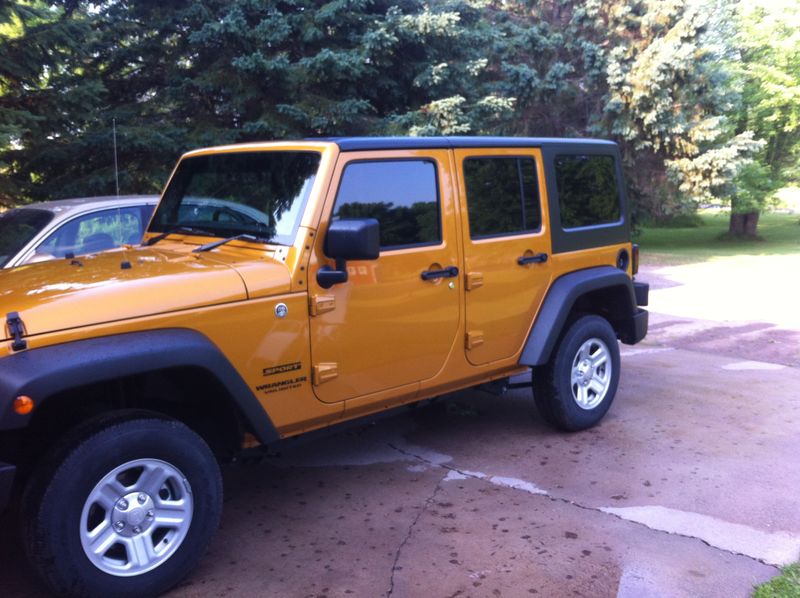
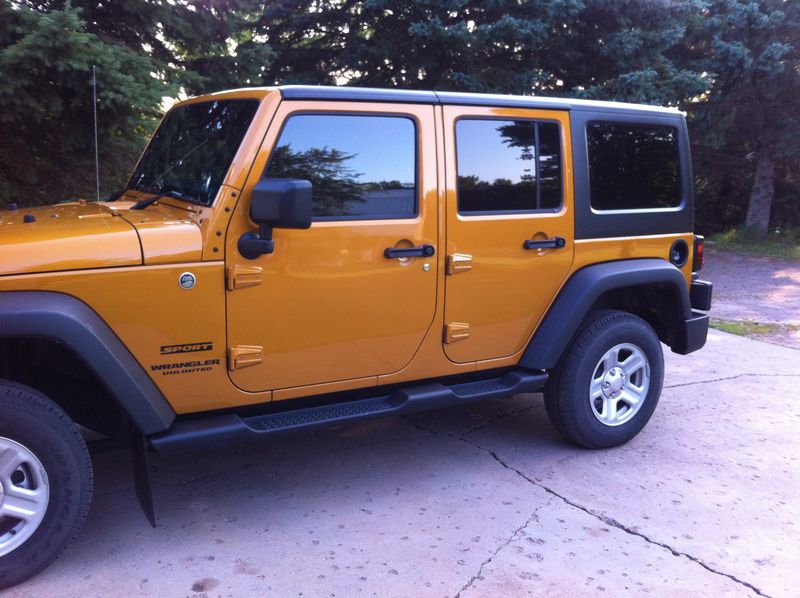
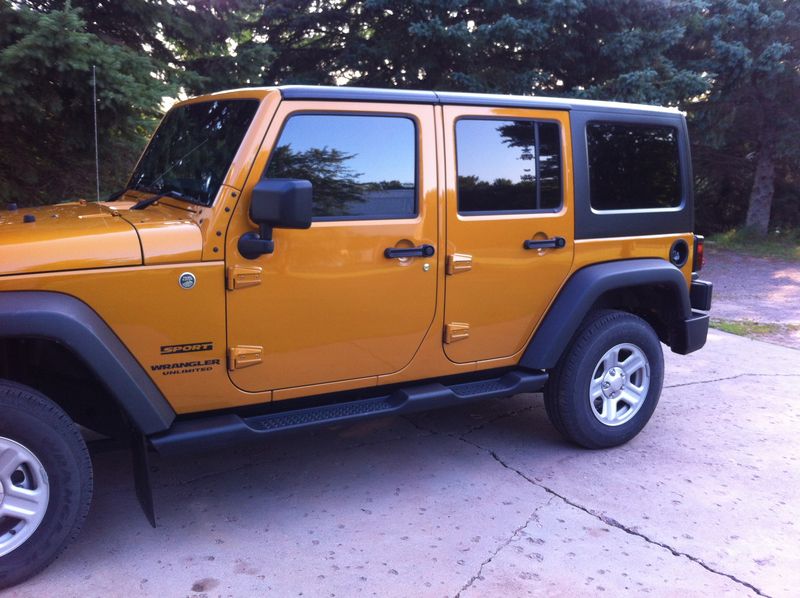
    This is the jeep as it arrived from Tennessee.

    My husband immediately began to gather "Protection" for the jeep.  What I Love about him, is that he not only fixes broken things, but protects the new.

    IMG_3857

    It now has these great Cat Mud Flaps, chip protection coating under the doors and running boards that will help stop the rocks from chipping up the sides as I travel my mail route.  

    IMG_3858

    I will feel better now knowing that it is protected. I did buy it for the rugged route I drive every day.  And, now it will feel less of the impact of the gravel.

    IMG_3860

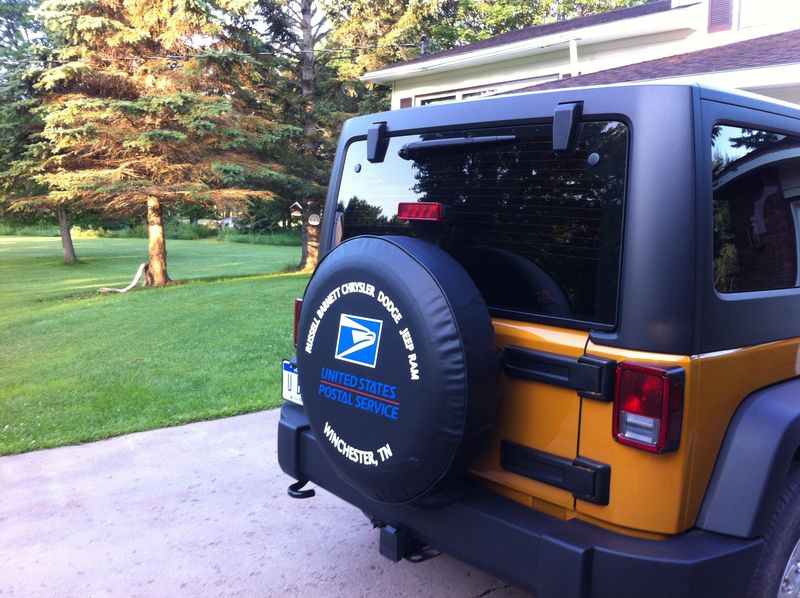
    I do have this neat wheel cover, and the strobe lights are in the works.  

    As I thought about the jeeps needs and my husband's attention to detail, it came to me we do or don't do the same with our bodies and lives.

    What do we do for protection?  Or what do we do to make the day deliver the least amount of damage to our bodies.

    I had read on Facebook, that doing exercise isn't about feeling good while doing it, although some can, but more about how you move the rest of the day.

    I have done extensive interior work on my body. It is now my intention to practice look at ways I can protect my physical body.

    The repetitive nature of my job…means I have to counter act in ways to relieve the pressure.

    I eat and move in ways to lessen the impact of my job.  

    My husband says, "If you take care of your car, your car will take care of you."

    I am so grateful to have him see to the needs of my mail vehicle and to do it with patience, and with his eye on detail. 

    It is up to me to take care of the Lady who drives the Jeep!


  • Who we are.


    What a difference in understanding this woman displays…

    It is incredible in showing how each of us is responsible for our pain and how the pain itself, in the body, is there to show us what we are believing.  And to question our thoughts with "Is it true?"

    Thanks Carl for sharing this with me.

    It affirms me.

    Our children are so brave to bring us the truth…if we have the space open to receive it, they will show us who we are.  


  • He is a hero to me.

    I watched a few segments of Oprah interviewing Matthew Sandusky as he spoke up about his experiences being abused by his adopted father; a coach and seemingly unlikely abuser.

    What struck me is how the public character often is the toughest enemy when it comes to children being believed….even adult children.  Had there only been one child to speak up against this Penn State coach, I am not sure there would have been a conviction.

    For it requires enough evidence to out weigh the life that is lived in the light of day.  

    Somehow this seems to be held on the scales as 'evidence' to the contrary of his capabilities to abuse.  Most will fail to recognize how it dove tailed nicely and played perfectly to be the perfect role to be an abuser.  It didn't make it harder, but easier.

    The manipulation and the selection of boys isn't done half-assed. It is carefully orchestrated and played out.  It is a huge part of the dance for the pedophile….child friendship.

    If only folks would recognize that it matters NOT what the abuser does…what office he holds, what religion he is, what sport he plays…for more often than not, it is the gate way to gaining access to those he will abuse.

    I am encouraged by more and more cases being exposed and others standing up and speaking out about their abuse and their abusers.  It opens the pathway to make it more believable….or at the very least, not so shameful.

    I see Matthew Sandusky as he said…no longer being a coward.

    I had to look up the definition of "Coward".

    "a person who lacks the courage to do or endure dangerous or unpleasant things."

    Isn't it funny, but we intuitively know, we will have to endure danger or unpleasantness IF we speak up.

    He said how family always stood together 'against them', whomever that was…Family stands by family, no matter what.

    And, his unwillingness to do so, set him apart from family.

    I understand this best.

    He is a hero to me.

    (You can watch episodes on OWN Network, online….oprah.com)