I M Perfect lady

I'm perfect – it's impossible not to be.

  • Once again, there are stirrings of an alleged sexual abuse within the FALC…I hate that I have to write alleged, but he is innocent, until proven guilty.  He is 'not' to be judge and the church should be kept separate, and the list goes on and on to protect him, while little children are left to work through the affects of his vile behavior.

    The more strenuous your objections and indigination, the more you need his innocence to save your belief.  Your belief in the one right church, your belief in the forgiveness of sins, your belief in a preacher, his image…perhaps even his name.

    Do you dare see him in a new light?  What will happen to your faith and belief if you dare bring in the possibility that the children and their parents are right?  

    Many will try and keep their precious religion and pure faith, while a man of the pulpit has resigned, and allegedly he has sexually abused his grandchildren…they will try and separate his 'sins' from the message of God…and not rush to judgement and leave that up to God, to overlook and look beyond the abuse.

    This behavior is nothing new.  For decades now, the good christians of the churches have been unwilling to respond…would not dare do something so unchristian like as to see what is, to not forgive and forget, and to stare unflinchingly at abuse…while giving up their ticket into Heaven.

    They do not see their behaviors OF not reacting IS keeping this whole cycle going.

    What are they saying to the folks who dare speak up? How are they treating the parents who dare stop going to church?  Are they listening or defending their church?

    In a perfect world, a child would speak of abuse and the whole structure would fall, for the good folks would tear it down themselves. They would demand the church to pay retribution to the victims.  They would set up Help lines for victims. They would enlist armies of therapists and counselors to deal with the families involved. They would take the lead in helping victims speak up. The board members would be out leading the charge to make sure he is prosecuted…by opening the space for other victims to feel safe….to feel heard and believed.  Their "Greetings Of Peace" would publish places where they could seek help. There would be a number to call the detective with information that would help these young victims. 

    Instead…there is nothing coming from inside of the church.  

    Can't we at least wonder why the church is so silent?

    Why the board members are not screaming with outrage?

    Why are they not supporting the detective and asking for a full fledge investigation and asking their parishioners to help?

    Why are so many adults completely acting so irrationally about sexual abuse (allegedly) by a preacher?  

    Maybe the questions are not about judging him, but about looking at the silent church…its chairperson and board members.  Why are they so unwilling to grab a hold of this and start demanding answers and leading the investigations.  Is the church NOT responsible for allowing a pedophile to be a preacher?  What is their role, do they have any accountability here?  Have they not heard his name being mentioned with sexual abuse prior and what was their response?

    What I find more shocking than a preacher molesting his grandchildren (allegedly) IS the SILENCE and NO REACTION of the Board of the First Apostolic Lutheran Church…as well as other parents.

    If, this was a learning institution, these same folks would be banging on the doors and removing their children Immediately. What stops them now?  What is holding them back from rushing forward?

    Whatever it is….it is what keeps the neat little nest of abuse going.  It is the fact that good people will not change their minds, drop their faith…to bring in abuse.  

    Their Belief stands in the way of seeing and responding to abuse.

    How many facts do they need? How much information would change their minds? How much of their lives depend upon the preacher's innocence and him not being an alleged monster?

    What are they willing to sacrifice for their belief?  How many little boys will have to be abused before they are willing to see differently….?

    I watch this and know, he isn't the only monster lurking….denial is equally at fault.

    For all it takes for evil to flourish is for good men to do nothing….Ellie Weisel.


  • What words of advice could I give to someone who finds themselves facing sexual abuse within their families. Are there hard and fast rules?  Do some roads lead to sure road blocks and stunt healing and others that speed things along, both with the law and mental recovery?  Does a check list exist of what decisions are best…and how to respond correctly for your child?

    Is it possible to have items of higher value than others and ones that will flip the pattern of abuse and others that will promote the same old song and dance?

    I see this broadly from the viewpoint of having traveled the tangled paths littered with debris of illusions…where pedophiles hid behind the mask of father….and their helpers wore the badge of mom.

    What is helpful when your life looks like trick mirrors?  How do you navigate and solicit advice, when you yourself can't even see what is right or wrong…when your values have been so mutilated…when so called family turn evil?

    When the laws of the land have guidelines to follow…that will depend upon a little child being articulate and brave enough to offer details of the crime….enough to prosecute…Adults who know enough, but are not good enough to put the abuser away…for our laws state, that the child (victim) has to tell his story convincingly.

    Are their lives not proof…when they wear the affects in their daily little lives?  

    I believe, it would be helpful if when we hear of another count of abuse by the same abuser, that others step forth…lend their voices to uphold the truth.

    Even IF you are not willing or sure of prosecution, it would be helpful to give your experience that helps support the victims, by showing them, they are not alone.

    I know, that the letters from other victims, helped me understand and see that I was not crazy…that my body had a reason to fear him.

    What definitive does the law need and will more proof from other victims help make a case? It seems that more of the law protects the abuser and makes the victims jump higher and reach further to get the help they need.

    My greatest desire is for other victims to share what they know, to help the little children's stories hold more water, when case upon case echo their story.

    In my father's case, the majority of the victims stories all matched, the behavior of sexual misconduct and forceful contact were so similar….down to the detail of the home and where my father sat.

    As this latest case in Minnesota shakes itself out, I know that it isn't an isolated incident, that there were others before AND will be others to follow, if there isn't a joint effort to expose him.

    This news is spreading like wild fire….and I can only hope that some day soon, the voices will not only be used to whisper, but will bravely be used to help these latest victims prosecute this man.  That other families will come forth and walk down the road with them…that there will be a collective effort to push back evil….instead to remain silent in fear.

    Encourage those who come forth with stories to share theirs with the local sheriff….if not now, when?  How many years and victims have to pass down this road before the abuser will be stopped?

    What is useful or helpful….what will help the abuser continue on a free man and what will help the littliest victims?

    Don't let the feelings of fear stop you from doing what is right.

    What is right, is the path less traveled.

    How is that possible that the Right path is the one less used?

    I say, to those who are still in the church, to rally each other to let this case be an example of how you are not going to sit silently no more.


  • In "Good Prose" The Art of Nonfiction.…about Memoirs.

    "The desire to tell the truth haunts the serious memoirist, and so it should. But there is a step beyond truth.  For the writer, the ultimate reward of memoir may be to produce a work in which the facts are preserved but the experience is transformed."

    "In "A Fortunate Man, a meditation on the working life of an English country doctor, John Berger writes: "Perhaps this is the true attraction of autobiography: all events over which you had no control are at last subject to your decision." Writers in all genres are attracted to the promise of control over past events – if by "control" one means creating form or finding patterns in a life or a mind or the world, and, in the case of memoir, finding a road through the wilderness of one's past."

    "Some memoirs cry out for this kind of control, as in the case of a young man with a painful past who had a powerful story to tell, but was uncertain about whether to tell it.  His name is Pacifiquel.  He grew up in an African country beset by civil war. His parents, farmers and herders – were virtually illiterate and yet they valued education, and Pacifique managed to attend grade school, often in peril from trigger-happy soldiers. He did well.  His test scores were among the countries highest and earned him a secondary school education. Then, at nineteen, through a series of improbable accidents and charitable acts, he was brought to the United States, where he spent a year at the private secondary school Deerfield Academy."

    "English was still strange to him and he arrived. (He was fluent in French as well as in his native language.) He had never read a great novel or poem, but as a child he had conceived a fondness for the kinds of stories that elders had traditionally told -mixtures of fact and fiction that the elders always claimed were true, with complicated structures leading invariably to a moral."

    "A frequent lesson of the elder's stories was the importance of discretion. Pacifique came from a culture that values silence, and so by training he was disinclined to tell his new schoolmates much about his past. Moreover, he worried that American students and teachers would be afraid of him if they knew about the violence in which he had grown up. They might think that it had left him violent too. But as he learned more English, he began to set down some of his experiences. When his teacher told him that some of what he ahd written was "Damn near pulishable," Pacifique said he only wanted to improve his English. They very idea of making his stories public seemed to frighten him. He worried that his stories were unfit even for his teachers to read because they contained so much horror. His teacher tried to reassure him , telling him that art had the great power to transform the experience of suffering and injustice into something beautiful. This idea made a strong impression on Pacifique."

    "In one story he wrote- he called it "The Color of a Sound" – Pacifique begins with a glass breaking in the dining hall at Deerfield. The sound triggers a memory. His native village is being attacked – on "one of the days my mother apologized to my brother and me for having given birth to us." The family's house is burned down.  He and his mother and brother spend the night hiding in the forest. In the morning, standing near a clearing, Pacifique witnesses the killing of a young school mate named Patrick. The boy has been tricked into approaching a rebel soldier. The soldier is holding a glass. The soldier drops it on purpose, and the glass shatters. Pacifique explains a superstition in his country, that if you drop something you are eating or drinking, you may blame a person near you for wanting it. The soldier accuses Patrick of having wanted his drink, then orders him to pick up the shards of glass and put them in his mouth. the soldier forces Patrick to chew, then shoots him in the forehead. The story ends this way:

    "Because I had seen many killings, and would see ones even more horrifying, I thought I would forget Patrick's, but eleven years later, when I arrived at Deerfield Academy, Patrick returned. In the dining hall whenever I heard a glass shatter, I did not think of the superstition.  I thought of Patrick's mouth full of glass and would see him trying to bite. My mouth would be full of food and I could not take a bite. It was as if the food in my mouth had become pieces of glass."

    "When my fellow students heard a sound of a glass breaking they knew someone dropped a glass and they would laugh at that person's clumsiness. When I heard the sound of glass breaking, I would not laugh. I would see a red color instead. The color of blood in Patrick's mouth. A color no one else could see."

    "During his first year in America, involuntary memories were an important problem for Pacifique – the dreadful things he could not banish from his mind, gusts of memory that could come at any time.  Two years later, he felt that something important had changed. While writing, he said, he had discovered a partial defense against his memories: "That's how it started. I wrote a story and I felt relieved. I could control it. In the head, I could not. It's as if you had your hands on it and you could control it and make it beautiful. So instead of haivng power on you, you had power on it. When it comes as a memory, it dictates to you, it controls you. After I wrote that story about the breaking glass, I would hear a glass breaking but it never came back that way.  I mean, I would remember what happened, but it was never as before.  I would think of making some modifications in the story, to make the story better. Then if a memory woke me up, I could get back to sleep by writing it down, thinking I could turn it into something beautifully written. I mean, that's what I wish."

    "He didn't show his stories to other students. He still wasn't  eager to make his past public, but he wasn't afraid of that anymore. He was afraid that other students would tell him the storiers weren't well made, and because their command of English was superior to his, he would be obliged to believe them. Most writers are vulnerable to criticism. It is hard to imagine one more vulnerable than Pacifique. Writing had been a great discovery for him, a defense against the invasions of memory, a way to get to sleep. But when he wrote stories that included the horrors of his past, he had to believe that the stories were well made or could be remade until they were. Otherwise, memory would regain its hold. "If it isn't well written," he said, "it is as if it comes back into you."

    "Many writers have spoken about memoir as a way to "objectify" experience, to get clarifying "distance" between oneself and one's past. But that is not precisely what Pacifique intended when he spoke of having power over his memories, nor is it the highest use of memoir. One can also use memoir to get closer to the past."

    "The memories that surface suddenly – merely unpleasant for most people, horrifying for Pacifique – are bolts from a bigger storm, capricious, even random. If you can go back to the source and see your memories whole, you can create truer versions of what you remember. You tell the stories as accurately and artfully as your abilities allow. If you succeed, you replace the fragments of memory with something htat has its own shape and meaning, a separate thing that has value in itself. The past becomes an assertion that your life is of the present and the future."

    "Taking the undifferentiated materials left by the past and giving them pattern and form can be – more of a solace- a source of great pleasure. The delight that memoir can offer is like the delight a woodpecker may feel when putting the finishing touches on a beautiful desk. The desk is different from the wood forever. And the good memoir is different from the memories behind it, not a violation of them but different, and different of course from the actual experience that gave birth to momory and memoir." Tracy Kidder and Richard Todd


    IMG_0099

    I love how Pacifique wrote down horrific things and wished to write them beautifully.


  • IMG_0059
    Krishnamurti writes about "Art, Beauty and Creation", in his book "Education and the Significance to Life."

    "Most of us are constantly trying to escape from ourselves; and as art offers a respectable and easy means to doing so, it plays a significant part in the lives of many people.  In the desire for self-forgetfulness, some turn to art, others take to drink, while still others follow mysterious and fanciful religious doctrines."

    "When, consciously or unconsciously, we use something to escape from ourselves, we become addicted to it.  To depend on a person, a poem, or what you will, as a means of release from our worries and anxieties, though momentarily enriching, only creates further conflict and contradiction in our lives."

    "The state of creativeness cannot exist where there is conflict, and the right kind of education should therefore help the individual to face his problems and not glorify the ways to escape; it should help him to understand and eliminate conflict, for only then can this state of creativeness come into being."

    "Art divorced from life has no great significance. When art is separated from our daily living, where there is a gap between our instinctual life and our efforts on canvas, in marble or in words, then art becomes merely an expression of our superficial desire to escape from the reality of what is. To bridge this gap is very arduous, especially for those who are gifted and technically proficient; but it is only when the gap is bridged that our life becomes integrated and art an integral expression of ourselves."

    "Mind has the power to create illusions; and without understanding its ways, to seek inspiration is to invite self-deception. Inspiration comes when we are open to it, now when we are courting it. To attempt to gain inspiration through any form of stimulation leads to all kinds of delusions."

    "Unless one is aware of the significance of existence, capacity or gift gives emphasis and importance to the self and its cravings.  It tends to make the individual self-centered and separative; he feels himself to be an entity apart, a superior being, all of which breeds many evils and causes ceaseless strife and pain. The self is a bundle of many entities, each opposed to the others.  It is a battlefield of conflicting desires, a center of constant struggle between the "mine" and the "not-mine"; and as long as we give importance to the self, to the "me" and the "mine", there will be increasing conflict within ourselves and in the world."

    "A true artist is beyond the vanity of the self and its ambitions. To have the power of brilliant expression, and yet be caught in wordly ways, makes for a life of contradiction and strife. Praise and adulation, when taken to heart, inflate the ego and destroy receptivity, and the worship of success in any field is obviously detrimental to intelligence."

    "Any tendency or talent which makes for isolation, any form of self-identification, however stimulating, dissorts the expression of sensitivity and brings about insensitivity. Sensitivity is dulled when gift becomes personal, when importance is given to the "me" and the "mine" – I paint, I write, I invent. It is only when we are aware of every movement of our own thought and feeling in our relationship with people, with things and with nature, that the mind is open, pliable, not tethered to self-protective demands and pursuits; and only then is there sensitivity to the ugly and the beautiful, unhindered by the self."

    Sensitivity to beauty and to ugliness does not come about through attachment; to comes with love, when there are no self-created conflicts. When we are inwardly poor, we indulge in every form of outward show, in wealth, in power, and possessions. When our hearts are empty, we collect things. If we can afford it, we surround ourselves with objects that we consider beautiful, and because we attach enormous importance to them, we are responsibile for much misery and destruction."

    "The acquisitive spirit is not the love of beauty; it arises from the desire for security, and to be secure is to be insensitive. The desire to be secure creates fear; it sets going a process of isolation which builds walls of resistance around us, and these walls prevent all sensitivity. However beautiful an object may be, it soon loses its appeal for us; we get used to it, and that which was joy becomes empty and dull. Beauty is still there, but we are no longer open to it, and it has been absorbed into our monotonous daily existence."

    "Since our hearts are withered and we have forgotten how to be kindly, how to look at the stars, at the trees, at the reflections on water, we require stimulation of pictures and jewels, ob books and endless amusements. We are constantly seeking new excitements, new thrills, we crave an ever-increasing variety of sensations. It is this craving and its satisfaction that make the mind and heart weary and dull. As long as we are seeking sensation, the things that we call beautiful and ugly have but a very superficial significance. There is lasting joy only when we are capable of approaching all things afresh – which is not possible as long as we are bound up in our desires. The craving for sensation and gratification prevents the experiencing of that which is always new. Sensations can be bought, but not the love of beauty."

    "When we are aware of the emptiness of our own minds and hearts without running away from it into any kind of stimulation or sensation, when we are completely open, highly sensitive, only then can there be creation, only then shall we find creative joy. To cultivate the outer without understanding the inner must inevitably build up those values that lead men to destruction and sorrow."

    "Learning a technique may provide us with a job, but it will not make us creative; whereas, if there is joy, if there is the creative fire, it will find a way to express itself, one need not study a method of expression. When one really wants to write a poem, one writes it, and if one has the technique, so much the better; but why stress what is but a means of communication if one has nothing to say? When there is love in our hearts, we do not search for a way of putting words together."

    "Great artists and great writers may be creators, but we are not, we are mere spectators. We must read vast numbers of books, listen to magnificent musci, look at works of art, but we never directly experience the sublime; our experience is always through a poem, through a picture, through the personality of the saint. To sing we must have a song in our hearts; but having lost the song, we pursue the singer. Without an intermediary we feel lost; but we must be lost before we can discover anything. Discovery is the begining of creativeness; and without creativeness, do what we may, there can be no peace or happiness for man."

    "We thing that we shall be able to live happily, creatively, if we learn a method, a technique, a style; but creative happiness comes only when there is inward richness, it can never be attained through any system.  Self-improvement, which is another way of assuring the security of the "me" and the "mine," is not creative, nor is it love of beauty. Creativeness comes into being when there is constant awareness of the ways of the mind, and of the hinderance it has built for itself."

    "The freedom to create comes with self-knowledge; but self-knowledge is not a gift. One can be creative without having any particular talent. Creativeness is a state of being in which the conflicts and sorrow of the self are absent, a state in which the mind is not caught up in the demands and pursuits of desire."

    "To be creative is not merely to produce poems, or statues, or children; it is to be in a state in which truth can come into being. Truth comes into being when there is a complete cessation of thought; and thought ceases only when the self is absent, when the mind has ceased to create, that is, when it is no longer caught in its own pursuits. When the mind is utterly still without being forced or trained into quiecence, when it is silent because the self is inactive, then there is creation."

    "The love of beauty may express itself in a song, in a smile, or in silence; but most of us have no inclination to be silent. We have not the time to observe the birds, the passing clouds, because we are too busy with out pursuits and pleasures. When there is no beauty in our hearts, how can we help children to be alert and sensitive? We try to be sensitive to beauty while avoiding the ugly; but avoidance of the ugly makes for insensitivity. If we would develop sensitivity in the young, we ourselves must be sensitive to beauty and to ugliness, and must take every opportunity to awaken in them the joy there is in seeing, not only the beauty that man has created, but also the beauty of nature."  Krishnamurti

    There is so much in this short section about the complex and simple place where beauty, art and creativity is born, it is born when we lose our self and our desires or what he calls pursuits. 

    How interesting for me, that my art flourished while my world fell apart.  Now it appears that it is truly the only place it can, when there is no me frantically needing and doing things that make up the Me world.

    It leads me to wonder about the WIND, the women in new directions. Is it possible to create your self into the empowered state, OR do you first have to investigate you and destroy the you that needs or desires things, due to being empty inside?  Do the women come empty to WIND, and will they be able to create since they have lost themselves?  Will the pursuit of creativity lead to the discovery of self?

    Is it like the quesiton of the chicken or the egg?

    From what he writes, he is saying true beauty and truth….and creativity comes when you are full inside, when you heart is full and there is no need for anything, when the mind isn't seeking…a space is there that  allows inspiration to flow.

    IMG_0077
    And, are you in fact, the most creative when you are in the midst of great change, when you don't know who you are.  When your life and self you thought you knew is left lifeless on the ground….is it then, that you are most open?

    Interesting for me to note.  

    Being creative is best done without your self.


  • Here is a interesting writing on Fear….or perhaps what fear stands in front of, by J.Krishnamurti in his book, "Commentaries on Living, 2nd Series"

    "Why do you engage in welfare or in any other kind of work?"

    "I suppose it is just to carry on.  One must live and act, and my conditioning has been to act as decently as possible.  I have never before questioned why I do these things, and now I must find out.  But, before we go any further, let me say that I am a solitary person, though I see many people, I am alone and I like it.  There is something exhilerating in being alone."

    "To be alone, in the highest sense, is essential; but the aloneness of withdrawal gives a sense of power, a strength, of invulnerability. Such aloneness is isolation, it is an escape, a refuge.  But isn't it important to find out why you have never asked yourself the reason for all your supposedly good activities? Shouldn't you inquire into that?"

    "Yes, let us do so.  I think it is fear of inner solitude that has made me do all these things."

    "Why do you use the word 'fear' with regard to inner solitude?  Outwardly you don't mind being alone, but from inner solitude you turn away. Why? Fear is not an abstraction, it exits only in relationship to something. Fear does not exist by itself; it exists as a word, but it is felt only in contact with something else.  What is it that you are afraid of?"

     "Of this inner solitude."

    "There is fear of inner solitude only in relationship to something else. You cannot be afraid of inner solitude, because you have never looked at it; you are measuring it now with whay you already know. You know your worth, if one may put it that way, as a social worker, as a mother, as a capable and efficient person, and so on; you know the worth of your outer solitude. So it is in relation to all this that you measure your outer solitude.  So it is in relation to all this that you measure or approach inner solitude; you know what has been, but you don't know what is The known looking at the unknown brings about fear; it is this activity that causes fear."

    "Yes, that is perfectly true.  I am comparing the inner solitude with the things I know through experience. It is these experiences that are causing fear of something I have really not experienced at all."

    "So your fear is really not of the inner solitude, but the past is afraid of something it does not know, has not experienced.  The past wants to absorb the new, make of it an experience. But can the past, which is you, experience the new, the unknown? The know can experience only that which is of itself, it can never experience the new, the unknown. By giving the unknown a name, by calling it inner solitude, you have only recognized it verbally, and the word is taking the place of experiencing; for the word is the screen of fear. The term 'inner solitude' is covering the fact, the what is, and the very word is creating fear."

    "But somehow I don't seem to be able to look at it."

    "Let us first understand why we are not capable of looking at the fact, and what is preventing our being passively watchful of it. Don't attempt to look at it now, but please listen quietly to what is being said."

    "The known, past experience, is trying to absorb what it calls the inner solitude; but it cannot experience it, for it does not know what it is; it knows the term, but not what is behind the term. The unknown cannot be experienced. You may think or speculate about the unknown, or be afraid of it; but thought cannot comprehend it, for thought is the outcome of the known, of experience. As thought cannot know the unknown, it is afraid of it. There will be fear as long as thought desires to experience, to understand the unknown."

    "Then what…?"

    "Please listen.  If you listen rightly, the truth of all this will be seen, and then truth will be the only action. Whatever thought does with the regard to inner solitude is an escape, an avoidance of what is.  In avoiding what is, thought creates its own conditioning which prevents the experiencing of new, the unknown.  Fear is the only response of thought to the unknown; though you may call it by different terms, but still it is fear.  Just see that thought cannot operate upon the unknown, upon what is behind the erm 'inner solitude'. Only then does what is unfold itself, and it is inexhaustible."

    "Now, if one may suggest, leave it alone; you have heard, and let that work as it will. To be still after tilling and sowing is to give birth to creation."  J.Krishnamurti 

    My knowing knows this is right. That somehow we have used fear to stop doing what we can't know before hand, what we can't fully understand, we place fear before it.

    If you instead use the word Unknown, about something and wait to experience it, I am sure we would do much more.  

    Imagine, Fear is a thought that steps in when it can't know.

    It, the mind, seems to be standing in the way of many unknown thrilling experiences…instead of letting us experience many different unknowns, it and our past, because it has no experiences of what would be new experiences for us, put the word fear to cover up the unknown.

    What I have found is to become friendly with the unknown….to dare to step into the unknown, regardless of the thoughts in my mind. Now, I know…when the mind doesn't know the unknown, it injects the word fear.


  • There is a separation, that comes naturally in parenting, that sometimes feels like disappointment and worry, an un-natural split.  When a child makes their own choice that is in direct opposition of what we want/dream/desire for them.  It is more about us, it is almost like we want to live our youth again, but with the wisdom of age…AND, using their lives!

    We want to spare them the consequences of choices made, the wasted years of chasing things that ended in deadends…the heartaches and struggles, perhaps we want to give them a life of heaven without the struggle to get there….taking all the fun out of living.

    My son has opted to bypass school this fall and work.  Work as a general laborer, live in unique housing and gather tons of life lessons as if he is on a crash course on Life. My husband sees his son traveling down the similar path he once traveled and wants to be his guide; the one my son will listen to and obey….but my son only hears his own ideas.

    You have to marvel at how our children's choices can push and sway us….how we literally feel the affects of their choices, when it isn't our life, but theirs.  How is it possible to feel so viserally their movements?  

    I love that our son can disappoint us. That he can feel/see and act upon HIS dream and not ours. That he is able and willing to jump out into the uncertainty with gusto and knowing.  That he is grabbing his life from us and living it!  No matter the outcome, he has got it.

    And, we (us parents) are holding the empty leash….he is gone.  I even wonder about the illusion we lived with, THINKING we had more say in his dreams and future, and in his daily living.  It seems, we are the last to know, again.

    We want the best, we want the very best, we want comfort, love, peace and joy for him….and perhaps what he is getting all that….from his point of view!  


  • Dr. Maya Angelou wrote this about her mother…"She's very intelligent and often said she didn't fear anyone enough to lie.

    Isn't that an interesting line.  

    Lying is when you are afraid.  

    Afraid of the other person…or you feeling your weakness with them…I guess it is the same…you are in fear.

    I didn't realize that truth speaking requires strength, self power, being fearless.

    It isn't so much about the other person, but about yourself. Are you strong enough to speak the truth?

    And, I can also see why many lie, because their power has been taken away due to various circumstances.  Which shines a light of understanding as towhy victims lie; their power has been taken away.  

    Just so interesting to me, that lying is a sign of being powerless.

    I did not know this.

    In fact, I misunderstood lying as someone trying to get away with something, or trying to fool me, pull a quick one etc…when in fact they were to afraid to tell their truth….see their truth, be with the truth.

    I love that now, I don't fear anyone enough to lie.  


  • Many years ago when I was talking to a therapist, she mentioned that in families where there has been abuse and dysfunction, you will have to rise to a social level with them, leaving behind the more familiar family interactions…to rise on the ladder of what you share, how you engage and become social…to politely say "Hi"…to no longer have a comfortable safe interaction.

    It seemed at the time like a lofty goal and even a senseless one.  I was still in the throes of complete and utter turmoil, with many relationships crashing.  How would we climb out of the hurt, anger and distrust and arrive at 'social'. And what is social? How do you feel a steady cool detached surface level politeness with a loaded history behind you?  

    What I found is that climbing the ladder out of family interaction onto the plane of social isn't comfortable or easy or even at times a desirable thing to do…complete and utter separation feels easier…and more sensible.

    Too much of my body and soul knows too much…to relax among old hurts.

    I would rather opt out…sit on the sidelines and not take the social ladder climb with old family members.

    My heart isn't in it.

    I don't know what that means?  I don't know if I care to much to settle for social or if I care even less and social is too much to ask?

    If I were to be totally frank, I would actually like to dive into the deep end, where all the mess lies and sort it out.  To hack and chop and pull and yank all the discrepancies between us. To make dysfunctional functional, by not being social but being totally frank with each other.  And, perhaps we already have been….and the answers are already given….and now social is our ledge we sit upon.

    A woman who lost her mother spoke of the PTSD affects grief has upon a person. And estrangement carries volumes of grief, especially, if it isn't just one person you are estranged from, but many.  

    I felt the PTSD feelings when confronted with family members I had not seen face to face in years….at my son's graduation party.  

    Heart racing, mind scattering, thoughts disjointed, jumpy, nerves near the surface, almost touchable…like danger was near, is how I later thought of it.  Which seemed odd…that I was unsafe.  Again, why these feelings?  It felt Iike I was being asked to be social to a rabid dog, a bitting snake….to pretend to pretend to pretend all was well. To be calm and gracious…when bells and whistles were screaming inside.

    I think, I thought, I could rise above it. I could be calm if my mind worked at it, I could overome and find a comfort feeling to be in. I could not.

    It seems the body's barometer works without regard to what I would find more comfortable, that its nervous system sends alarms all on its own.  I could not participate as a smiling hostess inside.  Inside was a three alarm fire code being announced…and I had to pretend it was not.

    Could I have spoken what was going on?  Could have responded authentically….or perhaps I did.  I steered wide and clear of what my body said was danger.  I instead sought out places of comfort with folks I felt comfortable with.

    Interesting how the body knows what it wants…regardless of what social etiquette demands.

    What was dangerous for me? Why did my body respond like that?  Why was my mind not able to convince my body to calm down and relax?  I truly do not get it, except to say that, "the body doesn't lie".

    It felt like my core was unprotected, vulnerable, open…or maybe that I had to protect and guard it.

    Not like being unseen or them being indifferent, but rather arrogant and challenging…pushing into my family. And yet they received the invite.  

    For my children have their own social life, they intermingle with their cousins…it was all appropriate…except for how it made me feel. Just interesting to witness and experience the social interactions with previous comfortable folks.

    It almost leads me to wonder or begs to be scrutinized, what did I truly feel with them before?  Were we really comfortable?  Did we fit comfy cozy together?  Did my body feel at ease with them or did we always have disjointed connections? 

    I can't see how we fit, except in a dysfunctional way, coming from such an abusive backdrop. Even on a good day, we were not normal. Perhaps we fit better, for we were all doing basically the same thing.  Now I am doing things differently…or they are different from me, regardless we are facing two different ways….as I see it.

    I wonder if their insides would feel better with me re-joining them….as much as mine feel better separated?  Do they feel better away from me?  

    I believe our body and soul know where its match is….birds of a feather flock together, except for graduation parties, showers, weddings and funeral, and then we push all sorts of mismatched folks together.


  • I finally finished listening to "The Center Cannot Hold – My journey through madness" by Elyn R Saks.  

    A very interesting perspective between the woman, the illness, and her career self; how to deal with them all without having them bleeding each other.  

    And the stigma that is still attached to illnesses of the mind…and yet we 'normal' folks are dancing around the lip of insanity as well, each time we con others into believing things that are not true about ourselves…or when we are not truthful and authentic as we live our lives, and make our daily choices.

    What is considered a mind disease?  Is it not when our thoughts and our words don't match?  How often do we lie to ourselves and others, knowingly, making a choice to appear better than we are?

    From what I understood by her book, is that her psychosis was illusionary…it wasn't real.  How then can we say we are not psychotic when we step away from reality?

    It almost seems like her psychosis is equal to ours, neither of us are in reality…except she can take a pill that will push back the illusions. Is there a pill that will make us speak the truth?

    When you look at the mind illnesses and even mood illnesses, you have to wonder what causes the imbalance?  Is it reality or the way we were taught not to be there?

    I know that some in my family of origin believe that I have gone over the edge, that I have lost my mind, when I am in fact standing hip to hip with reality.  I will no longer pretend to pretend to pretend.  I am unwilling to join them in illusion, and I am seen as the problem…not that there is a real issue in reality.

    What I also found so striking in her book is her fight against the illness, due to its stigma and consequences in her life IF it were known.  Mind illnesses are so frightful to us all, we like to believe we all are always standing steady in reality, when we more often are unwilling to go there, BUT are not considered insane.

    Insane means, "not of sound mind".  What is a sound mind?  Or what is an unsound mind?

    For myself, I would say, that I was more comfortably accepted in my first 46 years of life, while I lived in illusion about many things….my family, my church and my self, compared to when I flopped out of the illusion or insanity.

    Perhaps for each family or individual, 'insanity' is objective and selective.

    What is the cost of aligning your life and your illusions? Would it cause you to feel anxious or fearful if the two were to collide and not match? How many of your friends and family are with you in the illusion?  Would it cost you your life as you know it to step out and into the truth of what you feel?

    Each time we ignore what we feel and do the opposite, we are dabbing our toes into illusion.  We are asking our minds to join us outside of reality. We do this often enough, that eventually we live there more than in reality. We have left reality and there is no magic pill to get us back. The only way back is to stand with our feelings…to honor our inner knowing, regardless to the cost or the uncomfortableness of those outside of us.

    I believe it would be harder to find folks who are one with their mind, body and soul…those who are living authentically.

    And yet we look down upon those with mental illnesses, while daily we preform all acts of mental gymnastics to spare us from reality.

    Insanity; a deranged state of mind…unsound.  I believe we are all on the spectum of being insane…and while most will not speak of it openly, but will profess behind your back your lack of stability in reality.

    Whether you will admit it or not, most of us are more comfortable with the insane than with those who are standing as one with the truth of what is.

    It appears very few want to know the truth, its sounds and echos, its feelings and knowings, more are at ease in the land of pretend.

    To bad there is not a pill that would make us all live authentically.

    An awareness pill.

    Reality…It is a tough pill to swallow!


  • I see the finish line, the last few feet, and I already want to sit down and FEEL the absence of daily caring.  It isn't that you have to do this or that, but that you are on call, that it is your responsibility to wash clothes, to clean behind, to feed, buy groceries, pay attention to their schedule, to urge, remind, remember, deal….the active daily mothering is about to end.

    I can't even remember, at least not clearly, what it feels like to just have my husband and I living without the added weight of children.  It isn't like they are constantly in need, but you are not free either…like an invisible tether, you feel them holding on.

    I am ready to be free as he is ready to be free.  Which is the natural evolution of parenting, to be there until they can fly alone…and flying solo is our goal.

    I am sure, I didn't think, think, THINK about the consequences in life about having children, they seem so cute and little and cuddly and nice and easy…like adding sunshine to your life.  You don't see the whole picture, until they are leaving…or feel the weight you signed up for until it is gone.

    We have had children living with us for almost 26 years.  During that time I have undergone a huge emotional upheaval and many estrangements…and made inner changes that deeply affected my children. Some for the good and others made their lives more complicated.  Mostly, my role as mother changed as much as I did….for how could it not.  

    Being a mother is you being you….with children who look up to you and toward you for their needs…and how you respond will impact their worlds.

    I recall the vivid turning point in the relationship with my son…and I can recall the old me and me trying so desperately to change in how I mothered him.  How much of his life was damaged by me and then how I learned to do things differently, at least most of the time.

    Even in his last week, he does what teenage boys do and I do what mother's do…meet head to head wanting completely different things.  Passing through me is the old rage flavor, but I don't even dip my toes into it.  I go and do something I can control, like make tea.

    It seems that I could not have gotten over the finish line of my healing without the children I have given birth to, they are my greatest teachers in changing the pattern. 

    Now, it is time to see the patterns taking form in their lives.  Where they are picking up the baton and beginning their lives…well He is picking up the baton.  He doesn't even know how much of the first part of the race his father and I have run, but he will certainly become aware he is on his own…when he is living in another state.

    And, we will feel the empty hands and hollow space of responsibility.

    Our list will be shorter….and the tasks not so crucial, nor will they have the same impact that parenting has.

    I am not sure that I will ever have this type of responsibility again, that compares to mothering.  It is a 24/7 job, you are never not on call.  

    With the children now being out on their own, I feel a distance between me and their needs.  I can see that in the future, we will be the second string, we will come in when the big guns are needed.  And, it is my dearest hope, that we will be spared knowing that kind of tragedy…and yet I also know, we both will gladly take back the baton, when crisis arises.

    Until then, we can turn down the volume on responsibility.

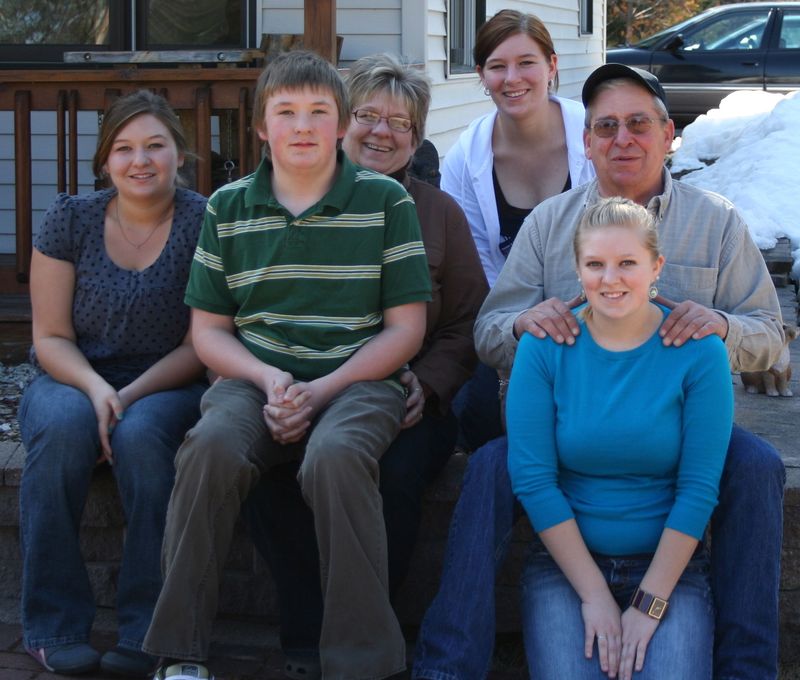
    (photo taken quite a few years ago….)


    IMG_4008