Author: bjukuri

  • Step Nine.

    Step Nine – Made direct amends to such people wherever possible, except when to do so would injure them or others. 

    "As we stand there with our Eighth Step list, we are astonished by a perspective we never imagined possible. We have finally gotten above it all with clarity. We can see that our parent’s dysfunction was not our fault. On the horizon, we see the preceding generations of our family lined up in single file, stretching back for miles. There must be 100 generations or more. At the front of the line, we see our parents as children with their parents. We recognize our grandparents, but visualizing our parents as vulnerable children is a new experience for us."

    "We notice the generations of our family passing forward a bundle. They move the bundle along by handing it off from one generation to the next. We watch as the bundle moves closer to our grandparents and to our parents. The bundle is heavy and gripped tightly as one generation hands it off to the next. The bundle is held at the stomach level as it is passed forward. We concentrate on the bundle and begin to recognize it. Our eyesight has been improved by our Step work. We can see more clearly. We see our grandparents kneel down to give the bundle to our parents. As our parents receive the bundle as children, we understand what they have taken possession of. It is shame, abandonment, and loss from the ages. We think about what we have seen. We realize we don’t have to take possession of the bundle. It is not ours. We are free. We look behind us, over a shoulder, to a clear horizon. There are no families there yet. We realize we have a chance to interrupt the passing on of family dysfunction."

    This visual is so perfect in seeing how our legacy of abuse was passed on, how the children are given the responsibility to carry on in silence, to take it and hold it OR to let it go.

    In letting it go, I broke with the tradition within my family.  I am the odd one out.

    I know many will try and claim they have admitted the abuse exists, but it isn't enough.  You literally have to act different.  Make changes in stopping the flow of dysfunctional choices.

    The book goes on…

    "Children do not always need all the details about our abuse and neglect. They have lived it and need a demonstration of changed behavior more than psychological or wordy explanations."   

    This is so powerful.  We need to see demonstrations of change, by actions. I will know others by how they act much more than what they say.  

    My actions are clearly visible and felt. They need no commentary.

    The book also talks about hurting others when making amends.

    "In making amends, we avoid bringing harm to another person by disclosing something that might be unnecessary and off the mark."

    "For instance, if we are making amends to an ex-wife, we need not bring up the infidelity we might have had with her sister. To do so serves no purpose in the moment. We need to admit our cheating to our sponsor or counselor and know in our hearts that the behavior was wrong.  We change such behavior in the future and stay out of the lives or our ex-wife and her sister."

    They go on and list lots of behavior that was hurtful to themselves and others.  And, as I look at the lists, I am grateful that I am not on them.  

    However, I am on the list of being silent and complicit. I didn't speak my feelings and I wasn't honest with myself and others in that regard.  I went along to get along.  I was a silent partner in the crimes of dysfunction.

    To make amends…(I have to go and look up the word "Amends"….reparation or compensation.)

    Now, "Reparation" - the making of amends for a wrong one has done, by paying money to or otherwise helping those who have been wronged.

    In the light of what this is calling for us to do, how can I repay my silence?  How can I help those I wronged and who did I wrong?

    I believe that my silence hurt the girls who followed me.  I believe that my silence hurt my own little girl (Inner Child).  I believe that I am making amends each time I speak out, write on this blog, share what I know and have learned about.

    At first glance I thought I would have to make amends to my parents…but I did not wrong them. I did not act out or retaliate.  I complied.  Until I didn't.

    Perhaps some may feel that I now need to make amends for my outspokenness or for putting up boundaries etc.  But my amends, I feel are to those I hurt.

    I hurt so many by being disloyal to my feelings and for keeping silent about my fear of my father.  I hurt many by going along against my feelings.  

    I believe, since it was very hard for me to do, that my change needed to be the opposite of what I had done that harmed others.  Being silent about things I should not have been silent about.

    The Spiritual Principles in Step Nine are "Forgiveness and Courage".  I believe that I have understood this principle and have walked it.  

    I have broken my silent and am no longer complicit.  We are the half of dyfunction that allows perpetrators and those who are doing wrong to continue. We are the silent watchers….those who allow negative behavior to continue, in order to be 'loved'.  We silently carry the bundle…for we know, if we drop it, we will be shuned and distanced.  The bundle we carry is the wrong behavior of others.  It isn't ours to carry.  In doing so, we are pretending all is well and that the evil, which we are holding, doesn't exit in another.  I carried my father's dysfunction. 


  • Step Eight

    Step Eight – Made a list of all persons we had harmed and became willing to make amends to them all.

    "While making such a list, we are also mindful of our Inner Child and the need to protect the child within from harm during the amends process.  While we concentrate here on willingnes and making the list, we must realize that many adult children have families that remain in denial about family addiction or dysfunction.  Walking into your home and announcing that you are an adult child might bring up an unintended effect. We urge caution for some circumstances; however, we do not let fear or being uncomfortable stop us from making this important list of wrongs."

    "With Step Eight and Step Nine we are strengthening our commitment to changing our lives.  We are doing something that is not easy but which will build confidence and set us free.  We are moving past our comfort zone. We are moving further away from our dependent, people-pleasing selves toward our new home. We are improving a real connection with our Higher Power."

    In the section "Letting Go of Parents" 

    "We realize our parents were often the perpetrators of our abuse; however, many of us have acted inappropriately toward them.  Some of us have been calculating and have acted with malice of forethought. We have attempted to get even with our parents in one way or another. We hurt them and hurt ourselves emotionally in the long run. Some incest victims have extracted money and gifts as part of the compensatory guilt they use against an offending parent or relative. These are difficult claims to listen to, but we must face them if we are to be different in our dealings with other people. For if we have abused our parents in retaliation, we more than likely have abused others.  The abuse started with our parents and we will start there to change our behavior."

    "In many cases we have crossed the line, and we must look at that behavior for our own benefit, not our parents' benefit. This is our Eighth Step list, and this is our chance to change. We are the ones seeking change, and therefore we are the ones doing the heavy spiritual lifting. We are sweeping off our side of the street regardless of what another had done or not done. We are giving our parents to God, as we understand God. We are freeing them to their choices and their desires. We are separate from them.  They have no power over us just as we have no power over them."

    "That said, some parents are so dangerous or preverted that the adult child must avoid them to remain safe and sane. Surely we would think twice about asking an incest victim to make amends to a perpetrator.  Any amends would obviously involve harmful behavior we have engaged in after growing up and leaving home. The actual amends may be to protect ourselves and to know that we did nothing to cause the sexual abuse in childhood. Forgiveness of a sexually abusive relative without a face-to-face meeting has been the choice of some ACA members in this situation. We gain personal power by realizing tha the dysfunction did not start with us. We release the shame we carried surrounding the sexual abuse. We know that we can have healthy love in our lives."

    "At the same time, some incest victims in ACA have made direct amends to a sexually abusive relative. These members report the amends, or a frank discussion with the offending relative, allows real honesty to be introduced to the family.  In these cases, the incest victim forgave the offending relative and made direct amends for harmful behavior toward the relative. These adult children say the amends produce a powerful sense of resolution. Resentment and shame were removed."

    "We leave decisions on these types of amends to the adult child and his or her sponsor or counselor."

    "Step Eight Spiritual Principles: Willingness and Self-Forgiveness"

    This is a personal journey, in one where you get to decide if disconnecting or being with your abusive relative is helpful or harmful to your Inner Child.  

    I know that my silence and separation is often seen as cruel, but it is very kind to my Inner Child. 

    And, I have given up the right to control others and have offered them the freedom to be themselves and given their lives back to them…and the Universe.

    To remain safe and sane, I am estranged.


    IMG_9311
     

  • Step Seven

    Step Seven – Humbly asked God to remove our shortcomings.

    The speak of bringing in balance and removing our defects.

    Continued Defects               Balance/Reparent with

    Self-Centered                                Selflessness

    Not always honest                      Rigorous Honesty

    Manipulative                                Sincerity

    Perfectionist                                Compromise


    I think the crucial part of recognizing our defects is to then not do them…to replace them with the opposite.  It sounds simple, but it is actually tough to do, except when you recognize how hurtful you are when you don't succeed in replacing the defect.

    I had children living with me, as well as my husband, and even my family of origin…and it was in dealing with these ongoing/old relationships that were the toughest to change.

    For one, they were not working on changing themselves and when I changed…IT changed the relationship.

    It wasn't always easy to be this new me, for I was challenged by the old ways and often ridiculed for my new self…and lost relationships that were built upon the old ways and were now uncomfortable with my new self.

    I understand this.

    I also feel that I am much kinder this way, compared to the old me. Even if some can't feel that.  It is like the birds of a feather flock together…and I changed to much to fit into places where my old self was welcomed.

    I can barely recollect her, but the terms "Not always honest, manipulative, perfectionist…bring her into view.

    I would say, I was also narrow minded and fearful…and needed lots of things from other people to make me me…and I controlled them with my liking or disliking. Very much conditional in my love.

    It was very hard to live that way.  To be bound to others approval or disapproval, and to want them to live their lives for me.  

    While it may be painful to see your defects, it is even more painful to see the hurt they inflicted upon others; the cost or toll my happiness cost others.

    If my happiness or peace or joy depends upon another's action…I am trying to wear my old self.

    It is very uncomfortable to be her.

    I love the new me. 

    She lets others be who they want to be.

    I am free to come and go and they are as well.

    What they call defects are actually things that keep you from being free and happy…and codependent upon others.

    If you are not free to say yes or to say no, you are linked into someone's happiness.

    I also love "rigorously honest".  For it is there you will discover you.  Being you, no matter what the backlash.  Not easy…especially when your trait is to be a people pleaser.  It is to then, displease others to please yourself.

    IMG_1630

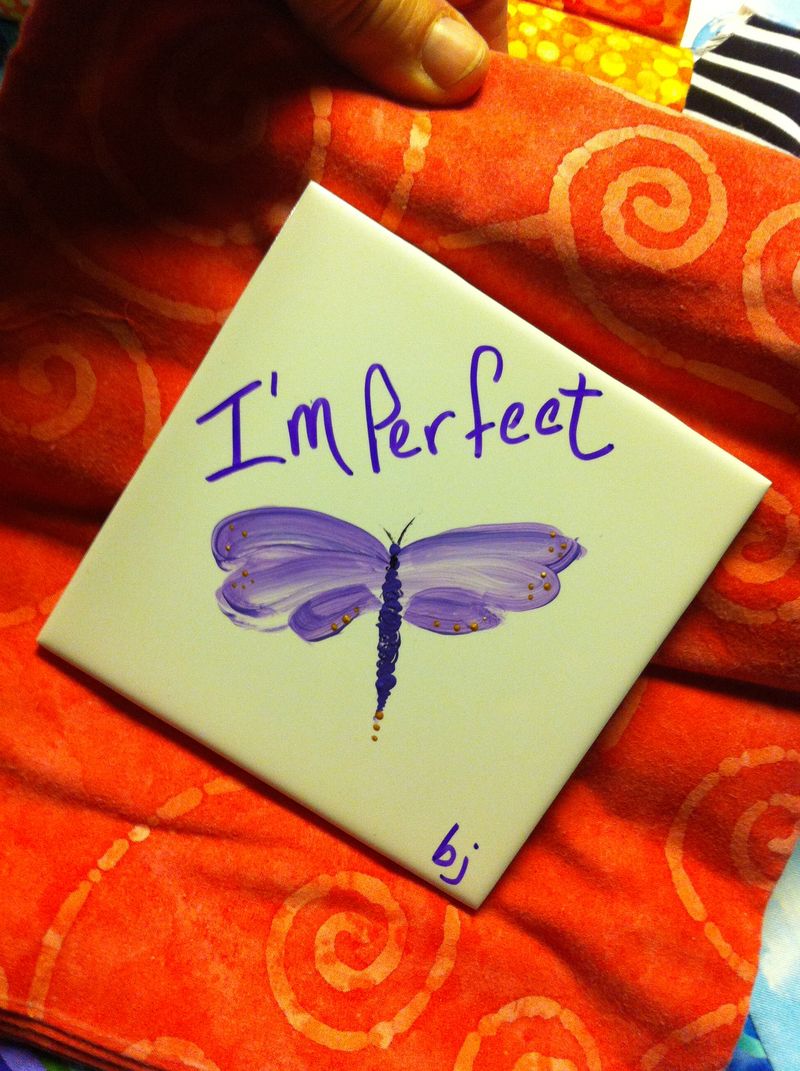
    We become like nature, perfect in our imperfections and willing to be a unique individual.  


  • In Reverence…

    “You can’t know my world until you are there 

    Nisargadatta

    IMG_4861 

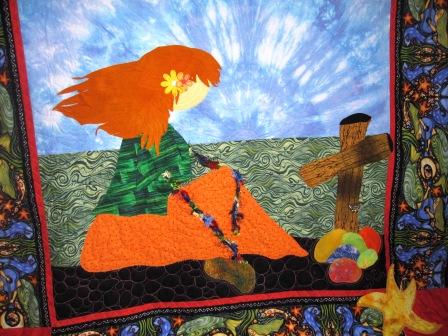
    This is my latest Lady quilt, the final touch I added today, a cross that bears the words,

    "The Old Me" 

    As I look upon this quilt, I am filled with feelings of gratitude and reverence for the life I lived, the shoes I wore; my journey and am also filled with pure potential of what is yet to be.

    I find such peace with this image, honoring my pathway to be who I am today.

    I thought of this post which was first posted in September 2010….as I read Step Six. 


  • Step Six

    Step Six – "Were entirely ready to have God remove all these defects of character."

    "For years, in meetings, I struggled with my survival behavior thinking it was a defect of character.  In reality my survival traits were deeply rooted friends. They are the Laundry List traits. They were no longer useful, but they had protected me. The harder I pushed against them, the harder they seemed to push back. I felt hopeless trying to let some of them go. But then I heard about integration. I heard about exercise in which I could visualize meeting these traits and making friends with them.  I could thank them for their work in protecting me, but I could also ask them to step aside. I got results and remained willing to give up these traits on a daily basis." 

    "By viewing my survival traits as part of me rather than something that was awful or defective, I took a softer approach. I humbly asked God to allow me to lay down these survival behaviors and replace them with trust, forgiveness, and self-love. The results have been awesome. I integrated most of the traits into my life, and I feel the most freedom ever."

    "Step Six Summary"

    "In Step Six we realize that we have defects of character like most of the population in the world.  However, our defects of character tend to be entrenched and trap us in unfulfilling relationships and block us from receiving the love of a Higher Power. Our defects can include procrastination, lust, envy, greed, selfishness, and judmentalness. We also have survival traits or common behaviors. The survival traits are the 14 characteristics of The Laundry List (Problem). These common behaviors represent the effects of growing up in a dysfunctional home. They are in a different category than defects of character."

    "Our survival traits include people-pleasing, addictiveness, hypervigilance, and stuffing our feelings to avoid conflict or arguments. We often confuse love with pity and tend to "love" those we can rescue. Even though we have identified such traits in Step Four, we are still new at this. We need focus to find our best course of action for release. Many adult children take the path of removal for character defects and take the path of integration for the survival traits."

    "There is a key distinction between defects of character and the survival traits of The Laundry List. Adult children readily identify with the survival traits; however, they struggle with claiming defects of character. Most adult children willingly admit to being people-pleasers or fearing authority figures but balk at claims of being judgmental, dishonest, or jealous. Adult children tend to feel relief when reading The Laundry List traits because they realize they are not unique in actions or thought. They often feel shame or dread when hearing the list of defects of character. These are the distinquishing points between defects of character and survival traits developed as children."

    "Admitting defects of character can be terrifying for adult children who have grown up in a pefectionistic home. To admit an error or to appear less than perfect is equated with extreme fear or a feeling of being unduly vulnerable. Some of us experience plummeting feeling in our stomachs when it is suggested that we have defects of character. Admitting defects had no real value in most dysfunctional homes so we see no value to it before coming to ACA. We must remember that we are recovering in ACA. Admitting our defects of character does not make us inferior or inadequate. In fact, it means we are human."

    "The key to becoming free of character defects while making peace with our survival traits involves a three-prong approach with willingness, prayer, and time. In some cases we have seen defects of character removed completely in a short time, but for most of us it takes prayer and patience to mark progress. But progress is possible."

    "We were introduced to willingness in Step Three when we made a decision to turn our will and lives over to the care of God, as we understand God. We also showed willingness in Step Four by inventorying our behavior and thinking."

    "We will be the most willing to have our character defects removed by a Higher Power after we have completed Step Five.  However, we can concentrate on willingness each time we meditate on Step Six or any of the Twelve Steps. As long as we make a sincere effort, we make progress on removing our defects of character with God's help. Willingness is our most powerful ally because it means we are teachable when it comes to addressing our defects of character. By being teachable, we learn how to discern how much effort to put into changing our defects and when to get out of the way and let God handle it."

    "Adult children dread emotional pain because they rarely had anyone to stand with us as we experienced anquish as children. Growing up in a dysfunctional home, we often endured unspeakable suffering in silence. We become hypervigilant to emotional pain and sought addiction, work, sex, or drugs to stay "pain" free. Many of us have writhed on the floor with codependent pain; however, pain is different in ACA. We now have friends and a Higher Power to rely on. We are not alone."

    "Our experience reveals that there is value in emotional pain. With support, and with gentleness, we can find our healthy pain and its healing release, just as we reclaimed our tears. Before we arrived at ACA, our tears seemed unproductive so many of us stopped crying. Through Step work or counseling we reclaim our tears and their value."

    "Emotional pain is a similar gift. Many of us had a preview of this pain in Step One or Step Four as we detailed the abuse of our lives or the abuse we visited upon others. We realized that we were not alone or unique in our pain. We realized that the pain we will feel in ACA is different than the unproductive pain of growing up in a family wrought with abandonment. In our homes, we learned to seek unhealthy pain that served no real solution and which fed our addictiveness. With the support of ACA, we experience healthy pain and find release."

    "We have seen adult children struggle in isolation and sorrow when such a solo struggle is not necessary. The emotional pain will end, but ican be prolonged if we fail to ask for help. During these times, we muster all the humility we can and ask someone we trust to listen to us. We become willing to share our fears and doubts about ourselves with another person. We find that ACA members really will help out. We find out that emotional pain can be the gateway to a closer connection with God as we understand God. We learn that our denouement of pain – the winding down of pain – is often where the integration of survival traits occur. After making it through, we feel changed. We embrace the inner strength we have always had, and we see emotional pain in a new light. We see it as one instrument which can temper our diamond hard survival traits."

    "By facing our pain, we learn that we really are not alone in our suffering. When we find ourselves in this kind of pain in Step Six, we stay close to meetings and keep our faces turned to God as we understand God."

    "Entirely Ready"

    "Upon completing Step Five, we return home and find a quiet place to reflect upon what we are doing with our lives. We are on a path of self-honesty and self-forgiveness that will lead us to a new way of life. We are also moving away from our victim, perpetrator and authority figure roles. We learned in Step Four that our survival traits have an opposite that we have practiced as well. If we feared authority figures, we often became an authority figure who was feared either as a parent, supervisor, or other position in life. If we judged ourselves without mercy, we also judged others just as harshly. We have been victims, but many of us have also been perpetrators. If we have gossiped maliciously, we stop. We become willing to ask our Higher Power to help us forgive ourselves and to change."

    "We are seeking a life in which we can feel our feelings and talk honestly about what is going on in our lives with the support of our ACA friends. Some of us will will reconnect with our family of origin and have the best relationship we can have with them. We will be less judgmental of our family, but we also will know when to disengage if necessary. We are reparenting ourselves as we grieve a lost childhood. We are on a path of the Inner Child or the True Self."

    "Step Six Spiritual Practice:  Willingness"  ACA


  • Step Five

    Step Five…"Admitted to God, to ourselves and to another human being the exact nature of our wrongs."

    "Rule and Found Freedom"

    "The fifth Step was by far my most difficult Step. I remember when I grew up my father would explode emotionally, and we'd walk on eggshells. Afterwards, no one would ever talk about the incident. There was never an apology. My father frequently said to me, "No one wants to hear what you have to say. Nothing you say is valuable. You're not learning anything when you're talking. Shut up."

    "To ask someone I barely knew to listen to me talk about my problems for even a few minutes was difficult. To ask them to listen to my entire Fifth Step was much harder. I overcame my father's admonitions when I worked Step Five. My sponsor and I spent two afternoons, for three hours each time. I told her about my character defects, my life and what I had contributed to my problems. I felt guilty because I made a lot of mistakes, but admitting my mistakes made me feel incredibly free."

    "The Fifth Step process has been very challenging. The reward, however is freedom from the past."

    "Step Five Summary"

    "By working Step Five we are challenging the three main rules entrenched in our soul as a result of growing up in a dysfunctional home. The rules are "Don't Talk, Don't Trust, and Don't Feel." Growing up in a dysfunctional family meant not trusting what you were seeing or what your parents said. Abuse was often minimized or blamed on another cause, which resulted in the child no trusting his or her own perceptions."

    "The don't talk" rule has its origins in home where children were often told to "shut up" or "be quiet" whenever they attempted to speak or express a thought. Others were ignored under the "don't talk" rule and therefore stopped talking. The "Don't Talk" rule also means that family doesn't talk about things that are important such as feelings or spirituality. The rule is also a method of keeping sick family secrets." 

    "The Don't Feel" rule of dysfunctional homes often means that feelings were unimportant or too scary to address. Before recovery, we could be accused of being too sensitive or being immature if we expressed feelings in a dysfunctional home.  To avoid such ridicule, we usually shut down our emotions. The "Don't Feel" rule is a rule that underlies our ability to stuff feelings such as fear. Some of us lived in constant fear of being ridiculed, teased, or battered by an abusive parent. By the time we reach recovery, many of us are numb from living in fear. We cannot call the feelings of fear into focus, but it is there, driving our hypervigilance."

    "In Step Five, we talk about what happened, and we trust another person to hear us without judgement. We feel the feelings that come up with the help of our ACA support group and a sponsor or counselor."

    "In Step Five, we finally get to talk about what matters rather than denying or filtering what happened. This is a critical step for any adult child hoping to face the effects of a dysfunctional upbringing and continue to grow in the ACA program."

    "We know that breaking the dysfunctional family rules does not come easy for adult children. These rules are similar to the survival traits we used to live through our childhoods. We learned to trust these rules and use them in our daily lives; however, the rules have outlived their usefulness. They are strangling our lives and our relationships. We have to find another way to live with feelings, trust and voice." ACA

    Again, I agree wholeheartedly in breaking these rules.  It is to become very vulnerable AND face the wrath of those who had enforced those rules in our childhood.  As well as our siblings who are still adhering to them in their adulthood.

    It literally feels like YOU are doing something bad when you break the rules of dysfunction.  And, you have to be willing to use your feelings and to put your heart and soul once again on the line, in hopes they will hear you.

    Steps four and five are like sling-shots….flinging you backwards into your childhood where you can no longer hide behind the rules, BUT this time put them down and do the opposite.

    TALK

    FEEL

    and TRUST.

    Doing this will break the cloak…the burden of carrying the responsiblity for another's poor behavior and owning your own. To be transparent in your story…and show all in the characters they are.

    Not hiding them behind the rules.


  • Fearless Acceptance!

    I love how David Cowardin has let each of my quilts get their day in the Sun.  Today, it is "Fearless Acceptance".  Thanks Lola Visuals…you make us look good!


    It is interesting that the Fearless Accepting…would appear to be to be without fear.  Instead you have to face that which you fear facing.  And, not only face, but accept. It is one thing to see something and turn away in disbelief, and quite another to see it and fully bring it in.

    To own it.

    To own the part of your legacy or heritage that is of the darkest part.  Easy to own the little family traits…like noses and feet with the family stamp. But to own the dysfunctional part…is to be drawn into a vortex of pain…the sea of a million tears.  One of which you don't believe you will ever see love, peace or joy again.  

    I love that this quilt was a vision ahead of me.  Like spot on the map to arrive at one day.  And, I love that I was fearless in believing it was there…while submerged in grief.


  • Handed off to my children.

    More from Step Four….Adult Children of Alcoholics/Dysfunctional Families.

    "We avoid blame because we are aware of the generational nature of family dysfunction. Our parents passed on the seeds of shame and fear given to them. They were once children without a choice. They survived as we survived.  While some parents are obviously sadistic or unrepentant, others did the best they could.  These parents made a conscious decision to raise their children differently than they were raised. Many of these parents abstained from alcohol, yet passed on problematic fear and shame just the same. Some of these well-meaning parents learned to say affirming statements of love and encouragement.  Yet, they still transferred their own lack of self-doubt and lack of self-love in large measures.  Many of us are the adult children of these parents. We have acted out with addiction or another self-harming behavior, continuing the disease of family dysfunction."

    "Nondrinking parents raised in an alcoholic home are essentially unrecovered adult children who unintentionally pass on family dysfunction. These parents are typically a dependent personality driven by the inside drugs of fear, excitement, or anxiety. This is para-alcoholism. It affects the children in the same manner that the alcoholic drinking does if it is present.  This means that our nondrinking parents were dependent people driven by a hundred forms of fear and self-doubt. they projected their fear and anxiety onto us with the same damaging effect that alcoholic drinking can have on a child. They passed on addiction or unhealthy dependence without taking a drink."

    "We avoid blaming the drinking parent as well. The alcoholic suffers from an incurable disease that progressively worsens. The alcoholic is very sick in body and mind. We cannot reach the level of spiritual growth that we are seeking by blaming sick people."

    "Avoiding blame does not mean that we avoid being angry or disgusted.  Many of us feel rage when we talk about the abuse and neglect in our homes. These are normal feelings for the abuse and unhealthy parenting we lived through."

    "We also avoid sinking into victim mindset. This mindset can disqualify us from the emotional and spiritual gifts of ACA. If we learn to accurately name what happened to us rather than blaming others for what happened, we find the truer path to healing and self-forgiveness. There is power in naming the exact nature of our abandonment and shame. We move out of the victim role and claim our personal power by taking this path. Step Four gives us a chance to identify what happened and transform our painful childhoods into our most valued asset. When we know what happened to us, we can help other adult children as no one else can, including some of the most dedicated professionals and clergy. We can finally say with humility: "This is what happened to me. This is my story. There is another way to live."

    "We sress fairness with our parents whild holding them accountable for another reason as well. Many of us working Step Four realize we have harmed our own children. We have passed on what was done to us.  Many of us have changed our behavior and made amends. However, some of us could one day be the focus of an inventory of our own children arriving at the doors of ACA. This is another reason to take a blameless, yet fair, inventory of the family and parents. If we give fairness, we can hope for fairness."

    "While we look at the generational nature of our family dysfunction  in Step Four, we must remember that the Forth Step is our inventory. In ACA we learn to face our denial and focus on ourselves. That means we will look at our parent's behavior in conjuction with our own behavior. We keep our focus on ourselves and on efforts to find clarity and be free of family dysfunction. We want to stop trying to heal our family-of origin through our current relationships. We want to stop isolating and repeating the same patterns that bring about our worst fears of abandonment and self-hate. We want to reclaim our wholeness."

    "While working Step Four and all of the ACA Steps, we encourage you to nurture yourself. We must balance this probing look at our behavior with gentleness. We must protect our Inner Child or True Self vigorously. At the same time, we cannot let discomfort or fear stop us from getting honest about our own behavior." ACA

    What I love about this is that they are looking to see where the dysfunction came from and then how we own it and then how we will eradicate it from our own lives; but not in the lives of our family of origin.  

    This is something each child within the family will have to do.  It can't be done for another.  

    What is the phrase…"We are as sick as our secrets…" Mostly, I am finding is the secrets we keep from ourselves.  What accurately happened to us as children…"Naming the exact nature of our abandonment and shame."

    We somehow believe that if we name it, WE are the ones bringing in the shame.

    Instead, this naming is the power we need for self-forgiveness and true path to healing.

    Most adult children will avoid this step so they don't have to point fingers to their parents as the cause of their suffering.  And, this avoidance will stop them from getting their power back.

    I totally get how it would be possible for my children to blame me if they were to do this book and I would agree.  There is no part of me that would fight them on the dysfunction I brought into their lives.  I get it.  I own how I could only mother at the level of my own self love.

    The more healthy I became, the less I hurt them. 

    My encounter with my mother, wasn't one of understanding of the generational legacy of abuse.  She would not own her dysfunction…or where it came from OR the cost of its nature.

    This climate of her not owning the legacy IS the vast crevice our relationship fell into.

    There is nothing there for me to work with.

    It will take the complete owning of how dysfunctional we are in order to work on changing it.

    Without acknowledging how messed up things were and are, especially with our own lives and self, there is nothing to work with.

    If you don't see the effects…of dysfunctional parenting….let alone the dysfunctional parents, there simply isn't a problem to work out.

    No problem.

    No need to fix.

    All is well…

    I guess the biggest troubles dysfunctional families face is facing there are problems…owning it.

    Claiming we are dysfunctional.

    And how this dysfunction has wrecked lives…and how it lives within us. 

    It isn't something you can toss out and avoid…for where you go IT goes!

    There was no part of my life that dysfunction didn't touch.

    I was steeped in it…saturated in fear, anxiety, self-doubt and self-hate.

    Dysfuction lived in me…and I passed it on to my children.  

    I also know, the more functional and self-loving and fearless I become…this too is handed off to my children.

    IMG_1565


  • Let Him In

    "Step Three – Made a decision to turn our will and our lives over to the care of God, as we understand God."

    Let Go. Let God.

     "We do not believe our brains are missing any elements. We start with the premise that we are whole and that we had a normal reaction to an abnormal situation of being raised in a dysfunctional home.  Our normal reaction to protect ourselves has created survival traits, compulsions, and self-harming behaviors, which respond to the ACA Steps and spiritual remedies.  We are not minimizing the severity of our situation as adult children. The disease of family dysfunction manifests itself in dependency, addiction, and dissociative personalities. The disease can kill.  Every day, adult children commit suicide, die in addiction, or die one day at a time in silent isolation, thinking they are hopeless.  In ACA, we believe we were born whole and became fragmented in body, mind, and spirit through abandonment and shame. We need help finding a way to return to our miracle state."

     "In addition to a deep sense of shame and abandonment, we believe that most of our emotional and mental distress can be traced to our steadfast nature to control.  In ACA, we realize that control was the survival trait that kept us safe or alive in our dysfunctional homes.  We controlled our thoughts, our voices, and many times our posture to escape detection from an abusive parent or care giver. We knew our parents were looking for imaginary clues to criticize us or verbally attack us. As adults we continue to control ourselves and our relationships in an unhealthy manner.  This brings abandonment or predictable turmoil. We make promises to do better but eventually return to our obsessive need to compulsively arrange, question, worry, dust, wash, lock, unlock, read, or hyper vigilantly survey our thoughts and actions to feel safe. But it is never enough. Experience shows there is little hope and spirituality in homes governed by smothering control."

     "By making a decision to turn our will and lives over to the care of God as we understand God, we are actually making two decisions. By deciding to ask a Higher Power for guidance in Step Three, we are also deciding to back away from control.  We are surrendering our plans to run our own lives on self-will.  We are asking God for help, which strikes at the heart of our instinctual reaction to solve problems on our own."

     "The decision we make in Step Three represents on of our first true choices."

     Further on it is written….

     "While we realize God's love in Step Three, we acknowledge that many adult children have been spiritually abused and struggle with the concept of God in addition to the struggle with control.  The emotional and spiritual damage created by such acts of betrayal are staggering for some.  We urge these ACA members to keep an open mind and to be gentle with themselves as they work the ACA steps to find a God of their understanding. We believe our best hope is seeking a spiritual solution in concert with other recovering adult children."

     "Other forms of spiritual abuse include the adults in our lives appearing righteous in public while hateful and abusive behind closed doors. This is yet another conflicting view of God in which the child is confused and believes this to be the face of God…" ACA

     Third Step Prayer

     God.  I am willing to surrender my fears and to place my will and my life in your care one day at a time. Grant me the wisdom to know the difference between the things I can and cannot change. Help me to remember that I can ask for help.  I am not alone. Amen.

     Step Three Spiritual Principles:  Willingness and Accepting Help

    I could quote the whole section…for I understand and agree with what is written, in not only what happened, but how we responded and then how we now have unlearn and let go.

     What strikes at my core is the process of learning to trust a higher power that is over you. When our elders failed us so miserably and how we learned self care and protection in order to survive.  

     To learn or dare to lay down our survival skills and open ourselves up to being hurt AND in handing over our lives once again to someone to control.

     It matters not if it is God or the Universe….it is the act of being vulnerable and trusting once again….our willingness to be hurt.

    To break open our heart and let Him in.


  • Change the Pattern


    Step Two - Came to believe that a Power greater than ourselves could restore us to sanity…from the book, "Adult Children of Alcoholics/Dysfunctional Families".

    "In one respect, Step Two implies that we had sanity and lost it when in reality we may be learning about sanity for the first time in ACA. A helpful tip in working Step Two involves replacing the word "sanity" with "clarity".  By working Step Two, we gain clarity about how our family dysfunction affects us in our lives as adults.  We gain clarity about our abandonment and internal shame. Many of us find Step Two sanity through clarity."

    "Step One Spiritual Principles: Powerlessness and Surrender"

    "Step Two Spiritual Principles: Openmindedness and Clarity"

    In step two they are asking for an open mind.  But, can you open your mind with a closed mind?  

    In my experience, the programmed or denial mind crashed. Its usefulness was null and void against the reality that exposed itself.

    There was a moment in time where what I thought I knew was so incredibly off, to ever trust it again.  It was then I realized the mind could make stuff up.  It literally was insane and I had built a life upon it.

    The difference between living life through your mind, compared to walking with reality is so large I can't begin to begin to explain it.  It has to be experienced. 

    But as Neale Donald Walsh wrote "In order to experience the Ultimate Reality you have to be out of your mind."

    It is very scary to be in reality…especially when your reality isn't to find a loving and kind family; but one who is insane. I know that my family doesn't want to hear this, but who but the insane would not respond to abuse?

    The greatest example of this insanity is how "kindness" becomes the last shield many will hide behind…so as to NOT see reality clearly and certainly NOT act upon it.

    They don't want to be 'unkind' like me….and put up boundaries.

    They will not disown or walk away from family… no matter what they are staying.

    It doesn't matter how someone treats you, doesn't see you, or if they abuse your children; you ain't leaving.  You are that tough.

    All I can share is the difference between my mother and I. She was always kind to my father.  How did that work out for her?  How did kindness protect the children or give my mother love?

    If her kindness failed, then why will yours work?

    Insanity is doing the same thing over and over expecting a different result.

    Here is what we can know.  The reason abuse and dysfunction flows IS due to the kindness of others.  

    I looked up the word "Kind" 

    "a group of people or things having similar characteristics." 

    "a group of people or things that belong together or have some shared quality."

    "of a good or benevolent nature or disposition, as a person: a kind and loving person."

    I LoVe this. 

    We immediately will discount the 'kind' as being similar, especially IF we are talking about dysfunction and instead will proclaim the third definition.

    If we can just sit with the two definitions of kind...we will be able to discern IF our actions are replicating our ancestors or are they different.

    And, is it kinder to repeat the dysfunction or to change the pattern.