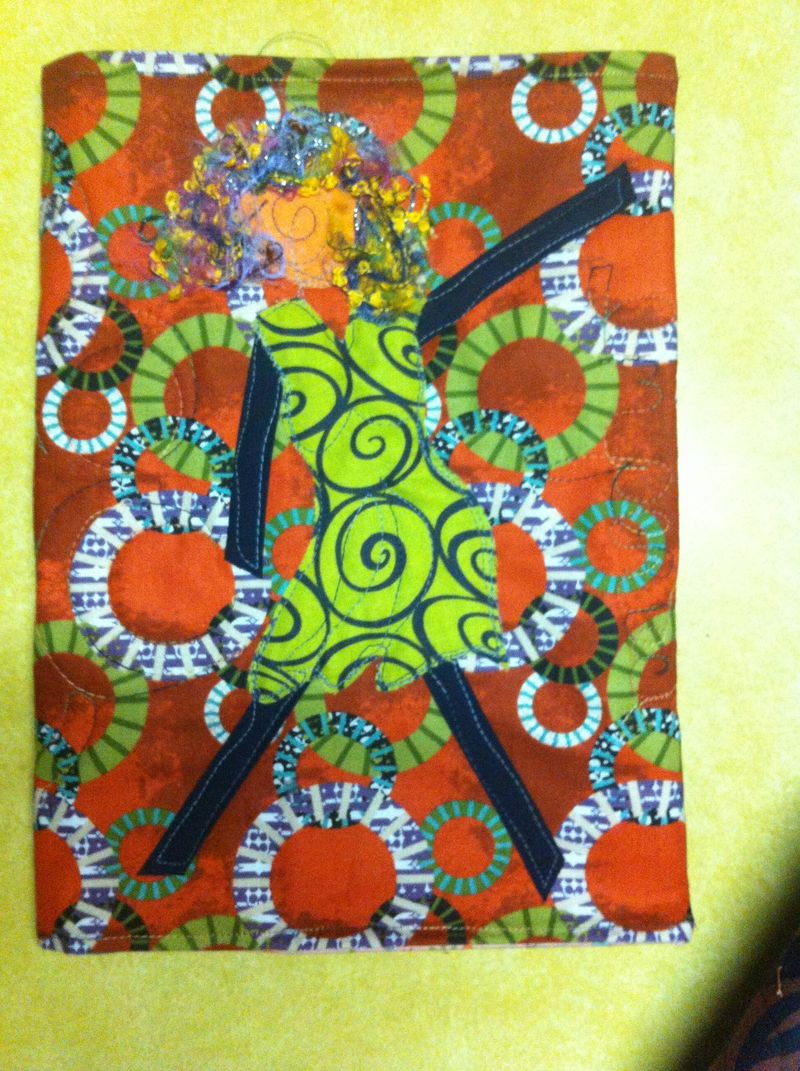
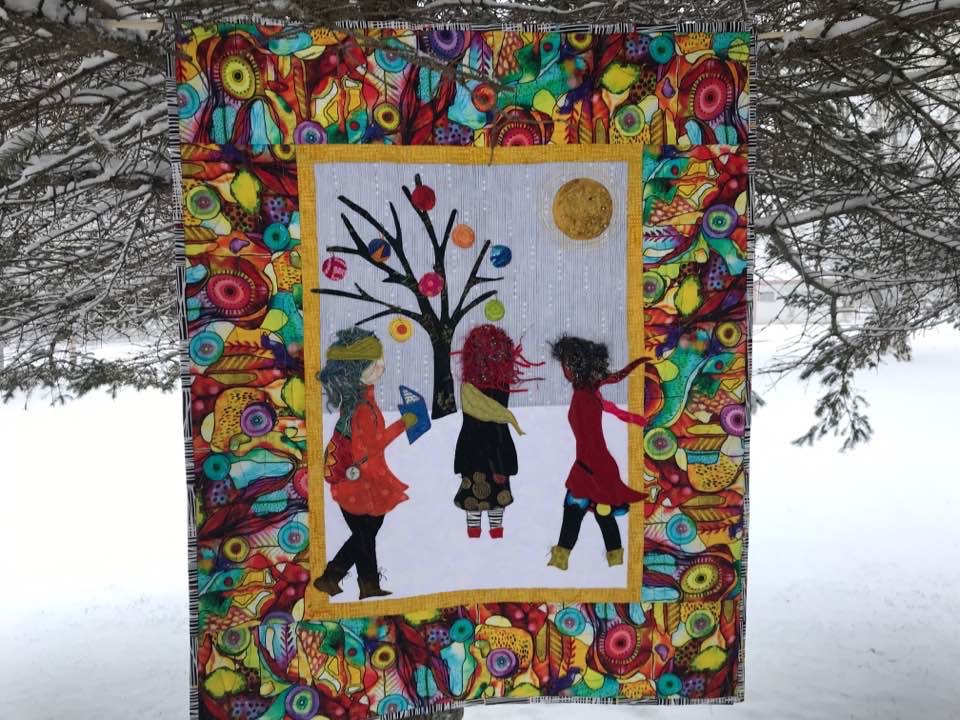
I M Perfect lady

I'm perfect – it's impossible not to be.

  • My Lady and I had a wonderful day yesterday…beginning with exchanging some of my quilts at Copper Country Mental Health. Yes, my quilts are still there…My Story Line and others, that are just for fun!

    Each time I enter Copper Country Mental Health, I feel the kindness from those who work there…and their appreciation for my lady and I.  How my whole self is accepted there, not just my lighter parts, but the darkness as well. 

    IMG_0464

    It is nice for my Art to be out and about and not rolled up in the basement!

    I then went to deliver some of my calendars and met with a woman who wants us to work on getting the word out about domestic violence and in exposing where help is.  I know that most are not aware of the helping resources and often we want to hide these place due to the confidentiality of their clients, and in doing so, we often hide the very places for those in need, who don't know they are there.  Our goal is to open up this healing avenue and lessen the stigma of seeking help. I will glady use My Lady as Art for this project, to have her be the signpost for being courageous and getting help…getting out and restoring your sense of self.

    I was invited to the Women's Group at the Clubhouse. Another well kept secret…at least for me.  They have been operating in plain view for nearly 20 years in Hancock.  A truly wonderful concept.  

    Their flyer states…

    A right place to come.

    A right to meaningful relationships.

    A right to meaningful work.

    A right place to return to.

    "A Clubhouse is first and foremost a community of people. Much more than simply a program, or a social service, a Clubhouse is a community of people who are working together toward a common goal, recovery from mental illness."

    "A Clubhouse is a community intentionally organized to support individuals living with the effects of mental illness. Through participation in a Clubhouse people are given the opportunities to rejoin the worlds of friendships, family, meaningful work, employment, education, and to access the service and supports they may individually need. A Clubhouse is a restorative environment for people who have had their lives drastically disrupted, and need the support of others who believe that recovery from mental illness is possible for all."

    In spending only one afternoon there, I was amazed to feel the efforts or presence and value of each person there.  Where you don't right away know who is overseeing the place and who is working towards their goal of recovery. I felt the equality of worthiness and helpfulness in each, and how a task was accomplish that day…that hour etc…a reason to be there.  Driven by choices and the desire to be there and by how much your services are needed.  I could felt its community and whole.


    IMG_4906

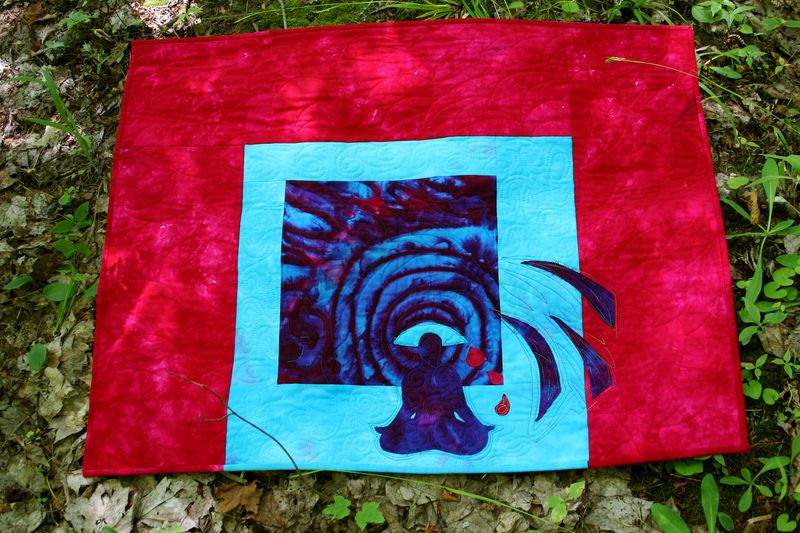
    I donated this Meditation quilt… They have a meditation practice which I feel is so helpful.  

    I was sincerely impressed by the application of Clubhouse and its members!  What an awe inspiring program.

    At the end of the day, I was left with the feelings and the juxtaposition in how we can be more open and transparent of each of the services and yet confidential or attentive to the rights of the individuals.  

    I understand the need for confidentiality, but if it comes at the cost of being so secretive it is shameful in its tone, I am not sure it is helpful. We all seek help for our physical bodies and seeking help for our mental wellness has such a negative stigma.  When it is the strongest among us who recognize their weakness….how can we showcase these individuals and stories as the heros they are…without breaking the confidentiality?

    I know, that I am proud of my recovery…and have no shame about my abuse…it would be my desire to make this possible for all.

    (Thanks to the staff and members of The Clubhouse and Copper Country Mental Health for your dedication for recovery and assistance in our mental health needs!)

  • Another section of "Thou Shalt Not Be Aware" by Alice Miller.

    "This is why I keep trying to explain my position with the aid of various images and concepts. I always regard myself as the advocate for the child in my patients; whatever they tell me, I take their side completely and identify fully with the child in them, who usually is not yet available to experience his feelings and delegates them to me. It is rare for patients to reproach their parents, since their illness is a result of not being allowed to do this as a child."

    If we could just understand this one sentence that our illness or confused minds ARE the result of the treatment in childhood, we would all begin to appreciate what happened and by whom, and then work to right our worlds; by placing the responsibility where it lies.

    She goes on…

    "If they do reproach them in the early stages on analysis, they soon give this up, torment themselves with guilt feelings, and attempt to defend their parents.  If aggression can be experienced at all, it takes adult forms  (scorn, irony, intellectual criticism), which originate at a much later date, for the rage felt by a very young child (an ambivalent, impotent rage) can never be experienced initially.  It is no different for adolescents who display defiant or even destructive behavior. In the beginning stages of analysis, the feelings stemming from early childhood are always unconscious."

    "If we keep this in mind we will understand how crucial it is for the analyst not to be judgemental, not to appeal to the patient's reason, not to strive for objectivity, but simply to let himself be guided by the child, who is not yet able to speak.  Neither should it be the analyst's goal to bring about the patients reconciliation with his parents. If the analyst has seen for himself that his rage did not kill his parents, he will no longer feel compelled to protect the patient's parent from rage by working toward reconciliation. In most cases the analyst is the first person in the patient's life whom the latter can confide in, and it is important that this person not abuse the trust placed in him, not admonish or blame, not be shocked, but be willing to explore unfamiliar territory of the patient's life along with him. For the patient, too, will become acquainted with his own life for the first time."  Alice Miller

    What we all fail to appreciate, and take and hold, is the role of therapist in the lives of the abuse and how critical it is that they NOT defend the parent in anyway.  And, how their own lives will be crucial in how the therapy session goes.  And, like Alice, always be an advocate for the child.

    If anyone breathed a word of defense I knew they were standing away from the child within.

    Also, I intuitively knew, that any word of reconciliation was about protecting the parents feelings and not mine. 

    This simple and yet profound distinction has the gravity of how the 'treatement' will go.  

    We look towards therapists to sort out our confusion; our childhood wounds.  And, if they are not the advocate to the frightened child within, they push him further back instead of letting him come forth.

    My greatest challenge has been to remain on the side of the child, for most instinctively or out of fear…stand resolutely by the parent.  It is a societal phenomena to "Honor thy mother and thy father…"

    The child that remains unseen and unheard is the one who goes out and inflicts his unexpressed pain on the world.  Hurt people, hurt people.

    A child that is allowed to come forth and be heard and seen…is free from the silent dark hell that is the life of a child whose childhood is wrought with abuse.


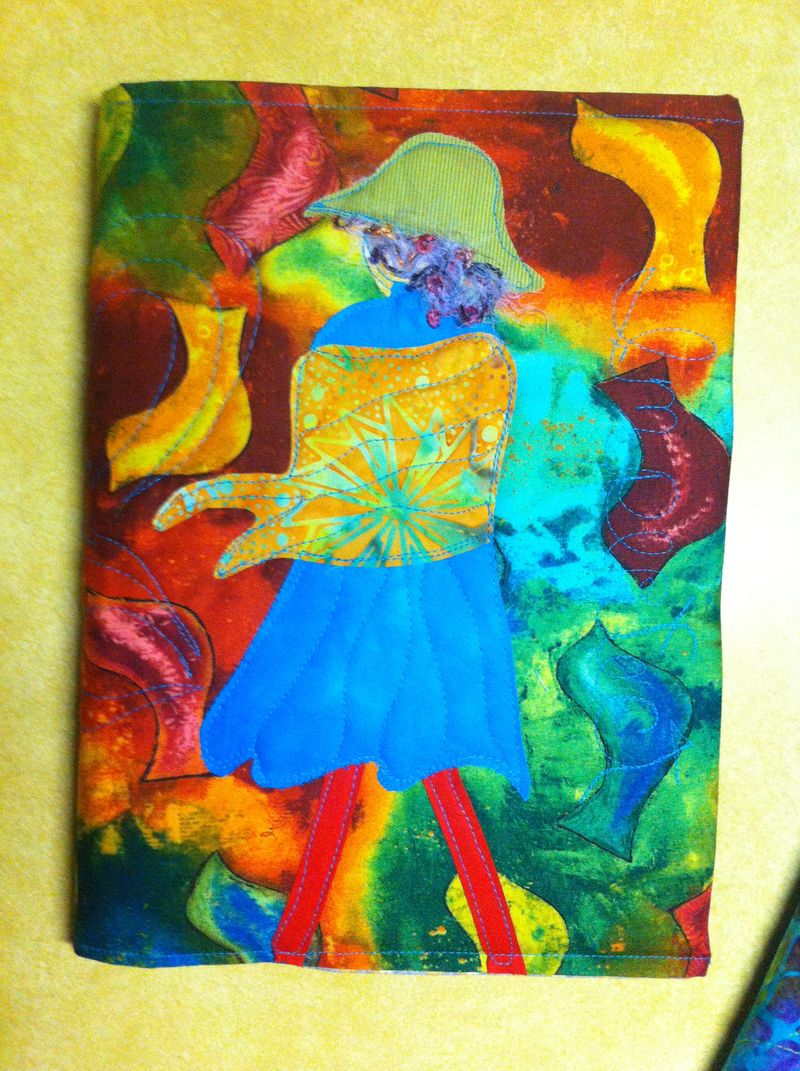
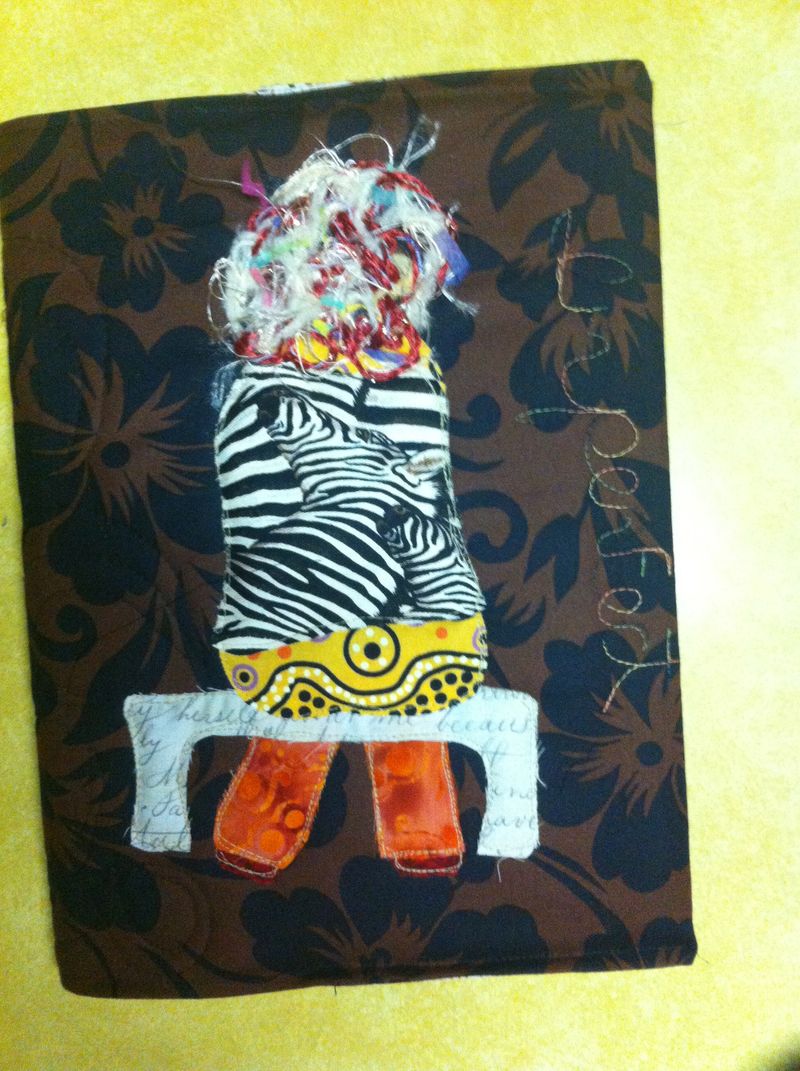
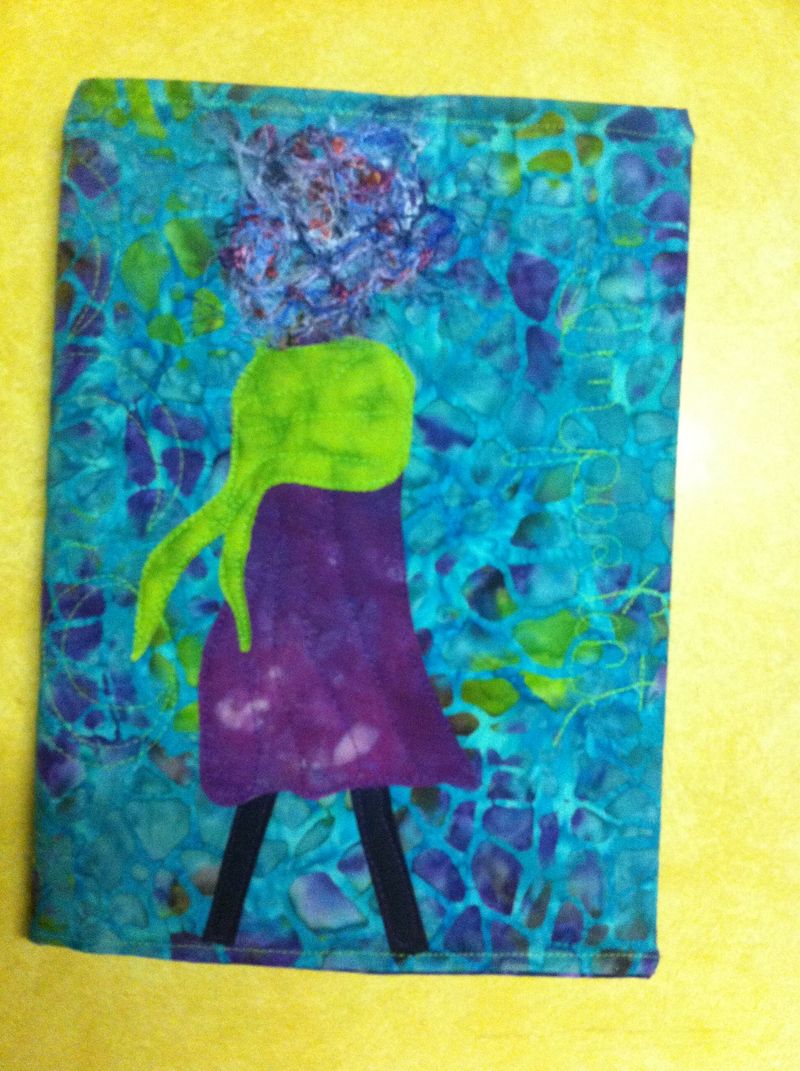
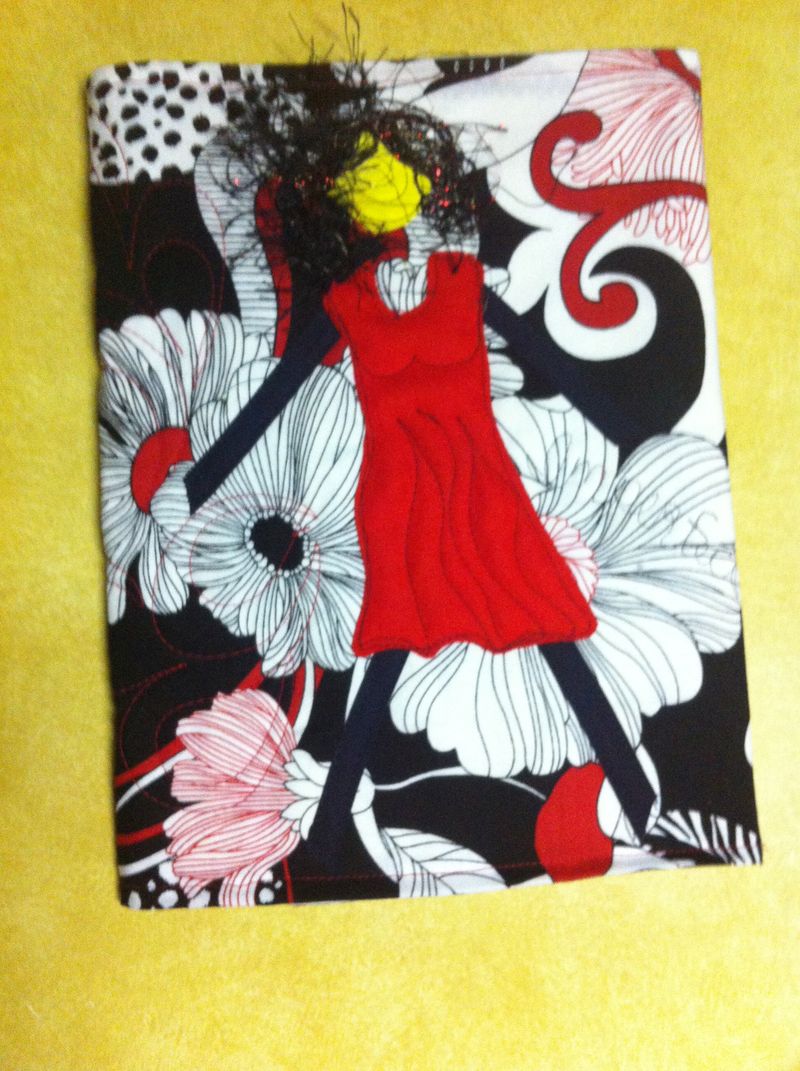
  • Today I worked on making journals…to give away.  These are fun for me to do, like making mini quilts. I like that these journals have pretty covers, for inside the raw truth is often painful…to express.

    IMG_0981

    Words written seem less scary once they reach the light of paper…

    I was invited to join the Women's group at the Clubhouse tomorrow.  I will bring a few of these along, if there are women interested in journaling.   IMG_0984

    While making these journals I wondered what the ladies tomorrow will teach me…

    My mother wrote truths and then burnt them saying they were nothing but filth.  Interesting to know she tried to get rid of her past…instead of accepting the darkest parts.

    Is it possible to burn up what you don't like and it will disappear in smoke?

    Somehow to me, the truths are like these journal beautiful in their raw expressions.

    IMG_0983

    Some of us have very dark spots in our past, and when we come to understand who we were at the time and our choices…we can find compassion for our darkness.

    My Lady Journals are quite complex…on the outside they have beauty and depth and yet the inside is where the real life stories are found and reflected…Art of being you.

    I am honored to make the covers for so many words…

    IMG_0987

    It is brave to face your thoughts and beliefs, to sort them out and lay them bare…

    May these journals be the sacred ground for holding the truth…

    IMG_0985

  •  

    We all need to be more aware of not only ourselves, but with those around us. And, I like what he says, about when you doubt whether you should get involved, think on the side of the victim.  Will it matter to them if you turn away and do nothing.

    And, will it matter to you?  Each time we fail to do what we know is right, we lower our sense of self.  Inside of us is a hero for someone…


  •  Another section of Alice Miller's book, "Thou Shalt Not Be Aware: Society's Betrayal of the Child."  

    I know it is long…but it shows how the child is missed and why in most therapy sessions…while the parents get their full support.  It isn't that we don't know the parents, but we fail to know the child…and its truths.

    "I owe to Freud's methods insights into the human psyche far surpassing anything my study of philosophy ever had to offer me. but it was my application of these very methods that brought me face to face with certain truths that refuted some of his theories.  I cannot abandon my truths I have discovered without abandoning myself, and am therefore compelled to remain true to them, even to those aspects of them that lead me in a different direction from my teachers.  I  what follows it will become clear that I still share common ground and psychoanalytic theory insofar as I subscribe to these tenets:

    1. Everyone is shaped (this does not mean determined) by his or her childhood.

    2. Neuroses are rooted in childhood.

    3. The methods of free association and the analytic setting (couch, rule of abstinence) make it possible for the drama of childhood to be renenacted in the transference and for a maturation process that has been blocked by neurosis to begin.

    4. Changes in personality occurring during analysis do not stem form "corrective emotional experiences" but from insights the patient arrives at by repetition, remembering, and working through relevant material.

    These four points may explain in large part why I do not accept C.G. Jung, Alfred Adler, or representatives of countless other schools as my teachers.  The analytic psychology of Jung and his followers does not seem to me to give due weight to what I consider the decisive significance of early childhood. Even Adler, who certainly recognizes the problem of power vs powerlessness, did not pay sufficient heed to the many critical factors of a child's early life, considering that Adler's followers are content with the schematic theories (such as organic inferiority) and overemphasize the teleological point of view. In Frankel's logotherapy, for example, which is oriented toward "the search of meaning", a person's primary concern is to find the meaning awaiting him and live accordingly.  It is no doubt true that a person will be subject to depression if he feels his life is meaningless, but the question of why he finds his life meaningless will not be answered by logotherapy if it does not take the dimension of childhood into account."

    "In spite of the common ground I share with Freudian psychoanalysis, I see decisive differences between it and my position:

    1. I do not believe that a neurosis originates because a drive conflict has been repressed, as Freud thought, but rather because early traumatic experiences could not be articulated and therefore had to be repressed.

    2. I do not regard the parents of a patient only as objects of his or her agressive and libidinous desires but also as real persons, who – often without knowing or intending it – have caused the patient real, not only imagined, suffering.

    3. The fact that a patient finally faces his or her parent's personalities and actions and is at last permitted to formulate an emotional response to them leads to an increased capacity for integration on the patient's part.

    4. This formulation, emerging in the transference and counter-transference and with the aid of fantasies, feelings and reenactments, is possible only if the analyst listens to the patient without setting up an pedagogical goals, i.e., if he (a) does not defend the parents against the patient's reproaches because he no longer has to spare his own parents and suppress his own pain; (b) has integrated his awareness of the child's lack of rights in our cultural traditions; (c) does not hide the reactive nature of destructive impulses behind inappropriate theories about the death instinct; (d) retains his role as advocate and does not let himself be turned into a judge, either by the patient or as a result of the criteria acquired in his own training.

    5. I cannot consider the problem of "infantile sexuality" in isolation but see it in connection with my knowledge of all the ways children can be used by their parents.  I have difficulty separating what Freud interprets as libidinous desires from the child's narcissistic needs for echoing respect, attention, mirroring, acceptance, and understanding.

    6. The child's position between father and mother undoubtedly leads to various feelings, strong emotions, anxieties, conflicts and problems that can be designated as Oedipal but that I interpret differently from Freud (see chapter 12). By no means do I consider the "Oedipal Conflict" and the need to work it through as a source of neurotic development.

    7. The healing process begins when the once absent, repressed reactions to traumatization (such as anxiety, rage, anger, despair, dismay, pain, grief) can be articulated in analysis; then the symptoms whose function it had been to express the unconscious trauma in a disguised, alienated language incomprehensible both to the patient and to those around him, disappear. This statement goes against the practice of many psychoanalysts who attempt to help their patients gain insight, often of a merely intellectual nature, into their drive conflicts, but it does not go against Freud's methods during the period prior to his discovery of the supposed omnipresence of Oepidus complex. Therefore, when I distance myself from Freud in these pages I am thinking of his writings after 1896, on the other hand, I see a confirmation of my own experience.  Alice Miller

    What Alice is showing me is how the therapists own education as well as their own viewpoint of their childhood, WILL greatly impact the kind of healing they can orchestrate.  

    It almost feels like we are surrounded by folks who do not see the child or maybe more importantly; don't see their parents in their true colors.

    How can it be that you will have a clear picture of who you are, unless you can clearly see where you came from; the nature of your upbringing.

    Even though, I know the intentions of the parents and or therapists are not to hurt or damage the child, they do so due to the fact that they have covered up their own wounds.

    I believe we don't set out to ruin another or to impede his healing…but do so by the very nature of our own unhealed childhoods.

    We can only refrain from hurting others when we have taken care of our own hurts…

    Until then, we will be reenacting our childhood wounds…waiting for someone to notice. And yet who is going to notice? 

    No one sees the wounded child…for then they would have to see the person who did the wounding in a way they can't bear to see.  A father turns into a pedophile.

    But, if you choose to disregard that, the child's wounds go unseen.

    Many will say they have seen the wounds my father inflicted, but they still call him dad.  I feel and see their allegiance to him and their betrayal of me.  Just as she speaks of the different therapist…about whether they will defend the actions of the parent or focus on the feelings of the child/adult child.

    In order for us to begin slowing down the numbers of people abused by family and friends, we will need to begin seeing the child.

    Believing the child.


  • I began another Alice Miller book, "Thou Shalt Not Be Aware"…and I could highlight the whole thing so far!

    She writes, "Our will for survival will never push us to invent painful stories, rather the contrary: to make up nice memories in order to obscure the painful reality of our childhood. This is something we must never lose sight of. The commandment that says "Thou shalt not be aware of what was done to thee, nor of what thou doest to others" ensures that cruelty suffered in childhood is played down or modified by memory until it becomes unrecognizable."

    And, I believe that the sentiment shared by the population as a whole, is that you can't trust the words of a child.  When they are brave enough to tell, we then are not brave enough to hear.

    For we are more accustomed to the child who makes their childhood abuse appear kind…by the very memories they use to obscure it.  However, she goes on to say…

    "Unfortunately, the truth that comes out not only in art, in dreams, and in fairy tales, but also in political action, in crime, and – increasingly in the activities of sects exploiting the ingenuousness and gullibility of maltreated and misguided children for their own financial ends. But this can only happen as long as we let the old traditional programs run on undisturbed. There is nothing inevitable about this. Today we have access to all the information we need in order to put an end to manipulation from outside and to stop denying our own truths at the dictates of our wishful thinking. There is no need to think that we will lose the love of our parents if we assert our allegiance to our own personal truth. The love of a child for its parents is all but indestructible. As children we cannot reconcile this love with the truth, and so we deny this truth exists. But as adults we can learn to preserve both. In fact we have very little choice, if we want to uphold our verbal tributes to love. It is only in alliance with the truth and the refusal of hypocrisy that authentic love can survive and grow."  Alice Miller

    And, that is just from chapter one.

    What I love about Alice is that she is she sees abuse from all sides and she also understands how abuse is passed on.  In that IF you don't see the cruelty of your parents, you don't see you being cruel.

    And that is the key to it all.

    A child cannot stop a cruel parent.

    But a cruel parent, who knows they are cruel now has the choice to change.

    You have to totally give up the fantasy of the 'kind' childhood and nice parent in order for you to catch a glimpse of you being them in some regard.

    I was not only horrified to see the lack of support my mother had towards me to only realize MY own lack of seeing my children.

    But it starts in seeing your childhood without the rose colored glasses…like a domino affect each of us has to look upwards towards those who raised us or who had us modifying our childhood in order to survive…to stop US from passing on the same cruelty.

    And, here is where the therapist or healers of our minds come into play.

    "If I as an analyst direct my interest and attention to finding out what drive desires a person who enters my office for the first time is suppressing at the moment, and if I see it as my task to make this clear to him in the course of his analysis, I will listen sympathetically when he tells me about his parents and childhood, but I will be able to absorb only that portion of his early experiences which is made manifest in his drive conflicts. The reality of the patient's childhood, which has been inaccessible to him all these years, will be inaccessible to me as well. It remains part of the patient's "fantasy world," in which I can participate with my concepts and constructs without the trauma that really took place ever being revealed."

    "If from the beginning however, I confront the person who enters my office with questions having to do with what befell him in childhood and if I consciously identify with the child within him, then from the very first hour events of early childhood will open up before us that would never have been able to surface had I based my approach on an unconscious identification with the parents and their devious methods of upbringing instead of consciously identifying with the former child. In order to enable these events to come to light, it is not enough to ask questions about the past; besides, some questions tend to conceal more than they reveal. But if the analyst directs his attention to early childhood trauma and is no longer compelled to defend the position of the parents (his own and those of his patient), he will have no trouble discovering the repetition of an earlier situation in the patient's present predicament. If, for instance, the patient should describe with complete apathy a current partner relationship that strikes the analyst as extremely painful, the analyst will ask himself and the patient what painful experiences the latter must have had to undergo in early childhood, without being permitted to recognize them as such, in order to be able to speak now so impressively about his powerlessness, hopelessness, loneliness, and constant humiliation in the present day relationship. It may also be, however, that the patient displays uncomfortable feelings directed toward other, neutral people and speaks about his parents without any show of feeling or in an idealizing manner. If the analyst focuses upon the early trauma, he will soon ascertain, by observing how the patient mistreats himself, how the parent once behaved toward the child.  In addition, the manner in which the patient treats the analyst offers clues to the way his parents treated him as a child – contemptuously, derisively, disapprovingly, seductively, or by making him feel guilty, ashamed or frightened. All features of a patients early training can be detecte in the very first session if the analyst is free to listen for them.  If he is a prisoner of his own upbringing, however, then he will tell his supervisor or colleagues how "Impossible" his patients behavior is, how much repressed agreesion is latently present, and which desires it emanates from; he will seek advice from his more experienced colleagues on how to interpet or "get at" this aggression. But should he be able to sense the suffering that the patient himself is not yet able to sense, then he will adhere strictly to his assumption that his patient's overt attitudes are a form of communication, a code language describing events that for the time can be and must be reported in exactly this way and no other. He will also be aware that the repressed or manifest aggression is a response and reaction to trauma that at the present remain obscure but will have to be confronted at the right moment."

    "I have outlined here two differing, indeed diametrically opposed analytical approaches. Let us assume that a patient or training analyst in search of psychotherapy speaks with a representative of each of these approaches. Let us further assume that on the basis of the initial session a report has to be submitted, either for the clinic or for the supervisory committee. In itself this is of little importance, for such reports usually remain hidden away in a drawer. What is important is whether the people seen in these sessions are led to regard themselves as a subject or as an object. In the former case, they glimpse sometimes for the very first time, an opportunity to encounter themselves and their life and thereby come closer to their unconscious traumas, a prospect that can fill them with fear as well as hope. In the latter case, their customary intellectual self-alienation prepares them to see themselves as the object of further pedagogical efforts in the course of which, to use the words of Freud's patient, they must paint themselves as black as necessary but must spare other people."

    "These differences in a patient's attitude toward himself strike me as having far-reaching significance not only for the individual, but for society. The way a person preceives himself has an affect on those around him as well, particularly those dependent upon him, e.g., his children or his patients. Someone who totally objectifies his inner life will also make other people into objects. it was primarily this consideration that led me to distinquish sharply between these two approaches, although I realize that the motives underlying the "cover-up" approach (defending the parents, denying trauma) have deep unconscious roots and are unlikely to be altered by books or arguments."  Alice Miller

    What I understand and agree with with her is that each different therapist or analyst as she calls them, bring to the session their own past.

    I love this.

    For I totally get that no matter what the college degree taught you about human behavior, if you yourself have not been able to see clearly yourself and your parents you will treat your patient as you would a child of yours…as a subject or an object.

    I could copy her whole book here, for she totally gets that complex difference between being aware and how your subconscious "cover-up" will prevent others from revealing theirs.

    So far a brilliant book on the literal ways in which dysfunctional patterns repeat themselves, because rarely does a child see their parent without the rose colored glass out of fear of losing their love for them.

    What I found, is that I have complete empathy for my parents for they were blind to their abuse, so they had to be blind to mine. It wasn't/isn't personal. It is the lack of their own inner work and destruction of the cover-up…that was the overlay in their childhoods.


  • IMG_0814

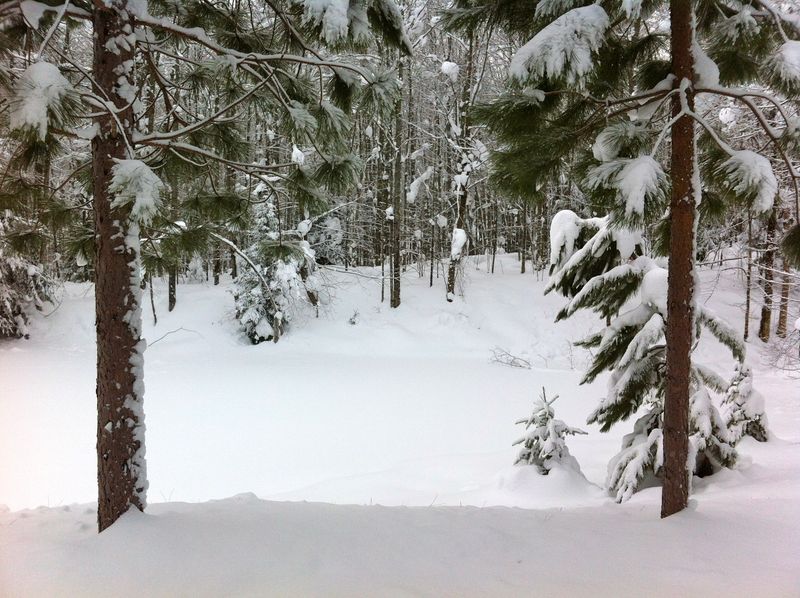
    Ever since we have gotten snow such huge amounts of snow, I wondered how the flags were doing in the woods…from my daughter's wedding.  This morning my daughter and I snowshoed in to see how the woods were decorated.

    IMG_0823And, I wanted to be the first to make tracks, to see it untouched as the flags continued to decorate this space.  Beautiful to see them with the white background…

    IMG_0842This is the site of the Vows.  It was so pretty decorated in snow. We could hear the dropping of huge chucks of snow…and I am sure the Trees felt relived of their heavy loads. 

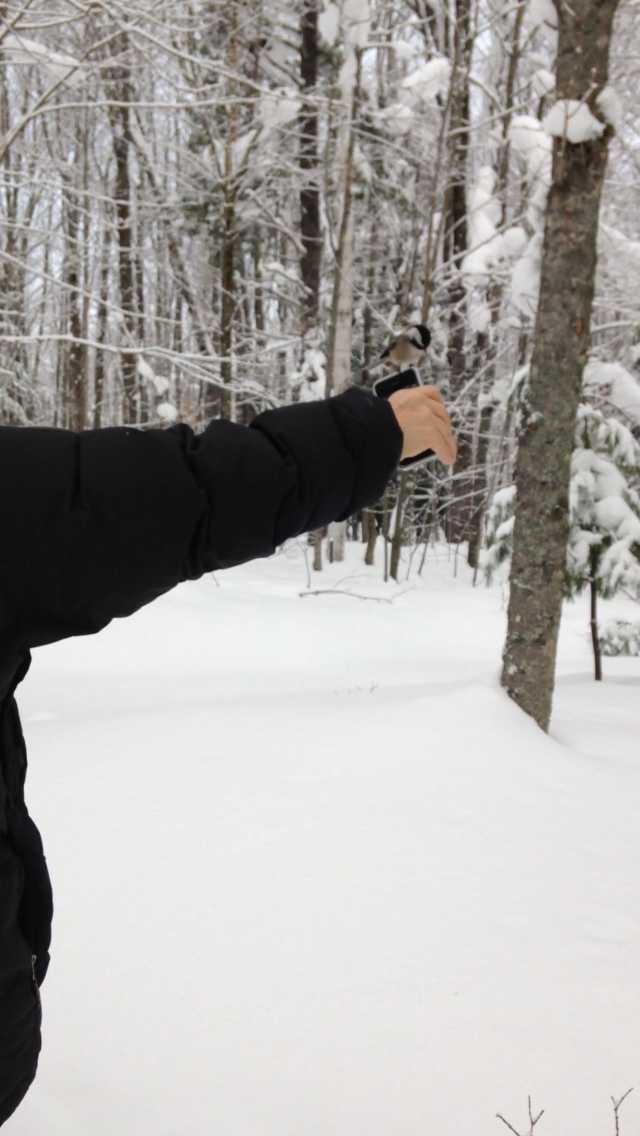
    And the Chickadees came to visit.  They wanted to land on me…and did.

    IMG_0897


    The next time we will bring them birdfood!  I can't wait to make a quilt "The Bird Lady"!

    It is so fun to see the way the snow molds itself smooth and round…perfectly.

    IMG_0870

    Like a Snow Mushroom!

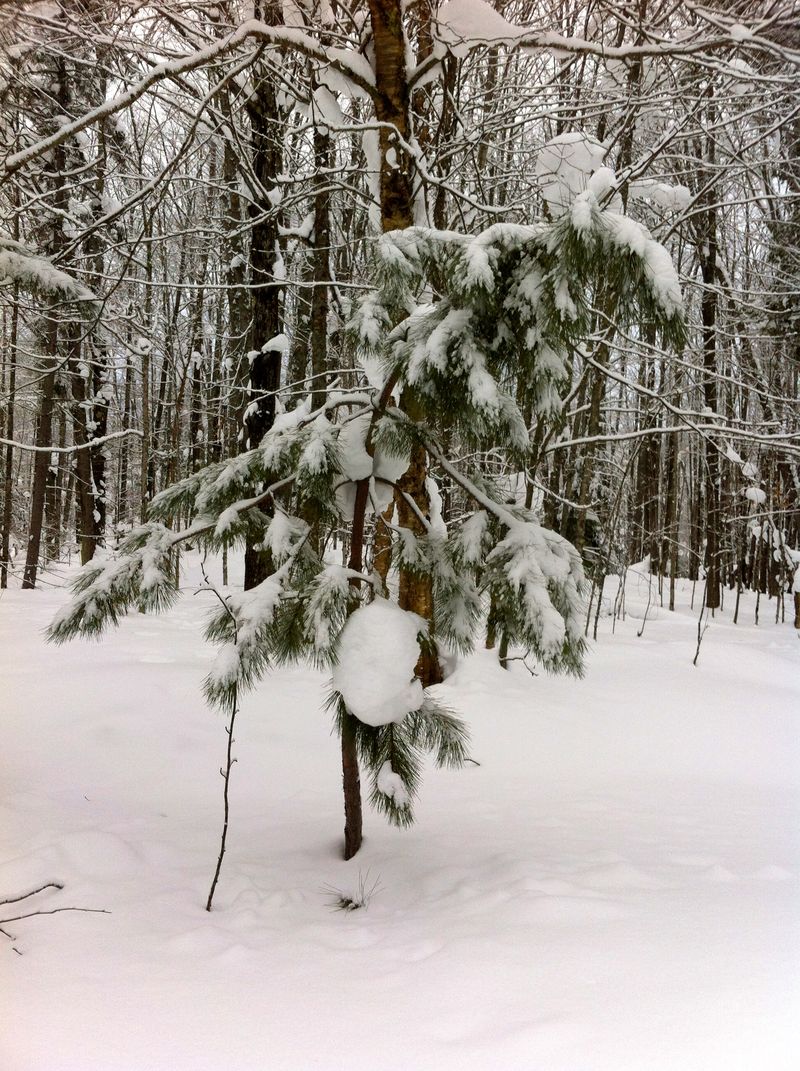
    And a very artful tree!

    IMG_0851

    Beauty in the woods!

    IMG_0873

  • IMG_1444

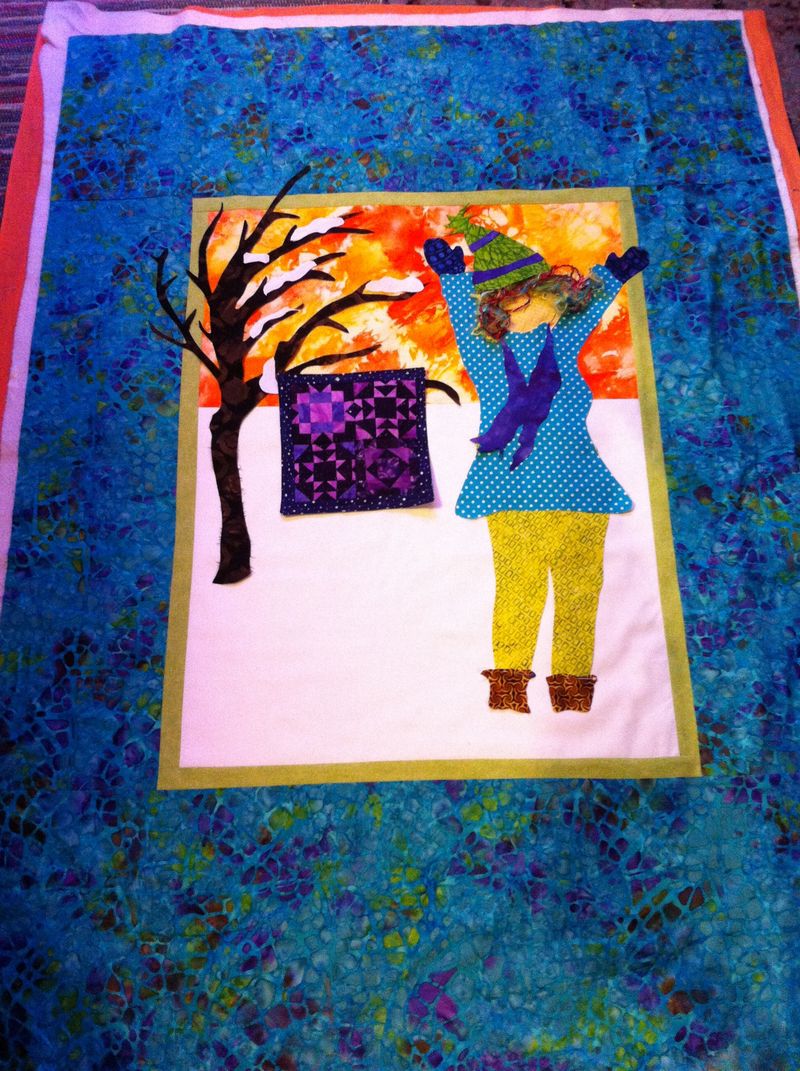
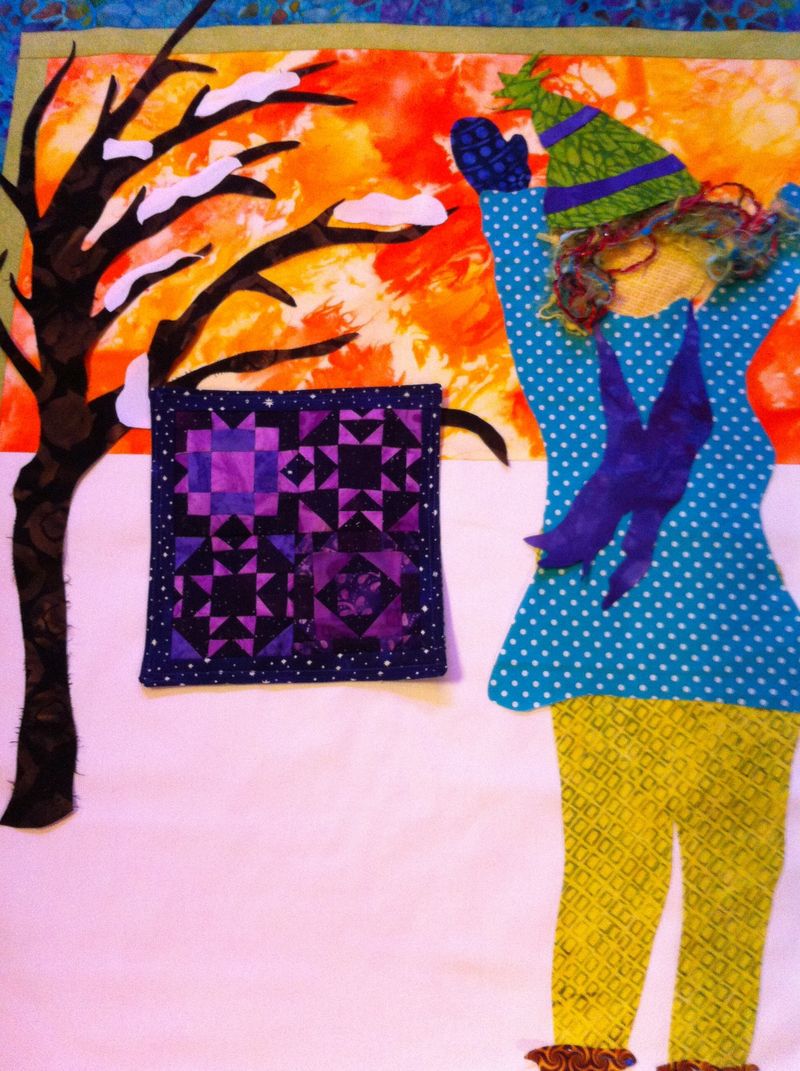
    This was a sunrise a few days back and I LOVED the Bright Orange in the contrast with the white snow…so, I was inspired to try this in a quilt.

    Photo-18

    And, here is a closer view.  I loved the boots, since half were covered in snow….didn't think it would work to make the illusion of deep snow.  I will have to play with that concept more.

    As you look at the closer view, the quilt in the tree is actually pieced together.  These were small blocks that a woman gave to me, her unfinished peices she no longer was interested in.  HOW cool to have an actual quilt on a quilt!

    Photo-19

    Thanks Gretchen for the inspiration and the Sunrise!

    (this is not quilted…so it could change.)

  • The hardest part of living with the affects of childhood abuse, is that you have lived with a damaged mind, and have very little if any recollection of the Mind Before the Abuse.

    For how can you know your mind isn't functioning properly…especially when the brain was damaged in your early childhood?

    The very tool you have to use to see that which is broken, IS Broken.

    I am not sure if this concept and how it complicates the healing process can be fully appreciated…for we are asking the sick of mind to use the sick mind in order to correct the problem…in the mind.

    I would have thought that the biggest problem was to deal with my father and his sickness…what I had never considered was my own mind and then the minds of the rest of the family.

    It wasn't as if only one sick man lived in our home, but we were all touched by this same affliction in our minds.

    In fact, the hardest thing to deal with are the sick minds of family members who don't know they are sick in their minds.

    This is the crux of the dysfunctional family…is that they are unaware of just how damaged their brains are.

    And, the only way you can stop the damage from spreading is to work on correcting the damaged mind.  

    But the damaged mind makes this very difficult…for it can't know it isn't normal or what normal is.

    There is no way you can stop the spreading of abuse in homes, until your correct the brain.

    A mother or father who doesn't get this concept; will spread their dysfunctional mind to their children affecting them like a computer virus.

    The words she speaks, the way she interacts all come from the brain…and she is seeing the world through a broken and distorted mind.

    There is no other explanation as to how a woman could continue to live with a man who abused her children, unless she was doing so with a broken mind.

    The phrase, "who in their right mind, would do such a thing…" is often spoken, and little do you know how true this is.

    For someone with a functional mind would not.

    What I don't know is how you can inject a dose of clarity or truth into this confused mind, to make it see itself as so horribly confused.

    They keep seeing themselves as being whole, healed and loving, while they are moving around broken.

    This is the biggest hurdle in stopping abuse…to have the mind see that it is broken.

    And it is one of the most horrifying and terrifying to acknowledge; that you and your mind are totally fucked up.  (excuse my French, but that is the only word that works)

    The incident of the actual act of abuse is miniscule compared to the knowledge of how completely snowed your mind is. How there is very little right in your head.

    How your interpetation of reality is completely wrong as well as who you are, where you came from and even where you are going.

    It is to one day stand up in your life recognizing the enormity of what happens when your mind changes everything that is wrong to right and right to wrong.

    I think we are all beginning to recognize that childhood abuse isn't about an event in the past, but it is about the state of your mind today.

    How can you know if you are running with a broken mind?

    I am not certain when you will discover this…for me, it took an event that totally flipped my world. It was to see in reality what my mind hadn't seen before.

    A father turned into a pedophile…40 years after the actual event.  My mind hadn't recorded this…

    However, once you see what your mind can hide and misconstrue, you will no longer have faith in your head…and begin to question everything it thought it knew.

    It is to find out one day that the person you thought you were didn't exist at all, it was a figment of your imagination.

    Hence the phrase I wrote…"I was lost and I was going to go and find myself, but I didn't know who I was or even that I was missing."

    I had to right my messed up mind…and the process continues.

    The only way this legacy and cycle of abuse can have such a long run, is that the mind which is damaged, goes along unknowingly.  Like a deaf and dumb passenger on the road to hell….believing it is love.


  • There is a misconception that child abuse is an event in childhood, period. It happened a long time ago and IT IS OVER!

    This article shows how wrong that is…


    The effects of childhood sexual and physical abuse last a lifetime. Abused children may grow up to be adults prone to depression, anxiety, substance abuse, and other psychiatric disorders. They are more prone to suicide. However, in recent years we have learned that abuse does more than wound self-esteem and break the spirit. It can damage the very substance of the brain and how it functions.


    A major way by which childhood abuse can disrupt normal brain activity is by diminishing its capacity to handle stress. Stress is more than the worry and distress we experience when the circumstances of life push us beyond our limits. The body's response to stress is a complex biological mechanism. When the brain senses that the body is being taxed beyond its usual capacity, it initiates the stress response by releasing a substance called corticotrophin releasing hormone, or CRH. CRH stimulates the pituitary gland to release ACTH that, in turn, triggers the release of the stress hormone, cortisol, from the adrenal glands. Cortisol marshals the body's resources to provide the extra energy and endurance to meet the demands being placed upon it. Once, this might have been escaping an angry mastodon. Today, it would more likely be getting used to a new job, a nasty divorce, or recovering from surgery.


    The stress-induced switch into physiological overdrive is designed to be brief. In fact, among the many things that cortisol does in the body, one of the most important is to feed back to the brain and start to shut the stress response down. Cortisol does this by binding to specific receptors in the brain. Cortisol fits the receptor, like a key in a lock, and turns the response off. One of the problems in those that have suffered severe, childhood abuse is that the brain's turn-off switch for the stress response is disabled.


    Instructions for how each cell in the body operates are in the DNA of those cells. Although every cell in the body has an identical copy of DNA, these cells can be very different. One means by which a cell becomes a skin cell instead of a liver or muscle cell is that certain genes in its DNA are turned off by the addition of a molecule called a methyl group. The addition of methyl groups to specific sections of DNA is an essential process in embryological development. It may also be involved in learning and other adaptive brain processes throughout life. However, DNA methylation can be abnormal.


    A study published in 2009 in the prestigious journal Nature Neuroscience revealed part of the reason why adults who were abused as children have abnormal stress responses. The grim details of the study included comparisons of the brains of individuals who had committed suicide vs. those who had died natural deaths. Among those who had committed suicide were some who had suffered severe childhood abuse and others who had not. It was found that among those who had suffered abuse, there were fewer of the special cortisol receptors in the brain that allow cortisol to turn off the stress response. It was further found that the section of DNA responsible for maintaining adequate numbers of these receptors had been methylated. They were no longer in full operation.


    When the stress response won't shut off and cortisol levels remain high in the brain, bad things can happen. Whereas bursts of cortisol help bolster the brain's supply of glucose and chemical messengers, sustained high levels of cortisol can cause damage. Cortisol diminishes the brain's response to the chemical messenger, serotonin, while it enhances the response to norepinephrine. Persisting high levels of cortisol also decrease levels of Brain-derived Neurotrophic factor, a substance that is necessary to maintain and replenish neurons in the brain. These and other changes alter mood, disturb sleep, heighten anxiety, and cause irritability. Consequently, the individual becomes more prone to Major Depression, PTSD, Generalized Anxiety, and other psychiatric disorders.


    The emotional upheavals suffered by adults who were abused as children can continue to wreak havoc on jobs and schooling. They can lead to substance abuse. They can devastate marriages. Thus, the innocent victims of child abuse continue to suffer as adults. Perhaps the most tragic effect of child abuse is that adults who were abused as children, either physically, emotionally, or sexually, have a higher than expected risk of becoming abusers themselves. Thus, the cycle of abuse and suffering perpetuates itself.


    We, as a society, must pursue every means to end this social cancer that reaches deep into the brains of children and across generations. The problem must be addressed by government and in schools, in churches and synagogues, and by community organizations. Doctors and other health care providers must redouble their efforts to spot child abuse and give the victims the help they need. Though it may be difficult to have sympathy for those who abuse children, they must be helped as well. After all, many of them were victims of childhood abuse. If nothing else, treating the perpetrators may prevent creation of still more victims.


    Need help? In the U.S., call 1-800-273-8255 for the National Suicide Prevention Lifeline.


    Need help? In the U.S., call 1-800-799-SAFE (7233) for the National Domestic Violence Hotline.


    Somehow we have to find a way to interrupt the cycle by doing something different.  And, sadly…we are asking people whose brains have been changed to do what appears to be impossible to do.  To live a life that will stop the pattern from repeating itself. To have the inner damage, but to make choices that are healthy.

    We need to stop the stigma of seeking help from the affects of abuse.  We have to make it a courageous action…and not something we look down upon. We need to see the bravery of breaking the silence and raise the conversations.

    Abuse isn't just like a scraped knee in childhood and it isn't about the sexual act.  It is about the affects that it has on the brain…and how it then changes who you are and how you feel and see….how you react or don't respond to stress.

    Childhood abuse lasts a lifetime…we need to recognize and own it.

    It damages the brain.

    It is not something to forgive and forget, it has changed the functioning of your brain.

    Hence…where the dysfunctional family begins.  Those whose brains are not functioning correctly…due to their own abuse as a child.

    If people would only get this. It would change the way we see those who are abused…they need help for brain damage.

    Not only is their love, peace and joy destroyed, their trust and faith shattered, when a parent turns against them, but their minds are changed.

    It isn't about getting along with your parents, or seeing that they did the best they could or forgiving and moving on.  It is about seeking to return your brain back to its functioning position.

    Childhood abuse is harmful to the brain.