Blog

  • Rules and Sins

    "We Sinners" by Hanna Pylvainen, is a book of fiction about the Laestadianism faith.  And it has many similarities to my old religion especially in how it affects the children as they enter into their young adult years and the complications of being raised within a rule based religion.

    I found it fascinating to read about something similar to my own roots…and how the family members lived this religion or tried to…or failed and its consequences.

    It shows the complexity of not being able to walk the walk that is presented AND live your life honestly.  It literally forces you to lie in order to be a 'good' christian.

    Even as a women who is unable to use birth control and the sheer amount of hardship having so many pregnancies and its wear and tear on the body…and try to be graceful about the overwhelming burden of caring for so many children adequately, let alone your own self.

    I was asked to come to a book group and talk about We Sinners, which is why I read it.  It brought back the weight of that religion upon my childhood home.  

    The guilt laden rules of the religion seem so far from my world, like it was another lifetime ago.

    "We Sinners" clearly shows how religion reigns supreme and how the individual, let alone the family structure, is secondary to upholding the religion. The religion will make you a fine person and will keep the family strong…it untruthfully says, when in fact, it is the religion itself and its impossible rules that lead to the decay.

    When religion comes before the person, the person will rot from the lack of self expression or authentic living…to be able to freely be yourself.  Instead we are made to conform into a veriable cage surrounded by rules and sins.


  • Change in our Homes.

    I purchased Nate Berkus's book, "The Things That Matter"….and have been pleasantly or at least unexpectedly surprised, in how he was able to show the person by what kinds of things their homes held.

    I remember seeing my home for the second time, but like it was the first time.

    When I suffered my breakdown into reality, I looked around my home like a stranger, wondering who had decorated it; for very little represented me. Instead it looked like bits and pieces and fragments of what other people liked.

    My daughter then painted the whole house and added color, and we went about reorganizing it…mostly throwing out all that we didn't love of find a deeper reason to keep it.

    Now, about eight years have passed, adult children have come and gone and my last one is thinking of leaving this spring.  It leaves me once again to look at my house and the things that matter.

    I also had given up the house as being a high priority and allowed myself to relax so that my kids could relax at home…and with it went my desire or passion to have my home a certain way.  

    I feel the stirring of desire to reclaim my home.  To make it a couple's home…to have it once again reflect us.  

    I wondered about myself and my lack of caring for redoing rooms now left vacant…had I lost total interest in my living space?  

    What it does show me is that I had put my children's interests and needs ahead of the house, for now the home is in need of some artful care.

    Nate's book has inspired me to look at the things I have in my house…what is their connection to me…what do I love…and what could easily go?

    I also love that he likes homes that break the 'rules' of decorating the best. This frees us all to just be ourselves, to bring in what we love and then our homes will reflect us.

    For 25 years our home has been shared with children and their stuff, along with what they needed to feel at home in our home…and now I feel the excitement to once reclaim this whole space. 

    It will be an easier task to go through things, when you can weed out all that don't matter.

    Little by little, thing by thing, room by room, I will make our home full of things that matter…and in turn will be a house of things I love.  

    I feel grateful for letting things go…and putting my kids first.  

    I have let them have messy rooms, painted rooms, rooms of many colors, rooms for TV and games, toy rooms, overflowing entry spaces, closets stuffed with stuff….

    It will not feel like an empty nest, but an empty canvas…one where I can once again transform it into a childless home.

    How interesting to see our lives change in our homes.

  • Relieved From Being Grounded

    I am reading Pema Chodron's book, "Taking a Leap: Freeing Ourselves from Old Habits and Fears.

    She writes,

    "There are many ways to discuss ego, but in essence it's what I've been talking about.  It's the experience of never being present.  There is a deep-seated tendency, it's almost a compulsion, to distract ourselves, even when we're not consciously feeling uncomfortable. There's a background hum of edginess, boredom, restlessness. As I've said, during my time in retreat where there were almost no distractions, even there I experienced this deep uneasiness."

    "The Buddhist explanation is that we feel this uneasiness because we're always trying to get ground under our feet and it never quite works.  We're always looking for a permanent reference point, and it doesn't exist. Everything is impermanent. Everything is always changing – fluid, unfixed, and open.  Nothing is pin-down-able the way we'd like it to be. This is not actually bad news, but we all seem to be programmed for denial.  We have absolutely no tolerance for uncertainty."

    "It seems that insecurity is ego's reaction to the shifting nature of reality. We tend to find the groundlessness of our fundamental situation extremely uncomfortable. Virtually everybody knows this basic insecurity, and often we experience it as horrible. With me in that  same three-year retreat was a woman with whom I'd once been close friends. Something had happened between us, though, and I felt now that she hated me.  We were in a very small building together, we had to pass each other in the narrow corridors, and there was no way to get away from each other.  She was very angry and wouldn't talk to me, and that brought up feelings of profound helplessness. My usual strategies were not working.  I was continually feeling pain of no reference point, no confirmation. The ways I had always used to feel secure and in control had fallen apart.  I tried all the techniques I had been teaching for years, but nothing worked."

    "So one night, since I couldn't sleep, I went up to the meditation hall, and sat all through the night.  I was just sitting with raw pain with almost no thoughts about it. Then something happened: I had a completely clear insight that my whole personality, my whole ego-structure, was based on not wanting to go to this groundless place.  Everything I did, the way I smiled, the way I talked to people, the way I tried to please everybody – it was all to avoid feeling this way.  I realized our whole facade, the little song and dance we all do, is all based on trying to avoid the groundlessness that permeates our lives."

    "By learning to stay, we become very familiar with this place, and gradually, gradually, it loses its threat.  Instead of scratching, we stay present. We're no longer invested in constantly trying to move away from insecurity. We think that facing our demons is reliving some traumatic event or discovering for sure that we're worthless. But, in fact, it is just abiding with the uneasy, disquieting sensation of nowhere-to-run and finding that – guess what?- we don't die; we don't collapse.  In fact, we feel profound relief and freedom."  Pema

    Isn't it interesting to see her view point of ego, of not wanting to feel the unease of living groundless and changing.  The part of us that wants to ground your life in a certain feeling is the only one with the trouble, for feelings are moving….and changing, and life is not stuck in one spot….even though often it seems like our lives are stuck, we only imagine they are.

    I was lucky to have experienced the free falling, feeling of no ground, and panic…only to find that that is the true nature of living.  

    "This too shall pass…" is the state of being.  Being present is to get used to feeling the static uneasy and not find a permanent reference point.  We want to hold onto something that will NEVER change!  And that alone, is impossible.  Somehow, we have grabbed onto addictions and habits that we believe will bring us permanence, when the only thing permanent is our habitual actions…while life hums along groundlessly changing beneath us.

    We grow old, people die, fall out of love, into love, feel sad, feel happy, it moves and ebbs and flows and we pile layers of habit on top…focusing only on that, believing life lives there….it is only a camouflage over life.  Ego I guess lives in habit, while our souls thrive in ever changing uncertainty….free and relieved from being grounded.


  • 100% Your Self

    Happy Valentine's Day is over and I have to say it was like any other day…except for a few cards.  What is great about this, is that my husband and I share many moments of love, so yesterday wasn't special, it was just another day…yet another special day.  A day of easy love…not a love that had to try and be something special.

    I recall past Valentine's Days, where I believed that it needed to be special, that it had to be loaded with tons of romance or whatever the culture called love.  Maybe it is my age or wisdom, but I see things so much differently.

    I see him differently, Me for sure differently and life absolutely differently…and Love.

    Love isn't about showboating, or getting the biggest bunch of flowers, it is about living life in truth, honor and respect…on just an ordinary day, as well as on special days.

    As we were out to dinner, I noticed something wonderful, it was just like any other dinner.  So, for me, I have many Valentine's dinners a month…in our weekly dates.

    Valentine's day is not the one special day a month, where you try and put aside the discords and troubles, and 'be' loving, but rather it is everyday.

    Our life is lived in gentle harmony, and has moments of high anxiety when trouble arrives, but we swim into the center of turmoil and find our peace with it.

    I know love isn't found in the cards, flowers and candy, but it is found when you face together all of life's challenges and honor each other's opinions and viewpoints while maintaining your own individuality.

    It isn't an easy dance…to be a together and apart, to be one and two…but it is achievable with the right amount of vulnerability and humility and trust…using empowerment, voice and choice.

    It is complicated to form…and the more trouble that comes your way, and you survive, the deeper the connection grows.  

    We can't know how long it will last, what bends are up ahead, but we can always know each of us will be ourselves…fully and honestly.  It is because each of us are not willing to let our integrity slide.

    What attracted me to him, was his sense of self.  His not caring what others thought or whether he fit into his peer group, or if he was in style or said and did the 'right' things, he was always impossibly himself.

    When I learned to do the same, our love grew deeper. For, you can only love someone with the same depth and breath that you love your self and be your self.

    I don't even know that my husband knows how much he loves himself…but what he has always been the most faithful to…is himself.  He rarely cheats and does something he doesn't want to do.  He fearlessly says no.  The only time, I have seen him jepordize his values is to be kind.  He is kinder than I.  He will give kindness to be civil.

    I am grateful to have experienced this wonderful journey of Love with him…learning how to be imperfectly Me.  To me, there is no greater love than being able to be 100% your self.  


    IMG_9450


  • Language of the Betrayal Bond

    There is one more part of this book (The Betrayal Bond, by Patrick Carnes) that I want to share…


    "To Take Responsibility for Yourself"

    "This risk reminds me of how monkeys are captured in africa. Tribal peoples put out slotted cages filled with fresh fruit. The cages are anchored securely to the ground. Monkeys discover the cages, reach in and grab the fruit. Of course, they cannot retrieve the fruit because as long as the hand holds the fruit, it will not fit through the bars of the cage. The monkeys are then trapped. They could always let go of the fruit and escape, but they refuse to let go. Even as their human captors pick them up, they hold on."


    "Trauma bonds are similar. There is always something kind, noble or redeeming about someone who has betrayed you. Victims of betrayal will hold on to those good things even while the world crashes around them. By holding on they stay stuck, just like the moneys. We do make our own prisons."


    "That is exactly how it was with Jack. He sat in my office, admitted for an addiction relapse and treatment because he was absolutely suicidal about a woman he had broken up with four months earlier. He was a very high profile sports figure. He spent over a half-hour telling me how she was his dream woman. The sex was fabulous. She was his best friend. they each had children the same ages who really got along well with one another. They had been together for two years. All of which was well and good, except that she had stolen thirty thousand dollars from him, embarrassed him countless times with violent outbursts at highly visible public events, alienated all of his friends, and kept him in constant turmoil with her dramatic exits. After their last breakup she became involved with on of his closest colleagues and slept with him within a week. Jack was sad she would no longer take his calls. I told him he was lucky, and the therapy began."


    "The scenarios of abuse in Jack's history and her history were there. He admitted that she terrified him most of the time. And he acknowledged that the relationship was over. Yet he had a thread of hope he could get her to therapy and retrieve the relationship. Like a monkey with fruit, Jack was holding on to the dream."


    "The bottom line is: Your life is up to you. Take charge of it, or somebody else will." Patrick


    This scenario is extremely popular with abused people, to never let go…for the hope of retrieving the relationship, no matter what.
    The sentiment is carried out in many ways in my family, whether it is in how they see my parents to how it is in their own personal relationships. They are not willing to let go of the 'good', no matter how much other junk is floating nearby. For they believe that family is family no matter what…and that healing is NOT in letting go…but in being there at all costs.

    This ideology alone shows their past histories of abuse…and in how it imprisons their lives.
    And another chain on the prison door is the forgiveness of sins, that washes many deeds whiter than snow, eliminating them from their reality, so only the good remains.

    This fallacy keeps them in relationships that are blended with good and evil. Where the evil is never dealt with…as evil, but is shoved aside in hope it changes or dies or they go to therapy or something….meanwhile the person keeps chanting and focusing on the good. Going forward with ONLY the positive. Not looking backwards and 'judging' others, but keeping the family a unit, no matter what.
    I am seen as the worst of the worst for dragging up the 'negative' and bad sins and awkward situations, while they righteously look kinder by forgiving the bad and keeping the good.
    As they hold on to the good, their lives are littered with filth 'unseen'.

    They are willing and able to have relationships with anyone, for all they see are the good things.


    Oh, except me. The one who is responsible for myself.
    I then hold others accountable for their actions.

    This is a foreign concept in abusive homes…where actions are not seen due to the distortion, where the improbable becomes probable…the hopeless filled with hope.
    I feel that the biggest wrong I have done was to take off my distortion glasses…and to see what is and not blink it away.


    This is a harsh stare to live under when you are used to people disregarding your bad behavior, your lacks of integrity and the false promises you fail to deliver, your lazy relationships of zero effort, the one way street of help, etc.


    My family is picture perfect through the lens of distortion.
    Sadly, when you take the lenses off, you are left with a ragtag bunch suffering acutely from the ravages of living in an abusive home, untreated…who exhibit word perfect the language of the betrayal bond.

  • Nature’s Healing Views

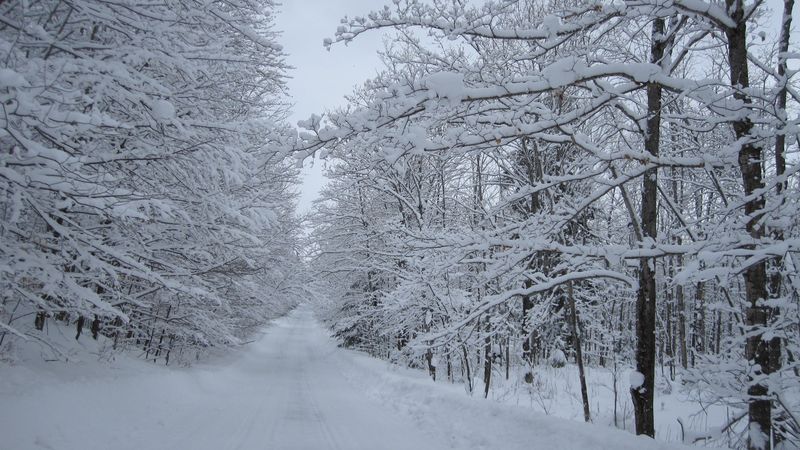
    Winter Wonder Land…on my mail route and on my road.

    I just can't seem to capture what the naked eye sees or how it feels to be in this space.  But, I wanted to share, even if it is a limited version of the real thing.


    IMG_9527
    Today, the snow on these trees were melting…

    This morning on my way to work the trees were glistening in the morning sunrise.  I stopped to take pictures, but again, you can't see the sparkle that was everywhere.


    IMG_9551

    Here is a view that I recall very fondly, where I would face the sun as I made my way back home….when I would walk each morning, crying one way and finding something positive as I turned and headed home.


    IMG_9556
    Natures healing views!

  • Breaking Free

    In the book, "The Betrayal Bond" by Patrick Carnes, Ph.D, there were exercises and things to write and probe your life about, but mostly what I received from this book was a huge affirmation of my journey breaking the bond of betrayal.

    He writes in the end of the book

    "What are risks of recovery?"

    Physicists tell us that once an atom has touched another atom, there is a relationship between two atoms that endures forever, no matter how far they are from each other.  While physics involved are quite complex, the physical relationship principles are quite simple.  Once made, a relationship always exists as well.  Once a person has been part of our lives, ripples remain, even though we have no further contact. In that sense a relationship continues even though we may consciously exorcise it from our conscious contact.  Once you understand that principle, a shift will occur in all of your contact with others."

    "If the relationship was toxic, as in a traumatic bond, the relationship must go through a transformation, since it will always be with you.  You do not need to be in contact with the person to change the nature of the relationship.  You can change how your perceive it. You can change how it impacts you. This is true of all human systems – intact or not."  Patrick

    What I totally understand about this section, IS that you can't continue on the same way, for you are no longer living in the world where the improbable is reasonable and reality doesn't exist.  

    I feel that I am now seeing the world with completely naked eyes and it is impossible for me to pretend or overlook or distort reality.  In order to have a relationship with me, you eyes too will be naked.

    He even writes about the distortion…under the subtitle,

    "To Commit to Reality at All Costs."

    "The movie Mask tells a story of a young man who had an illness that, among other things, "lionized" his face.  His facial features were so distorted that they often repelled people.  The movie tells of how he deals with other adolescents, his first girlfriend, other adults, his family and ultimately his death.  There is a point in the story when the boy, his mother and their friends go to an amusement park and buy tickets to the fun house.  In the fun house are the typical mirrors that distort appearance. The mirrors make you look fat or skinny or misshapen – only in the movie, the boy's face in the distorting mirror looks "normal." He calls his mother over to see.  The poignancy of the scene comes when the two of them gazing at the handsome face he would have had without his illness."

    "In many ways, betrayal and exploitation are like being in the fun house.  It makes the abnormal and the grotesque appear normal.  Trauma distorts our perceptions just as sure as the mirrors in the fun house.  Your task is to leave the fun house and face the reality without the distortion.  This risk is the price of admission to recovery.  You simply have to be willing to do it."  Patrick

    What a accurate metaphor for living in abuse and then leaving.  What I see as abnormal and the grotesque, they see as normal and unscathed.  How would it ever be possible to be in a relationship when we can't see eye to eye or more eye to reality?

    He goes on to write, 

    "Once you have clarity about reality you must be willing to risk that others will misperceive you. Survivors want others to understand them. They do not want anyone upset with them. Their childhood training taught them that "if you cannot say something nice, do not say anything at all." If they have tried to change in the past they may even have had their lives threatened.  They hold out a vain hope that they can write a letter to explain their actions or that they can have the "talk" that will gain them the acceptance of their actions.  The fact is that they can give the perfect explanation and others in the abusive system will not understand it, maybe not even believe it.  Even those who truly do cherish the survivor will misperceive. Remember, they are back in the fun house.  If survivors are making significant changes, the people around them will not like it.  They will misinterpret the survivors actions.  They may even question the survivor's motivation and conduct.  Count on it."  Patrick

    When you picture those who are still bonded by betray in a fun house and not able to see what you see, it helps in feeling that their reaction is less personal to me.  They simply are seeing out of eyes that have been distorted.

    There is a refrain in a song, "I can see clearly now, the pain is gone, all obstacles in my way…." 

    One of the last pages I earmarked, "To Say Good Bye"

    "If someone does not respect your boundaries, you will have to leave. Many times I have witnessed incidents in which the victim gets to the point where she is ready to leave, only to have the abuser deliver the most compelling version of the seduction story. The abuser does not test the boundaries at that point, but once the victim is sucked back into the circle, the boundary abuse occurs again."

    "Saying good-bye is wrenching for survivors, who already grieve their many losses. Here the survivor must confront the deep desire for the seduction story to be true. There is more than exploitation or abuse at stake here. There is the loss of some dream or core hope that made the seduction story so irresistible.  Usually that dream or hope has roots in some original wound for which the survivor has not yet fully grieved. So when it is time for good-bye, the grief will be overwhelming. The only choice you have to survive is to embrace the pain and experience the loss.  In many ways the betrayal bond protected you against that pain."

    "You may not have to say good-bye, but you must be willing to do so. In fact, life as you know it may require a complete transformation for you to survive these relationships. Work, values, homes, friends, and even family relationships may have to substantively change for a successful recovery. What lengths are you willing to go to in order to be free? When you answer that question, you may have to face another risk; to be alone and be okay."  Patrick

    This is the part that is the hardest, when abuse happened in your childhood home…when, in order to recover and heal, you have to say good-bye to all whose eyes are distorted.  Mostly, it is not how you see them, but rather how they see you.

    I have been seen as the home wrecker, the mental woman, the insane person who insanely believes, that in order to gain my life back, my freedoms etc…that I have to walk out of the fun house, and be alone.

    I do.

    If, there was a way to honor myself and my integrity and authenticity AND be a vistor in the fun house, I would have.  But, there simply is no other way to break the betrayal bond, than to cut the ties that bind you…

    Even if the rest of my family believe that I am certifiably nuts, cold and heartless…this book affirms my journey…both while under the influence of the bonds and breaking free.

    Thank you Patrick Carnes for writing this!

    "Some of us cried out, it is too great a risk!"  The big book of Alcoholics Anonymous


  • In Abuse, Unaware.

    Patrick Carnes book, "The Betrayal Bond" is like a blueprint into so many lives…to not only what happens to a life that has been abused, but its consequences or the changes their life then takes.  

    He writes…(it is a long blog, but full of great information)

    "Children are presented with what trauma researcher David Calof has described as the "universal bind".  Do not see, hear, sense, feel or address what is real. Instead, accept what is unreal and proscribed in the interest of your survival.  Disbelieve the obvious and accept the improbable.  The bind is that the child is presented with only two options (1) to be overwhelmed with terror and not able to function, or (2) distort reality to survive. Because of the bind, distorting reality becomes part of the "working model" eventually used in adult relationships.  Therapists Blizard and Bluhm describe it this way."

    "These defenses are highly adaptive in childhood, because they permit the child to survive in an abusive family.  In adulthood the defenses become maladaptive, because they prevent the survivor from accurately perceiving the presence or absence of abuse.  By permitting the adult survivor to maintain a relationship with someone who resembles the original abuser, these defenses perpetuate the cycle of abuse."

    What Patrick is writing is what I have experienced myself and what I am dealing with or witnessing of my family.  The mere fact that their lives went on pretty much uninterrupted, shows the universal bind.

    He goes on to write about the crashing of the bind…or when we are no longer able to keep reality at bay.

    "Sooner or later this system gathers enough momentum that a life crisis occurs. Something so bad happens that the victim can no longer simply go forward. Forgetting about the past and coping with the day is not enough.  Those who have the courage decide to change, whatever the cost; it literally takes that kind of resolve to make the change."  Patrick

    What I experienced was a life crisis, while most in my family were not at the breaking point, they, it seems, had years to go…

    It isn't that the affects of the abuse were not severe for them as well, but that their lives and addictions are not at the crisis point.  While it is the most terrifying and life ending feeling, it is what is needed to right yourself… to stand nose to nose with reality.

    He goes on….

    "The Path of Awareness"

    "By reconstructing the path from the original trauma to the life crisis, we gained an important insight into recovery.  People in our study recovered in stages, and the order of their recovery was almost the reverse of how people got into their life crisis. Most had to experience some type of intervention to get out of the trauma-based system.  If they were addicted to alcohol or gambling, they had to start a recovery program around that illness.  If they were hooked into a destructive relationship, they had to do something about it. If they were dissociating, stuck in deprivation behaviors or immersed in shame, they would seek treatment for it. To start, they had to focus on the trauma solutions, identifying the immediate source of the chaos. Their recovery was akin to putting up a tent in the wind – some pegs have to go in the ground before you can anchor the tent and raise the poles."

    "These early interventions create confusion about what is real.  The survivors, in beginning these intial changes, also start to accept that the rationalization and distortions they have used or believed were part of the problem. And they were confused by that. Remember, a survivor has been asked to disbelieve the obvious and accept the improbable. After the intervention, survivors are unsure of what reality really was. This created the window for the next stage – the next stage in which denial and repression break. When survivors stop using the dysfunctional solutions they have used (i.e. high-risk behavior, medicating or anesthetizing, repeating the event), they can expect that:

    memories to previous abuse will return

    they will have intense reactions to what they do remember

    they will have an expanded understanding of what happened in the past

    they will see continuing aspects of those abusive patterns now

    they will know how high the cost has been

    they will be very fearful of what this means for them and their lives

    "After the intervention, those participating in the study asked several questions: What if this is all true? What does this mean about me? About my family? What will happen now if say this out loud? How will people react? Will it be worse if I admit the truth?  Is it safer to hide? As you've read this book, you may have asked yourself some of those same questions."

    "If you understand that this fearful reaction is the beginning of grief, it helps. Whenever there is a significant loss -whether individually or collectively – the stages of human grieving are quite predictable. First, there is denial – "This cannot be true?" Then there is fear – "What if it is true?" This is followed by anger – "This is unfair." Anger is followed by the wrenching pain of loss "This hurts too much to bear." Finally, there is acceptance and an attempt to derive some meaning out of all that happened."

    "There are several things that make it different for survivors. First, grief is delayed. Most grief cycles begin with a current loss, such as the death of a loved one. Survivors have not been able to acknowledge the pain that has been accumulating. It is somewhat akin to running in front of a growing avalanche for years and never being more than a few inches in front of it. When you stop, the avalanche overwhelms you. When you no longer have the cushion of trauma solutions, the pain envelops you all at once."

    "Second, the intial trauma may have distorted the relationship template used as an adult. The result is that survivors have a vulnerabilty most people do not have. They often are not able to discern when someone is being exploitive or abusive toward them. This interfers with their sense of loss, their outrage and their pain."

    Third, most people plunge into grief can be public about their loss.  If a loved one dies in an auto accident, there is no mystery as to why the family members hurt. But when the loss is shrouded in pledges of secrecy and in shame and betrayal, getting support wil require incredible vulnerablity: "How could I have been so foolish? So trusting and accepting?" Worse, talking about the loss means disloyalty within the abusive system.  Anger can help break the loyalty of the betrayal bond. For survivors, the typical anger at God most people in grief experience is coupled with anger toward the victimizer. This anger becomes an empowering emotion that helps to break the secrecy and dissolve the insane loyalties."

    "Finally, most people grieve because the loss is painful. Survivors must add another dimension to that pain. It starts when they realize that the people who abused them were also abused. Perhaps the abuse may even go back many generations. Survivors move beyond this realization to a new level of integrity when they acknowledge that they have also abused others.  Maybe they did not do the same things, but they still victimized others.  They are part of the unbroken chain, which can be incredibly painful to admit.  We call this victimization consciousness, which means the victim understands the whole picture. She now grasps and accepts the whole complex series of relationships, solutions to trauma, and accumulated loss. With acceptance comes a new sense of peace." Patrick.

    First of al,l it took me awhile to understand what he meant by "Trauma Solutions". 

    Trauma solutions are what we came up with to NOT feel the pain or see/hear and sense the abuse.

    So, now we have the trauma that we don't want to deal with and then the trauma solution.  

    What I also understood, that I was in grief about so many things…that my life was in a complete overload between what had happened, who they truly were, and how I had built a life upon a false reality, and then who I was and what I had done.

    Each small piece was enormous…and I had many on my plate.

    I sense that many are believing that they ARE DEALING with the abuse of our childhood home, when in fact all they are truly doing is running inches ahead of a huge wall that will collapse at one point.  It isn't IF it will, but when it will.

    All the disbelief that is directed my way, is the universal bind…I feel their distortion and insane rationalizations…which all are key points showing their abuse.

    This book clearly shows the landscape and the cost of living in abuse, unaware.


  • In Abuse, Unaware.

    Patrick Carnes book, "The Betrayal Bond" is like a blueprint into so many lives…to not only what happens to a life that has been abused, but its consequences or the changes their life then takes.  

    He writes…(it is a long blog, but full of great information)

    "Children are presented with what trauma researcher David Calof has described as the "universal bind".  Do not see, hear, sense, feel or address what is real. Instead, accept what is unreal and proscribed in the interest of your survival.  Disbelieve the obvious and accept the improbable.  The bind is that the child is presented with only two options (1) to be overwhelmed with terror and not able to function, or (2) distort reality to survive. Because of the bind, distorting reality becomes part of the "working model" eventually used in adult relationships.  Therapists Blizard and Bluhm describe it this way."

    "These defenses are highly adaptive in childhood, because they permit the child to survive in an abusive family.  In adulthood the defenses become maladaptive, because they prevent the survivor from accurately perceiving the presence or absence of abuse.  By permitting the adult survivor to maintain a relationship with someone who resembles the original abuser, these defenses perpetuate the cycle of abuse."

    What Patrick is writing is what I have experienced myself and what I am dealing with or witnessing of my family.  The mere fact that their lives went on pretty much uninterrupted, shows the universal bind.

    He goes on to write about the crashing of the bind…or when we are no longer able to keep reality at bay.

    "Sooner or later this system gathers enough momentum that a life crisis occurs. Something so bad happens that the victim can no longer simply go forward. Forgetting about the past and coping with the day is not enough.  Those who have the courage decide to change, whatever the cost; it literally takes that kind of resolve to make the change."  Patrick

    What I experienced was a life crisis, while most in my family were not at the breaking point, they, it seems, had years to go…

    It isn't that the affects of the abuse were not severe for them as well, but that their lives and addictions are not at the crisis point.  While it is the most terrifying and life ending feeling, it is what is needed to right yourself… to stand nose to nose with reality.

    He goes on….

    "The Path of Awareness"

    "By reconstructing the path from the original trauma to the life crisis, we gained an important insight into recovery.  People in our study recovered in stages, and the order of their recovery was almost the reverse of how people got into their life crisis. Most had to experience some type of intervention to get out of the trauma-based system.  If they were addicted to alcohol or gambling, they had to start a recovery program around that illness.  If they were hooked into a destructive relationship, they had to do something about it. If they were dissociating, stuck in deprivation behaviors or immersed in shame, they would seek treatment for it. To start, they had to focus on the trauma solutions, identifying the immediate source of the chaos. Their recovery was akin to putting up a tent in the wind – some pegs have to go in the ground before you can anchor the tent and raise the poles."

    "These early interventions create confusion about what is real.  The survivors, in beginning these intial changes, also start to accept that the rationalization and distortions they have used or believed were part of the problem. And they were confused by that. Remember, a survivor has been asked to disbelieve the obvious and accept the improbable. After the intervention, survivors are unsure of what reality really was. This created the window for the next stage – the next stage in which denial and repression break. When survivors stop using the dysfunctional solutions they have used (i.e. high-risk behavior, medicating or anesthetizing, repeating the event), they can expect that:

    memories to previous abuse will return

    they will have intense reactions to what they do remember

    they will have an expanded understanding of what happened in the past

    they will see continuing aspects of those abusive patterns now

    they will know how high the cost has been

    they will be very fearful of what this means for them and their lives

    "After the intervention, those participating in the study asked several questions: What if this is all true? What does this mean about me? About my family? What will happen now if say this out loud? How will people react? Will it be worse if I admit the truth?  Is it safer to hide? As you've read this book, you may have asked yourself some of those same questions."

    "If you understand that this fearful reaction is the beginning of grief, it helps. Whenever there is a significant loss -whether individually or collectively – the stages of human grieving are quite predictable. First, there is denial – "This cannot be true?" Then there is fear – "What if it is true?" This is followed by anger – "This is unfair." Anger is followed by the wrenching pain of loss "This hurts too much to bear." Finally, there is acceptance and an attempt to derive some meaning out of all that happened."

    "There are several things that make it different for survivors. First, grief is delayed. Most grief cycles begin with a current loss, such as the death of a loved one. Survivors have not been able to acknowledge the pain that has been accumulating. It is somewhat akin to running in front of a growing avalanche for years and never being more than a few inches in front of it. When you stop, the avalanche overwhelms you. When you no longer have the cushion of trauma solutions, the pain envelops you all at once."

    "Second, the intial trauma may have distorted the relationship template used as an adult. The result is that survivors have a vulnerabilty most people do not have. They often are not able to discern when someone is being exploitive or abusive toward them. This interfers with their sense of loss, their outrage and their pain."

    Third, most people plunge into grief can be public about their loss.  If a loved one dies in an auto accident, there is no mystery as to why the family members hurt. But when the loss is shrouded in pledges of secrecy and in shame and betrayal, getting support wil require incredible vulnerablity: "How could I have been so foolish? So trusting and accepting?" Worse, talking about the loss means disloyalty within the abusive system.  Anger can help break the loyalty of the betrayal bond. For survivors, the typical anger at God most people in grief experience is coupled with anger toward the victimizer. This anger becomes an empowering emotion that helps to break the secrecy and dissolve the insane loyalties."

    "Finally, most people grieve because the loss is painful. Survivors must add another dimension to that pain. It starts when they realize that the people who abused them were also abused. Perhaps the abuse may even go back many generations. Survivors move beyond this realization to a new level of integrity when they acknowledge that they have also abused others.  Maybe they did not do the same things, but they still victimized others.  They are part of the unbroken chain, which can be incredibly painful to admit.  We call this victimization consciousness, which means the victim understands the whole picture. She now grasps and accepts the whole complex series of relationships, solutions to trauma, and accumulated loss. With acceptance comes a new sense of peace." Patrick.

    First of al,l it took me awhile to understand what he meant by "Trauma Solutions". 

    Trauma solutions are what we came up with to NOT feel the pain or see/hear and sense the abuse.

    So, now we have the trauma that we don't want to deal with and then the trauma solution.  

    What I also understood, that I was in grief about so many things…that my life was in a complete overload between what had happened, who they truly were, and how I had built a life upon a false reality, and then who I was and what I had done.

    Each small piece was enormous…and I had many on my plate.

    I sense that many are believing that they ARE DEALING with the abuse of our childhood home, when in fact all they are truly doing is running inches ahead of a huge wall that will collapse at one point.  It isn't IF it will, but when it will.

    All the disbelief that is directed my way, is the universal bind…I feel their distortion and insane rationalizations…which all are key points showing their abuse.

    This book clearly shows the landscape and the cost of living in abuse, unaware.


  • I will meet you there.

    While reading Martha Beck's book, "Finding Your Way in a Wild New World," she writes about her experience with learning to lead horses.  I felt immediately that this is the same technique great leaders use.

    "Horseplay and the Technology of Oneness"

    "If I wanted to, I could see the little palomino by looking at the top of my own shoulder, picking her up in my peripheral vision. But instea I just let my eyes drink in the scenery: the rolling California hills, dappled light falling through the clouds, a truck parked nearby. Everything, including the truck seems equally beautiful and equally alive.  At this moment the palomino is neither more or less important to me than the sky."

    "To say that I haven't spent my entire afternoon in this state of serene detachment is like saying that the Three Stooges were not neurosurgeons. For what feels like hours, I've been pursuing a herd of two-year old colts in weird slow motion.  I amble up to them in arcs. They wait until I get close then nervously move to a different part of the field, whereupon I doggedly start amble-arcing toward them again.  My instructors have told me that striding up to them in a straight line could scare them off for good.  My goal is to serpentine, calmly but relentlessly."

    "Amble, Arc. Arc, amble."

    "Oops. There they go again."

    "I keep thinking of that joke about the turtle who's mugged by two snails and later tells the police, "I am sorry, I can't remember much.  It all happened so fast!" Perhaps it was unwise to relinquish my afternoon and good sense to the renowed horse whisperer Monty Roberts and his protege, Koell Simpson. I've just met both of them (never suspecting that I'll later spend some of the best days of my life watching Koell "whisper" zebras and elephants).  Monty kindly invited me to his farm after I mentioned his horse training method in a magazine article.  He and Koell have brought me out here to this lush pasture and are now standing by the fence calling instructions and encouragement."

    "Keep arcing!" they say. "A little faster – no not that fast! Watch out for – well, that's okay.  Manure is easy to slip in.  Don't worry, they haven't gone far. Just get up and start over."

    "My ears burn with shame.  Theoretically I'm learning to behave like a strong, determined horse leader, mimicking the gestures, positioning, and energy of a "matriarch mare." (Horse herds are led by experienced females, while the stallions bring up the rear, defending against predators and competing sperm donors.) Monty told me to focus my attention on the little palimino. If I approach her with just the right actions and attitude, she'll follow me of her own free will.  I've seen Monty and Koell do this with other horses. I believe it will work. But for me, learning horse communication is like trying to yodel in Latvain while undergoing dental surgery."

    "Don't worry!" shouts Koell as the herd bolts yet again.  "You doing great!"

    "Amble, amble, arc, arc, amble, amble, arc, arc. Buh-bye now."

    "Why the damn palomino, anyway?  She's the jitteriest, least approachable horse in the herd.  They're domestic-born but not yet trained, and to me the palomino seems almost wild.  After an eternity of watching me amble, some of the other colts are so bored with me that I can walk right in between them, gently pushing them aside with my hands. But just when I get within arm's length of the palimino…"

    "That's okay!" Monty says as the filly tosses her head and runs off accompanied by the entire herd. "Keep trying! You've almost got it!"

    "Yeah, I wish."

    "But then, about fifteen minutes later, by George, I get it."

    "Maybe I'm so tired I slipped into Wordlessness, though this is before I've learned to value this state.  Maybe there's something in human DNA that clicks into equine communication during emergencies. ("A horse! A horse! My kingdom for a horse!) All I know is that one moment the notion of the herd seems chaotic and random, and the next, everything is meaningful.  I don't need Monty and Koell to tell me why I'm ambling in arcs; I just feel that the horses like it better than the straight line approach."

    "A subtle but absolutely clear awareness diffuses through my internal world, like dye coloring a glass of water.  It saturates my body, then flows beyond me to the palomino.  The moment it touches her, I know she'll let me touch her too. I arc up to her, hold out my hand, see her skin shudder, gently move away, move in again.  We both draw in a breath, exhale in unison. I lay my hand on her neck, brush off some dust and hay, scratch along the line of her mane. Then I arc away, walk a few yards and stop."

    "No need to think."

    "The California hills, the clouds, the light, the truck. Everything beautiful. Everything equal."

    "I don't look behind me because I didn't need to; the palomino has already told me she's coming.  The stream of communication connecting us feels as real to me as a signed contract. So I expect to hear the little horse's footsteps drawing near.  Instead, confusingly, there's a strange rustling sound, like a cottonwood tree in the wind or a church congregation shifting in a quiet chapel."

    "I feel a puff of warm, moist air on my right shoulder, and then, a moment later, the palomino's velvet nose. She's accepted me as a leader. She stands behind me radiating that sweet blend of power, guilelessness, humility, and trust that is particular to horses.  My eyes fill with tears. Though I've seen "join-ups" like this before, the moment is a miracle.  I can't imagine feeling anything quite so magical ever again."

    "Until I feel a second nose, a second puff of warmth, this time in the center of my back. And then a third, on my left upper arm."

    "Confused, I look at my shoulder to see, peripherally, what's going on behind me. (Turning and staring would tell the hourse to run) A warm buzz runs through my body and the hair prickles on my arms as I understand what that rustling noise was; not four hooves walking up to me, but sixty-four. The palomino is the matriarch mare of the herd. When she accepted me, so did all the others."

    "I walk forward.  An entire herd of horses , of their own free will, walks with me.  I turn left. They turn left. I circle right. So do they.  I stop. They stop. That sweet horse energy fills my body so completely I seem to be seeing through their huge soft eyes, hearing through their fuzzy ears. The loveliness of the day blends seemlessly with their consciousness. There are infinite wonders out here in this pasture; the herd, the horse whisperers, the truck, every mouse and mosquito living in the grass, me."

    "And there is only One."  Martha Beck

    What I love about using this as a metaphor for being a mom, is that we truly have to be one with our children and let them move towards us.  Not to be demanding or bending their will.  To do what we do as a strong leader and let them decide if it something they want to be part of.

    It is very hard, when you do have a child like the willful palomino who isn't easily swayed. It is then, you have to remain doing what you do, most steadfast.

    The way the leader Arcs and Ambles is so perfect…and it leaves us open to do be authentically our self.  If my children some day stand behind me…it will be of their own free will.

    It has been the hardest thing I have ever done is to let them make their own choices, especially knowing my history and theirs. To 'allow' them to move in and around people I have separated from.  Knowing, they could find a leader (a lifestyle) there and turn their backs on me. It is a gamble I had no choice in making.

    Meanwhile, I amble, arc…arc and amble, slip in messes and get back up.  I arc and amble. My goal is to serpentine, calmly but relentlessly…

    Relentessly I have down, calmly is where I slip up.  

    What I keep forgetting to remember is the faith that it is out of my hands. The join up is not up to me, but up to them.  It is their free will to be with me or not.  

    My join up is out of the ordinary circles of whence I came.  I am in a whole new pasture…in a field beyond the right and wrong doing….I will meet you there. (Rumi)

March 2026
M T W T F S S
 1
2345678
9101112131415
16171819202122
23242526272829
3031  

I M Perfect, and it is impossible not to be.


Twenty Twenty-Five

email@example.com
+1 555 349 1806