Blog

  • Writing the Story of You.

    Yesterday I heard Don Miller who wrote a book called, “A Million Miles, a Thousand Hours. He speaks about what would the world miss if you were to die?  He also stated we grow from places of conflict and that there are times when we have to lose greatly in order to gain.


    As I look back, I can see where my greatest gains came with my greatest losses, and where I grew up.


    The question of what would the world lose if you were to leave now, intrigues me.


    What dreams or aspirations would be left undone?

    Who would not be helped if you were to leave now?


    He relates our lives to stories, and how we are the main character, and it is up to us to keep the story interesting or at least keep our character interesting.


    What draws you into a good story?  Maybe the same type of character is who you desire to be.


    As the story of me continues, who will become, what lessons are still to be learned, what places of fear or weakness do I still have to conquer?


    What can I do today to make my life more interesting, to affect others, to add something that is needed?


    There are certain things or avenues we can pursue that will have great changes on us as the main character.  Don’t you love to read about a person who stretches of the box, who takes a leap of faith, who even if afraid jumps anyway!


    Overcoming the blocks that keep us in a humdrum existence, to expand yourself by adding a new skill or maybe even by doing something unusual for you.


    How to be a great main character…..imagine it, dream of it, and then dare to take the first step!


    Who would you be if you were pushing the pen writing the story of you? 

     IMG_1461

  • What a Grateful Sound.

    Iron John, by Robert Bly.


    Gaining a Four-Legged Horse


    A remarkable detail that leaps out of this scene and demands some interpretation is the three-legged horse that the boy finds in the stable.  This three-legged horse doesn’t feel like good news when we see it standing there, and it obviously feels worse when one rides it.  We might look at what a horse could be in such a story as this, and what the difference might be between three legs and four.


    “Four” is complete in that it stands for the four-gated city, the four directions, the four rivers of Paradise, the four seasons, the four letters of the Holy Name, the four horses of the sun carriage, and the four strings of the sistrum.  The old rhyme goes:


    One for sorrow,

    Two for mirth,

    Three for wedding,

    Four for birth.


    Three, on the other hand, falls a little short.  A three-gated city is not impressive as a four gated city, and a planet with only three directions would seem odd to us.  Dawn, noon and sunset add up to three parts of a good day, but night is left out.  Fall, winter, and summer would not be acceptable to farmers, for they need spring. So we have to think that something important is gone.


    As for the horse, its associations range over heaven and earth. The horse has reminded human beings of ocean waves, of the dead, of thunder, of sexual energy, particularly sexual energy of men, of the Great Mother, for Lady Godiva rode on a horse, of glory and kinship, and of divine energies, such as the four horse of the Apocalypse.


    The horse, when contrasted with its rider, reminds men and women of the animal side of human beings, and of the body.  The rider stands for the intelligence or intellect or mind, and the horse stands for the animal desires and instincts and energies that have their home there.


    I am going to consider the fourth leg as a shamed leg.  I assume that the boy’s animal body has been crippled by shame, his hobbledehoy walks so because it has a shamed leg.


    We have already spoken of shame and its power.  Shame can come in from many sources; from parents who deliberately shame us in order to make us more controllable, from addicted parents who shame us as a side affect of their own addiction, or from peers who shame us to get rid of some of their shame.  Asking a parent for a response and not receiving it cause enough for shame; we can ingest a shame-bound parent, and receive shame by inheritance; every invasion, whether sexual abuse or physical abuse, produces in five minutes shame that lasts for thirty years.  Simply making up a false personality to please our parents can generate shame for a lifetime.  The shaming we receive from irritable school teachers, manic Catholic priests, or our own internalized perfectionist increases the store of shame that gets poured into our hollow leg, and each drop of shame increases our commitment to isolation.  We attend secret meetings of apology, submission, resentment, and collaboration.


    When we were very tiny, our horse had all four legs, and it joyfully lived in whatever sensualities it could gallop to.  By the time a child in our culture is twelve, one of the legs at least will be crippled by shame, whether it lives in a ‘dysfunctional’ household or not.


    None of us knows at twelve how to heal our horse of shame.  The story suggest that a boy’s horse needs to be brought to an older man or mentor, or, lifting a scene to the imaginative level, it needs to be brought to the Wild Man. We take the nag out of the barn, where “the older boys” have left it for us; we ride to the edge of the forest; and then we ask the Wild Man for a better horse.  We know we have to return it, but just to experience what it would be like to ride a horse without a crippled leg even for a few minutes, is worth it all.


               Robert Bly


    I love how he shows how our damaged psyche is like riding a cripple horse, how shame damages the leg of our body, how we then are crippled.


    Imagine the impact we can wield to another human?

    The power of words and how we use them, the way shame is for controlling the other.


    I know that my words and my tactics as a ‘crippled mother’ myself, crippled my kids.


    As I heal my shame-crippled leg, I will no longer damage my children, and hopefully work at healing theirs.


    To hear the sound of a healthy horse galloping away as  your child leaves home, what a grateful sound.


  • Keeper of the Door.

    The Warrior Inside – Iron Man by Robert Bly


    The warriors inside American men have been weak in recent years, and their weakness contributes to the lack of boundaries, a condition which earlier in this book we spoke of as naiveté.  A man six feet tall will allow another person to cross his boundaries, enter his psychic house, verbally abuse him, carry away his treasures, and slam the door behind; the invaded man will stand there with an ingratiating, confused smile on his face.


    When a boy grows up in a ‘dysfunctional’ family (perhaps there is no other kind of family), his interior warriors will be killed off early.  Warriors, mythologically, lift their swords to defend the king.  The King in a child stands for and stands up for a child’s mood.  But when we are children our mood gets easily overrun and swept over in the messed up family by the more powerful, more dominant, more terrifying mood of the parent.  We can say that when the warrior inside cannot protect our mood from being disintegrated, or defend our body from invasion, the warriors collapse, or go into a trance, or die.


    The inner warriors I speak of do not cross the boundary aggressively; they exist to defend the boundary. The Fianna, that famous band of warriors who defended Ireland’s borders, would be a model.  The Fianna stayed out all spring and summer watching the boundaries, and during the winter came in.


    But a typical child has no such protection.  If a grown-up moves to hit a child, or stuff food into the child’s mouth, there is no defense, – it happens.  If the grown-up decides to shout, and penetrate the child’s auditory boundaries by sheer violence, it happens.  Most parents invade the child’s territory whenever they wish, and the child, trying to maintain his mood by crying, is simply carried away, mood included.


    Each child lives deep inside his or her own psychic house, or soul castle, and the child deserves the right of sovereignty inside the house.  Whenever a parent ignores the child’s sovereignty, and invades, the child feels not only anger, but shame.  The child concludes that if it has no sovereignty, it must be worthless.  Sham is the name we give to the sense that we are unworthy and inadequate as human beings.  Gershen Kauffman describes that feeling brilliantly in his book, Shame, and Merle Fossum and Marilyn Mason in their book, Facing Shame, extend Kauffman’s work into the area of family shame systems and how they work.


    When our parents do not respect our territory at all, their disrespect seems overflowing proof of our inadequacy.  The slap across the face pierces deeply, for the face is the actual boundary of our soul, and we have been penetrated.  If a grown-up decides to cross our sexual boundaries and touch us, there is nothing that we as child can do about it.  Our warriors die. The child, so full of expectation of blessing whenever he or she is around an adult, stiffens with shock, and falls into the timeless fossilized confusion of shame.  What is worse, one sexual invasion, or one beating, usually leads to another, and the warriors, if revived, die again.


    When a boy grows up in an alcoholic family, his warriors get swept in the river by a vast wave of water, and they struggle there, carried downriver.  The child, boy or girl, unprotected, gets isolated, and has more in common with snow geese than with people.


    The snow geese, treading, blowing Dakotah snows,

    Over the fence stairs of the small farms come,

    Slipping through cries flung up into the night,

    And setting, ah, between them, shifting wings,

    Light down at last in bare snowy fields.


    The drunken father pulls the boy inside.

    The boy breaks free, turns and leaves the house.

    He spends that night out eating with the geese.

    Where, alert and balancing on wide feet,

    Crossing rows, they walk through the broken stalks.


    Robert Bly


    It is no wonder that such a child, when a teenager, looks for single rooms, maternal women, gurus, systems, withdrawals, “nonattachment.”  When he is older, thirty or thirty-five, he will still feel unprotected, and be unable to defend himself from other people enraged at their own unprotection.


    Every Adult or older sibling who wants to enter the child’s psychic room does so, because it is as if there is no doorknob at all on the inside of the door.  The door moves freely in, opening us to improper intimacies that the mother may insist on, to improper belittling the father may insist on, to sexual fondling any older child or baby-sitter may insist on, to incest, physical or psychic.  The door moves freely, we could say, because the doorknob is on the outside.


    I think it’s likely that the early death of a man’s warriors keeps the boy in him from growing up.  It’s possible that it also prevents the female in the boy from developing.  We know that Dickens for example, endured a horrendous childhood, and we also notice that his female characters tend to be sentimental and girlish. It’s possible that these girlish beings are projections of his stunted interior woman, whom his warriors could not protect from the violence all around him.


    The inner boy in a messed-up family may keep on being shamed, invaded, disappointed, and paralyzed for years and years.  “I am a victim,” he says, over and over; and he is.  But that very identification with victimhood keeps the soul house open and available for still more invasions.  Most

    American men today do not have enough awakened or living warriors inside to defend their soul houses.  And most people, men or women, do not know what genuine outward or inward warriors look like, or feel like.

               Robert Bly


    This is wonderful for me to read, especially when I now have a doorknob on the inside, that I revived my inner warriors, that by having boundaries it means you have a warrior manning the line.


    As I wrote the word ‘line’ it came to me that my husband accused me of drawing a line in cement, not in the sand, that once that line was there, I was adamant about it, there was no moving that line.


    Guess my inner warriors stood guard.


    Imagine I have a knob on the inside, and I can ask ‘who is there and what do you want?’


     My warrior is front and center as my sister ambles up to the door.  I am comforted knowing I have warriors once again.

    A door on my inner psychic room, or my soul’s castle, how awesome to be the keeper of the door!


  • What will be the reply?

    A broken family, what does that mean?  Maybe it would be easier to describe a not broken one.


    I have another sister that requested me as a “friend” on Facebook, can that really happen?


    We are broken sisters, our relationship is severed there is nothing there right now.


    We are two islands with an ocean of disagreement between us, can a bridge really be made over the sea and what would it be made of, pretend?


    What would a bridge of pretend be like?  Wouldn’t we both have to pretend to be someone other than who we are to get along?  I am way not interested in a game of ‘pretend sisters’.


    We are two girls whose life began in the same home, we each experienced similar, but not the same ride, as we grew up and then left. 


    We shared parents, but we no longer share the response to life, we do not act the same given the exact set of circumstances.


    What would we have in common except our histories?  Our present and our most recent past is totally the opposite.


    When truth knocked on your door, you slammed it shut, and continued to treat this man as a father, only. 


    I on the other hand welcomed it in with shaky legs and a broken heart, I crumbled under the weight of it all, I opened the door. 


    I brought truth into my home and I looked at it and its damage, I did not shut it out, I did not turn my back, I did not close my ears, eyes and heart to what this truth had to say.

    I opened the door.


    When I opened that door what I didn’t know that I was walking out of our family.


    And now you are beckoning me back?  Really?

    You want me and the truth to come back in your world, when the first time around you could not hear my words, you really are asking me to come back in?


    I am not that naïve.


    I did not open this door you did, are you coming out with me, or are you asking me to come back minus the truth?


    You all claim you seen what I seen, that you understand who your father is, but what you fail to see is how your actions do not reflect that, your actions are that of a loving daughter, not a victim of his abuse.


    As you sit inside the family with your hand on the door, are you ready to come out, or are you happy to shut the door one more time so not to hear me speak?


    I stand as a little girl again, one who is outside the family, one who walks with courage to face the darkest truth, but one who longs to be part of a family again.


    As you open that door requesting me to be your friend, who do you want?


    You may not know this of me, but I can’t even begin to pretend to pretend to pretend that I didn’t see the truth.


    When you ask to be my friend, you are asking for the truth, can you accept that?  Is that what you want?


    You opened the door, what is it you want?

    Are you coming out? 


    For I will never walk back in to the home of abuse, neglect and pretend it is called love.


    A little girl waits. 


    What will be the reply?

     IMG_1205

  • My Walled Garden.


    More from Iron John, by Robert Bly.


    “If a man or woman has been sexually abused in childhood, or has lived in any form of a ‘dysfunctional family,’ he or she will need sooner or later a ‘heaven haven.’  The story says that each of us needs it.


    The walled garden is a shelter from the world, and a place to recover your broken trust…..A walled garden also is a place to develop introversion.”


    Rilke says:


    I am too alone in the world, and not alone enough

        to make every moment holy.

    I am too tiny in this world, and not tiny enough

    just to lie before you like a thing,

      shrewd and secretive.

    I want my own will, and I want simply to be with

       my will,

    as it goes towards action,

    and in the silent, sometimes hardly moving times

    when something is coming near,

    I want to be with those who know secret things

    or else alone.


    “We could say that in the walled garden, as in the alchemical vessel, new metals get formed and the old ones melt.  The lead of depression melts and becomes grief. The drive of success, an insistence tin, joins with Aphrodite’s copper, and makes bronze, which is good to make shields and images of gods.  The enclosed garden then suggests cultivation as opposed to rawness, boundaries as opposed to unbounded sociability, soul concerns as growth for the soul desire opposed to obsession with a generalized greed for things……


    In the garden the soul and nature marry.  When we love cultivation more than excitement we are ready to start a garden.  In the garden we cultivate yearning and longing – those strangely un-American feelings – and notice tiny desires.  Paying attention to tiny hardly noticeable feelings is the garden way.  That’s the way lovers behave.


    The enclosed garden is a right place for lovers…..


    Garden work may begin unexpectedly.  An illness that confines the sufferer to a room for weeks may be his enclosed garden. An accident may bring it on.  Thoreau, on the other hand, chose to live for some months in a cabin he built himself, and he and his cabin and Walden Pond were his garden.  He knew very well that he had become a lover, and said, “A match has been found for me at last: I have fallen in love with a shrub oak.”


    Some men entering the garden begin by getting up at 5am, and keeping an hour for themselves each morning before work.  A father, in order to do that, may have to resist his own insistence that life belongs to his work, his children and his marriage.


    Making a garden, and living in it, means attention to boundaries, and sometimes we need the boundaries to prevent caretaking from coming in and occupying our time.


    I am too tiny in this world and not tiny enough

    Just to lie before you and be a thing.


    Addiction to perfecting, as Mariann Woodman reminds us, amounts to having no garden. The anxiety to be perfect withers the vegetation.  Shame keeps us from cultivating the garden.  Men and women deeply caught in shame will, when they tend their garden, pull out both weeds and flowers because so many of their own feelings seem defective and soiled.


    What do we love so much that we want to protect it from strangers?  That is a good question for garden makers.


    No matter how deeply I go down into myself

    My God is dark, and like a webbing made

    Of a hundred roots, that drink in silence.

         Rainer Maria Rilke


    I love the analogy of being in a walled garden.


    I love that when we seek to know ourselves we have to put up a wall and cultivate ourselves.


    I truly lived in a walled garden and mended my wounds, my sorrows and tears fell there and helped grow a new me.


    To put up boundaries and to lean into yourself, going deeply into the dark places to find answers and then to sit with those answers awhile. 


    In your own world you will find ways to have garden time.

    I was blessed to be at home, alone.

    My house was my garden and it expanded to the road along the river.  It became my sanctuary, my walled garden.


     IMG_1190


  • A Big Bubble of Me.

    The word LOVE brings with it such energy and Light, it brightens up spaces and brings wholeness where before less than appeared.


    People walk around feeling so defeated, if they don’t HAVE love.


    Like Love is an object we can go and pluck out of a store, search and find like a hidden treasure, it remains outside of us, and we hunt like predators to capture it.


    It steals our peace, and keeps us running in anxiety for fear that without it we will not be whole.


    This love is like a devil to those who need it, it becomes a drug that we can’t live without, and will do anything to anyone to get it.


    My brother is sitting with the ‘love’ our parents gave us. 

    In our hands we look down devastated, for what we see surely isn’t love.


    How is this possible?

    How did we receive such a messed up version of love?
    Is it even a fragrance of love, does it hold a hint of love?

    What is this we received from our parents?

    What did we go forth and replicate?


    The love we received was not love.

    It is the opposite.


    I have read numerous times that there are only two ways of living or Being.  In Fear or in Love, those are the only two choices.


    In my childhood love, fear ran rampant.  Fear of them not liking you, that you were not good enough, that they would leave you, a very clutching manipulating demanding love.


    It wasn’t free.

    You weren’t free.


    The love of my childhood, the love that I replicated in my own home with my own children was that they had to do this or be that, and I would love them more.


    I focused on their behavior and how it impacted me, but I didn’t focus on how their behavior impacted THEM.


    Now I have given them back them selves.  I am no longer interested in owning them for my happiness.  It seems vulgar and twisted.  Like my children’s only role was to live to make me happy.


    I will be a better mom if you are a better kid! I will be a happier mom, a nicer mom, a this mom and a that mom, DEPENDING upon your behavior!


    It left me irresponsible for my own happiness.  It left me powerless.


    But what was even more important it had them looking away from themselves to only focus on me.


    Their lives were for me.


    Not only was I powerless, they too became powerless in their own worlds.  A house full of powerless dependent people!


    It was when I unplugged them all that we each became free.


    I recall the conversations I had with each of my children, how I was telling them that from now on, their only job in this house was to do them selves.  That they and they alone were responsible for what they did or didn’t do.  I fired them from making me a better mother.


    As I fired them, I hired me.  I hired myself to be myself.  I hired myself to be a mother.  And I recall telling them that as their mother I was only going to be the consequence lady.


    That was my one job as a mother.  That every action has a consequence and it is up to me to figure out that consequence.


    To their benefit they were both excited and fearful.  For no more wasted words would fly out of my mouth. 


    In fact it still pops up where I forget my role as consequence lady, and I focus more on their behavior than mine.  When I feel out of control, it is usually me.  I am forgetting my control.


    When I gave them the responsibility of their lives, I got mine.


    It was a great independence day in our home.

    Where 6 individuals were born.

    We all claimed our own worlds.

    We all can shine as one person, separated and free to be who ever it is we are to be.


    Sure there are common house rules, but for the most part I celebrate each child doing themselves alone.


    My youngest is still clutching on to being irresponsible, and as parents our role is to keep placing the responsibility of his life in his hands.


    In as much as we love freedom, we are more afraid to be free.


    Free means no one to blame when we are unhappy.


    Our whole lives are free for us to express or be or do as we feel, and no one stands in the way of us living our greatest life, but ourselves.


    Once we stop searching outside for love, when we know that it isn’t their job to bring us love, or peace or joy, we can begin doing this for ourselves.


    Learning one step at a time to be independent.


    A separated soul, a free spirit!


    What can another bring to a free spirit?

    What does a free spirit need?


    I love that I am one self- contained unit of one.


    I walk around a big bubble of me.


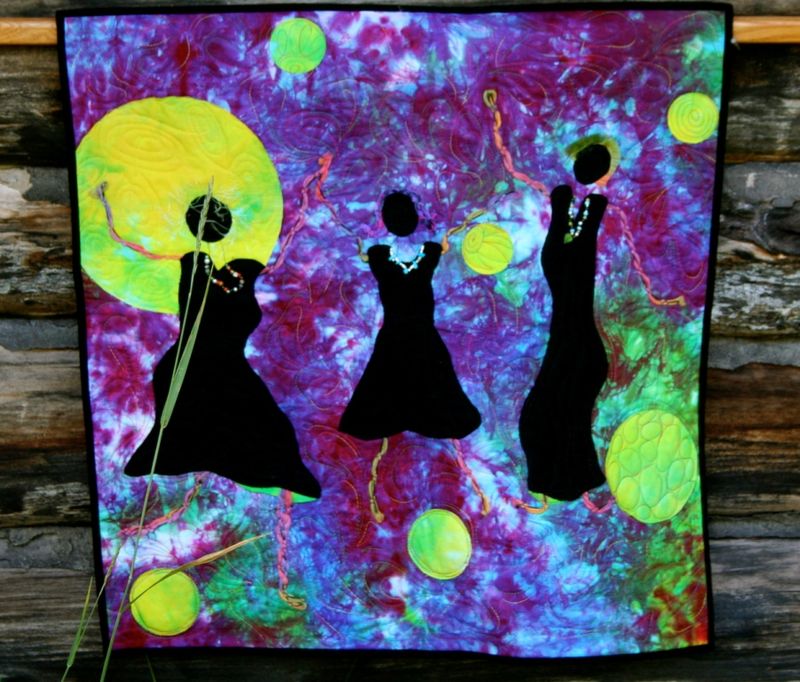
     I M perfect Dance!


  • Iron John, by Robert Bly

    There is another section that I loved from Robert Bly’s book “Iron John”; he speaks of the becoming passive to your own hurts.


    “The passive man may not say what he wants, and the girlfriend or wife has to guess it.  As a compensation for passivity at home, he may go into robot production at work, but that isn’t really what he wants either. 


    We can go farther.  The passive man may ask his children to do his loving for him.  Children often observe the parents with great acuteness.  The family therapists around Murray Bowman, working on anxiety in families, stud how much anxiety there is and who carries it.  They conclude that an adolescent “in trouble” who is “acting out” may in fact be transferring some of the anxiety between mother and father to himself, and in that sense carrying it.  Children are active in loving to the point of sacrificing themselves.


    The passive man may skip over parenting.  Parenting means feeling, but it also means doing all sorts of boring tasks, taking children to school, buying them jackets, attending band concerts, dealing with curfews, setting rules and behavior, deciding on responses when these rules are broken, checking on who a child’s friends are, listening to the child’s talk in an active way, et cetera.  The passive man leaves his wife to do that.


    He then goes on to a section called “Naiveté”


    We see more and more passivity in men, but also more and more naiveté.  The naïve man feels pride in being attacked.  If his wife or girlfriend, furious, shouts that he is a “chauvinist,” a “sexist” a “man,” he doesn’t fight back, but just takes it.  He opens his shirt so she can see more clearly where to put the lances…..


    He feels, as he absorbs attacks, that he is doing the brave and advanced thing; he will surely be able to recover somewhere in isolation.  A woman, so mysterious and superior, has given him some attention.  To be attacked by someone you love – what could be more wonderful?  Perhaps the wounds may pay for some chauvinistic act, and so allow him to remain special still longer.


    The naïve man will also be proud that he can pick up the pain of others.  He particularly picks up women’s pain.  When at five years old he sat at the kitchen table, this mother confided her suffering to him, and he felt flattered to be told such things by a grown-up, even if it showed his father up poorly.  He becomes attracted later to women who “share their pain.”  His special ness makes him, in his own eyes, something of a doctor.  He is often more in touch with women’s pain before he checks his own heart to see if this labor is proper in the situation.  In general, I think each gender drops its own pain when it tries to carry the pain of the other gender.  I don’t mean that men shouldn’t listen.  But hearing a woman’s pain and carrying it are two different things.  Women have tried for centuries to carry men’s pain, and it hasn’t worked well.


    The word special is important to the naïve man, and he has special relationships with certain people.  We all have some special relationships, but he surrounds the special person with a cloying kind of goodwill.  The relationship is so special that he never examines the dark side of the person, which could be a son, a daughter, a wife, a male friend, a girlfriend.  He accepts responses that are way off, conspires somehow with their dark side.  “Some people are special,” he says.


    We might say that if he doesn’t investigate his son’s or daughter’s dark side, perhaps they will not investigate his.  He may also have a secret and special relationship with the wounded little boy inside himself.  If so, he won’t challenge the little boy, nor will he point out his self pity, nor actually listen to the boy either.  He will simply let the boy run his life.

    Sincerity is big with him.  He assumes that the person, stranger or lover he talks with is straightforward, goodwilled, and speaking from the heart.  He agrees with Rousseau and Whitman that each person is basically noble by nature, and only twisted a little by institutions.  He puts a lot of stock in his own sincerity.  He believes in it, as if it were a horse or a city wall.  He assumes it will, and should protect him from the consequences that fall to less open people.  He may say, “It’s true that I betrayed you with your best friend while you were away, and even after you were back, but I was frank with you and told you about it.  So why should you be angry with me?”


    This book may be for Men, but all women should read it too, it will give you a greater understanding of what men are up against.  He even comments that the men need a movement similar to the feminist movement. 


    Here is a short quote by Antonio Machado,


    Look for your other half

    Who walks always next to you

    And tends to be who you aren’t.


     And one by Juan Ramon Jimienez


    I am not I.

            I am this one.

    Walking beside me, whom I do not see,

    Whom at times I manage to visit,

    And at other times I forget.

    The one who forgives, sweet, and when I hate,

    The one who remains silent when I talk,

    The one who takes a walk when I am indoors,

    The one who will remain standing when I die.


  • Reality is a mixed life.

    I am reading Robert Bly’s book “Iron John.” 


    Here are a few paragraphs that caught my attention.


    “If a human being takes an action, the soul takes an action….. The soul itself which does nothing if you do nothing; but if you light a fire, it chops wood; if you make a boat, it becomes the ocean.”


    ”When an artist is at work on a painting, images he or she had never thought of arrive instead of the images the artist planned to set down.”


    “ The sacred response depends on a serious decisive effort made by a man or woman.”


    The key is the serious decisive effort….and I suppose the knowing of who walks with us.


    Imagine the free will to decide how to move and the soul responds. 


    The Universe is waiting for us so it can respond in kind.  If you are not building a boat, no need for an ocean, if you are not in your studio playing with fabrics and design, an inspired image will not fall out! 


    How exciting to know that our serious decisive efforts are the key. 


    Maya Angelou on the radio yesterday said, “We are equal to the mountain we face.”


    In my experience that is true, you have to trust that you will conquer the mountain you face. 


    Maya also said that the greatest virtue is courage, for without courage you can’t maintain the other virtues.  I am not even certain what the ‘other virtues’ are, but I do know that I am learning to become very courageous.


    And one more thing I heard yesterday, and I believe it was from Carly Simon.  She was asked if she was in a good place in life, and she responded that she doesn’t believe you ever get to a good place and those that say they are, are lying.  Instead she says that she has a mixed life. 


    Meaning that it is ever changing and there are ups and downs and all in between.


    I would say reality is a mixed life.

     IMG_1224


  • Be Here Now.

    What a lovely surprise to finally discover how unlonely being alone can be. – Ellen Burstyn


    The word alone can seem like a very lonely and depressing thing, unless you are whole and alone. 


    You can also be alone in a room full of people if no one there really understands you, or maybe it is when you don’t understand yourself.


    I now have very little trouble being alone, for it seems near impossible to be alone. 


    When I step outside with nature, I feel that I am with a million friends.  I feel that I am interacting with it all the time, that the Sunshine is for me, the moist damp fresh air of rain, for me, the windy air, for me, the crunchy crisp frost, again for me.


    And each day is there for me, and what lies ahead, for me.


    Sometimes it seems there is a huge salad bar of things offered up to me, and I can select that which fillls me with peace, joy and love, other times it seems the bar is less selective, and then I have to make the best with what I am offered.


    My choices at work today will be decided upon a girl who has the option to choose and then I get her leftovers. 


    One route she did yesterday and took half the mail.  I may have to carry half of her work along with all of mine.  The other route is smaller but unfamiliar to me.  I would like to choose ‘none of the above’.


    Whichever route I get that is where I will be today.  No point is wishful thinking or getting all worked up in “if only”, it will just take me away from the moment.


    My brother’s blog, www.messyguru.typepad.com has referenced a book, Jon Kabit-Zinn's, "Wherever You Go There You Are.” 


    Wherever I go today, that is where I will be.  It is like we walk around with a spot on our backs saying, “You are here.”


    At times I get caught up in playing out a scenario of what it will be like way ahead of time arriving.


    I almost delivered half the heavy route before I even woke up today. 


    I am still sitting at home, yet I was almost done lifting all the heavy trays.  Trays that I may not even have to do or only do once.


    Isn’t it amazing how we can slip quickly into ‘victim’ clothes, how I could give my power over to the lady who chooses first, yet maybe she has the harder job, we don’t know ahead how each mail route will be that day. 


    My friend who passed away this summer used to say to me, “Just Arrive!”


    Life is asking me always to just arrive. 


    Jon Kabit-Zinn's book, "Wherever You Go There You Are." He writes:


    "So there can be no one place to be.  There can be no one way to be, no one way to practice, no one way to learn, no one way to love, no none way to grow or to heal, no one way to live, no one way to feel, no one thing to know or be known.  The particulars count."


    We don’t have to preplan all the planning is done for us.

    No need to choreograph life, not need to practice steps before their time.


    Here I was dancing dance moves before I even hear the music.


    The music is be here now!


    IMG_0932

  • Say You Are One of Them.

    In my ‘inbox’ was a Oprah Newsletter speaking of the book, “Say You Are One of Them, by Uwem Akpan.”


    Now I have heard this advertised so much, and I have requested the book at the library, but she had a free download.


    If you go to her website, www.oprah.com there should be a spot for you to sign up for an online web cast, and on that site there is a place for you to download free a chapter of the book, An Ex-mas Feast.


    I did this morning and read it.  It is truly amazing in its depth and to see dysfunction from the eyes of the children who live it.


    Of course I relate to the oldest daughter. 


    I would love to hear your response.  Email me at bjukuri@hotmail.com or comment on this post.


March 2026
M T W T F S S
 1
2345678
9101112131415
16171819202122
23242526272829
3031  

I M Perfect, and it is impossible not to be.


Twenty Twenty-Five

email@example.com
+1 555 349 1806