Blog

  • Be real or Pretend

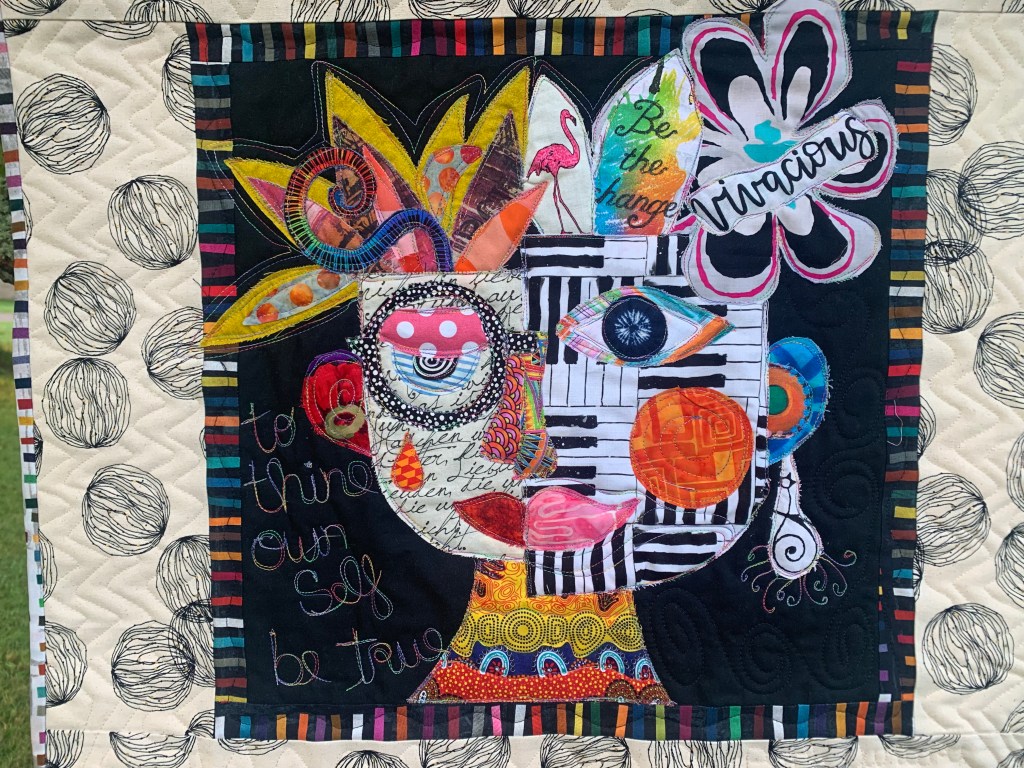
    Do we really know what being authentic means?  I felt like it was something I had to do again and again, that it isn't just like a coat you wear, but how you act…and it either lived in each moment or died.  

    In Brene Brown's book, "The Gifts of Imperfection" she writes about what her research found about being authentic.

    "Before I started doing my research, I always thought of people as being either authentic or inauthentic. Authenticity was simply a quality you had or that you were lacking.  I think that's the way most of use the term: "She's a very authentic person." But as I started to immerse myself in research and doing my own personal work, I realized that, like many desirable ways of being, authenticity is not something we have or don't have.  It's a practice – a conscious choice of how we want to live."

    "Authenticity is a collection of choices that we have to make every day.  It's about the choice to show up and be real.  The choice to be honest. The choice to let our true selves be seen."

    "There are people who consciously practice being authentic, there are people who don't, and there are the rest of us who are authentic on some days and not so authentic on other days.  Trust me, even though I know plenty about authenticity and its something I work toward, if I am full of self-doubt or shame, I can sell myself out and be anybody you need me to be."

    "The idea that we can choose authenticity makes most of us feel both hopeful and exhausted. We feel hopeful because being real is something we value.  Most of us are drawn to warm down-to-earth, honest people, and we aspire to be like that in our own lives.  We feel exhausted because without even giving it too much thought, most of us know that choosing authenticity in a culture that dictates everything from how much we're supposed to weigh to what our houses are supposed to look like is a huge undertaking."

    "Given the magnitude of the task at hand – be authentice in a culture that wants you to "fit in" and "people please" – I decided to use my research to develop a definition of authenticity that I could use as a touchstone. What is the anatomy of authenticity? What are the parts that come together to create an authentic self? Here is what I developed:

    Authenticity is the daily practice of letting go of who we think we're supposed to be and embracing who we are.

    Choosing authenticity means

    • cultivating the courage to be imperfect, to set boundaries, and to allow ourselves to be vulnerable;
    • exercising the compassion that comes from knowing that we are all made of strength and struggle; and
    • nurturing the connection and sense of belonging that can only happen when we believe that we are enough.

    Authenticity demands Wholehearted living and loving – even when it's hard, even when we're wrestling with the shame and fear of not being good enough, and especially when the joy is so intense that we're afraid to let ourselves feel it. Mindfully practicing authenticity during our most soul-searching struggles is how we invite grace, joy, and gratitude into our lives."  Brene

    I think most think, that being authentic means never being wrong or different, but perfect.  I found that I could only be authentic when I was imperfect.  When I allowed myself to not fit in and to not please others, but to please myself.  

    At first being authentic feels like you are purposefully hurting others and being very self centered in a negative way.  But after awhile, it is more hurtful in the long run to be inauthentic, for sooner or later, the false response will catch up to you. 

    We don't escape the circumstances we were not truthful in, we just delay responding to them.

    Overtime, all the things you neglected to deal with pile up, until your life becomes unmanageable….and at that time, it will all fall into your world to be reconciled.  

    In Bikram yoga, he will say, "Is it better to suffer 90 minutes or 90 years or 10 seconds or 10 years?"  This is how I feel about being authentic.  I would rather have an uncomfortable moment, the tough conversation, now, than to suffer pretending.

    It seem so simple to me now…..be real or pretend.


  • Another Quilt taking form…

    I wanted to finish a novel I was listening to in the mail jeep, so I brought the last CD in the house, went downstairs to listen and began playing with a quilt I had started awhile ago.  

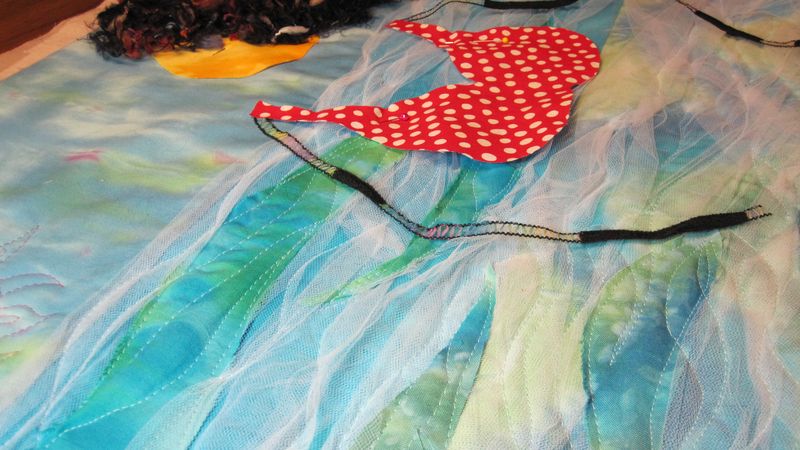
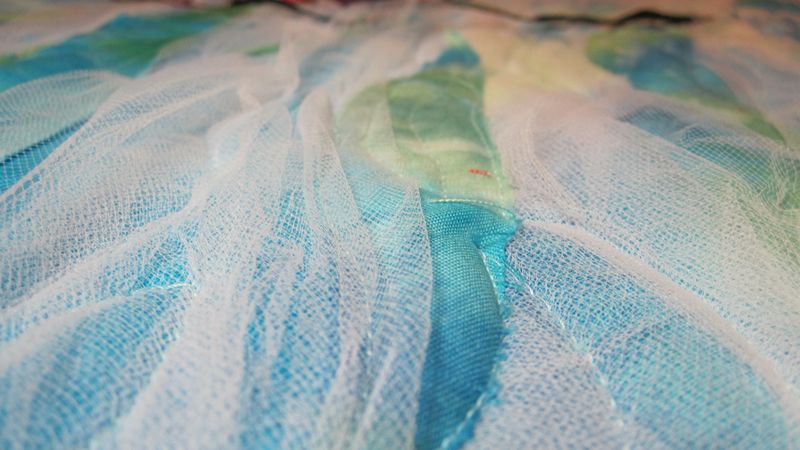
    I first played with the water….using tulle.  It gives it great texture.  I may still add other threads…


    IMG_9749
    I have done this once before and I like the dimension it gives off.


    IMG_9748
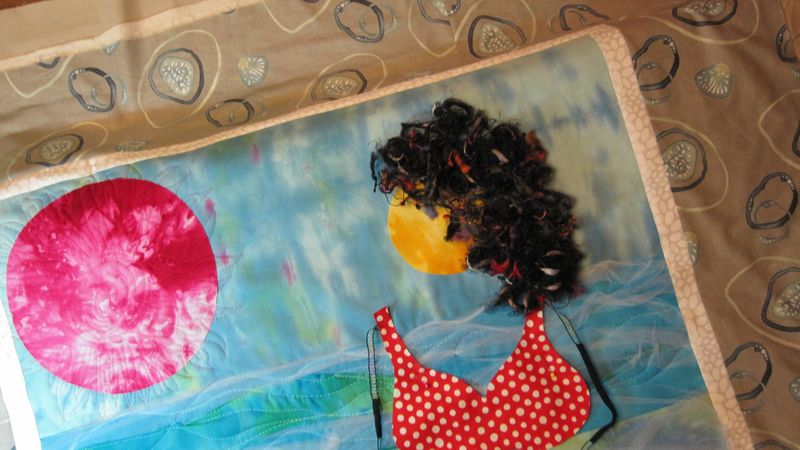
    And then I began to play with a lady, I went from a dress to a bikini….in the water and out of the water.  Who knows what will end up in the water!


    IMG_9744
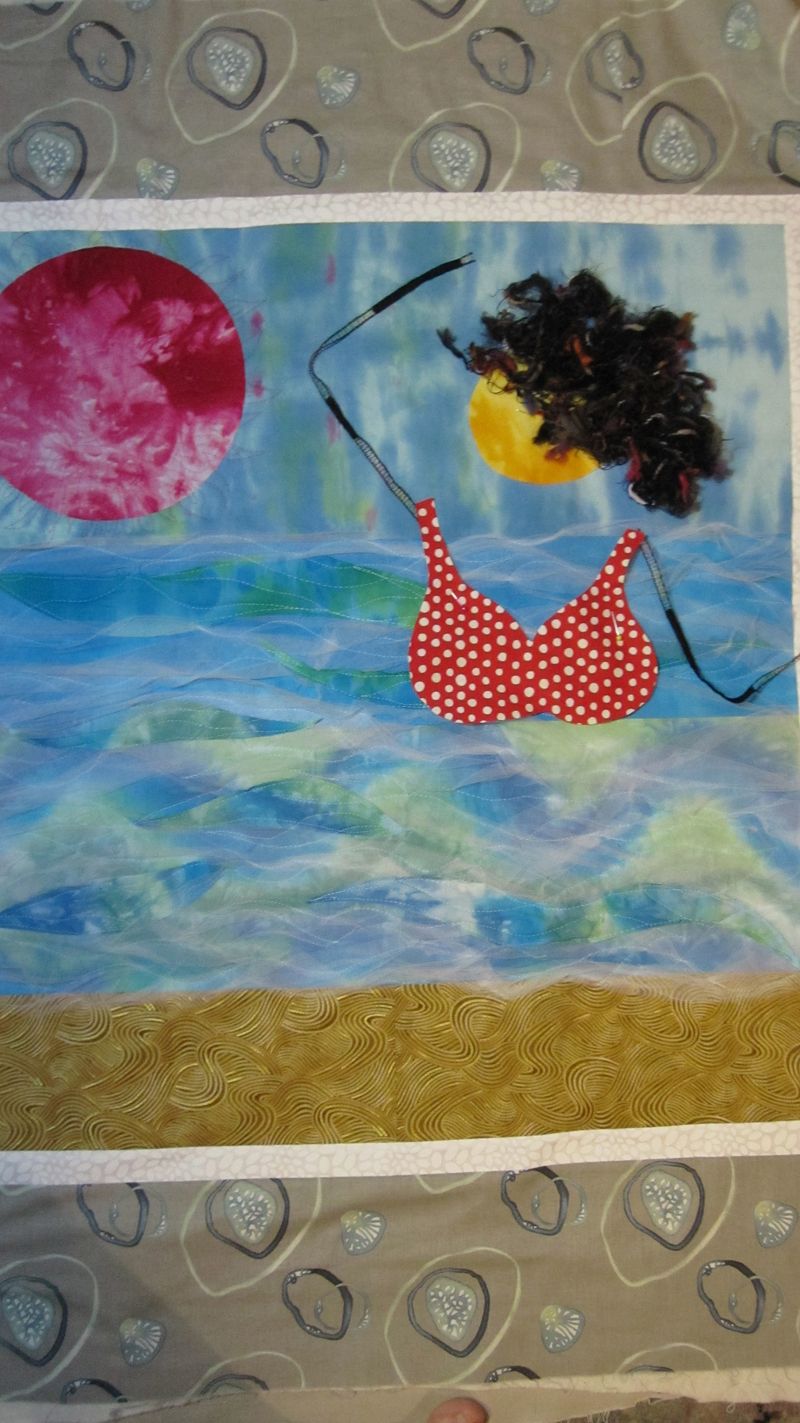
    I like her hair…and even her bikini top….and the sun.  The border fabrics are much more compatible in real life.  It seems murky or off color in the picture.


    IMG_9743
    It was a pleasant way to spend this evening, wind howling outside, and a storm brewing, a novel completed and another quilt taking form…


  • The Perfect You.

    "If we want to live and love with our whole hearts, and if we want to engage with the world from a place of worthiness, we have to talk about the things that get in the way – especially shame, fear and vulnerability."  Brene Brown

    I loved how she explained that people want to live in love, peace and joy, and they only want to know how, and NOT discuss what gets in the way.  They don't want to talk about what is uncomfortable, what they fear, what keeps them from being Happy, they just want to be happy.

    The word "gets" is an interesting choice.

    What has gotten us that keeps us from happiness?

    What has taken us away and why?

    Most want to know how to return to happiness, but not what has taken us from it in the first place.

    How did you get so far from your happiness?

    I lived so far from my own happiness, I didn't even know it was missing…

    This isn't about what others had done, but about what I allowed to lead me away from me.

    The places and moments that I left my own happiness behind.

    You can't find your happiness until you are willing to see where you lost it.  Where did it get to…

    Each time I gave up my happiness for another's love or peace, I was making a choice to leave my own happiness.  I did this so much, I wouldn't have recognized what made me happy if I came face to face with it.  But, I surely knew what to do to make others happy.

    I had to find out what stood in the way and what stood in the way was me.

    I was the one who said yes when I felt no….and said no to things I wanted.

    What stood in the way for me were all the places I allowed to get my happiness, one person, one action at a time.

    I had to get my happiness back by living as Brene says, "wholeheartedly".  By being at one with my heart and only doing what felt right for me.  I had to gather my life back and make new choices based upon how it made me feel….and to articulate my emotions with words…to be vulnerable and to set boundaries…to give my self my voice.

    So what it the path to happiness?  

    Is it being the perfect Buddhist?  

    Is it being a perfect Christian…

    Or is it just being the perfect you?


  • Thankful for my boundaries

    Do you know the difference between "Fitting in" and "Belonging"?  

    It seems like they would be twins, that there is no difference…but there is.  I believe that my experience of the FALC was more about fitting in, than belonging.  However, when I stopped being part of it, I felt like I no longer belonged, yet it was then that I began to belong to myself.  

    Same goes with my family.  I used to fit in and I felt I belonged, but only if I was a certain way. The only way I know this, was the fear to change.  The fear of stepping out of the church, the fear of speaking my mind, the fear of not pleasing of disappointing…I had to remain the same, in order to fit in.  I intuitively knew, the slippery slope and confusion that would ensue, if I stopped doing the things I was beginning to resent…I knew that things would change.

    It is evident by the last 8 years of estrangement that I had to be a certain way and do certain things to belong; for as soon as I began to change, I no longer fit in.

    This fitting in, this club and the way things need to be, IS what keeps us from being ourselves, for usally, our self is not what is needed to fit in.  

    I am not certain I can articulate the sameness and format we have to mold into, and how we know, if we don't, we will be set outside of the group.

    What I see most clearly is the sameness of the church folks as well as the sameness of my family, how the subtle and not so subtle behaviors are blended into a palatte of the same shade…and it feels hostile to stand out.

    Again, in my experience this too is true.  I have felt the attack by being different…where I no longer fit or belong, where my changes are too different to fit in.

    Oddly though I belong to my self more than I ever have in my life.

    Here is how Brene Brown explains the difference in her book, "The Gift of Imperfect"…along with her definition of love.

    "One of the biggest surprises in this research was learning that fitting in and belonging are not the same thing, and, in fact, fitting in gets in the way of belonging. Fitting in is about assessing a situation and becoming who you need to be to be accepted. Belonging, on the other hand, doesn't require us to change who we are; it requires us to be who we are."

    "Before I share my definitions with you, I want to point out three issues that I'm willing to call truths."

    "Love and Belonging will always be uncertain.  Even though connection and relationship are the most critical components of life, we simply cannot acurately measure them. Relational concepts don't translate into bubbled answer sheets. Relionship and connection happen in an indefinable space between people, a space that will never be fully known or understood by us. Everyone who risks explaining love and belonging is hopefully doing the best they can to answer an unanswerable question. Myself included."

    "Love belongs with belonging. One of the most surprising things that unfolded in my research is the pairing of certain terms.  I can't separate the concepts of love and belonging because when people spoke of one, they always talked about the other. The same holds true for the concepts of joy and gratitude, which I'll talk about it in a later chapter.  When emotions or experiences are tightly woven together in people's stories that they don't speak of one without the other, it's not an accidental entanglement; it's an intentional knot.  Love belongs with belonging."

    "Of this I am actually certain. After collecting thousands of stories, I'm willing to call this a fact: A deep sense of love and belonging is an irreducible need of all women, men and children. We are biologically, cognitively, physically, and spiritiually wired to love, to be loved and to belong.  When those needs are not met, we don't function as we were meant to. We break. We fall apart. We numb. We ache. We hurt others. We get sick. There are certainly other causes of illness, numbing, and hurt, but the absence of love and belonging will always lead to suffering."

    "It took me three years to whittle these definitions and concepts from a decade of interviews. Let's take a look."

    Love: 

    We cultivate love when we allow our most vulnerable and powerful selves to be deeply seen and known, and when we honor the spiritual connection that grows from that offering with trust, respect, kindness, and affection.

    Love is not something we give or get; it is something that we nurture and grow, a connection that can only be cultivated between two people when it exists within each one of them – we can only love others as much as we love ourselves.

    Shame, blame, disrespect, betrayal, and the withholding of affection damage the roots from which love grows. Love can only survive these injuries if they are acknowledged, healed and rare.

    Belonging:

    Belonging is an innate human desire to be part of something larger than us. Because this yearning is so primal, we often try to acquire it by fitting in and by seeking approval, which are not only hollow substitutes for belonging, but often barriers to it. Because true belonging only happens when we present our authentic, imperfect selves to the world, our sense of belonging can never be greater that our level of self-acceptance.

    "One reason that it takes me so long to develop these concepts is that I often don't want them to be true. It would be different if I studied the effect of bird poop on potting soil, but this stuff is personal and often painful. Sometimes, as I turned to the data to craft definitions like the ones above, I would cry. I didn't want my level of self-love to limit how much I can love my children or my husband. Why? Because loving them and accepting their imperfections is much easier than turning the light of loving-kindness on myself."

    "If you look at the definition of love and think about what it means in terms of self-love, it is very specific. Practicing self-love means learning how to trust ourselves, to treat ourselves with respect, and to be kind and affectionate toward ourselves. This is a tall order given how hard most of us are on ourselves. I know I can talk to myself in ways that I would never consider talking to another person. How many of us are quick to think, God, I'm so stupid and Man, I'm such an idiot? Just like calling someone we love stupid or an idiot would be incongruent with practicing love, talking like that to ourselves takes a serious toll on our self-love."  Brene Brown

    Her research I have lived.  It is amazing to read what I already know to be true and to have her study boundaries, compassion and love and belonging while I lived this out in my life.

    It is like reading a research paper about your experiences…and so thankful for my boundaries.

  • A Whole Life

    IMG_9724
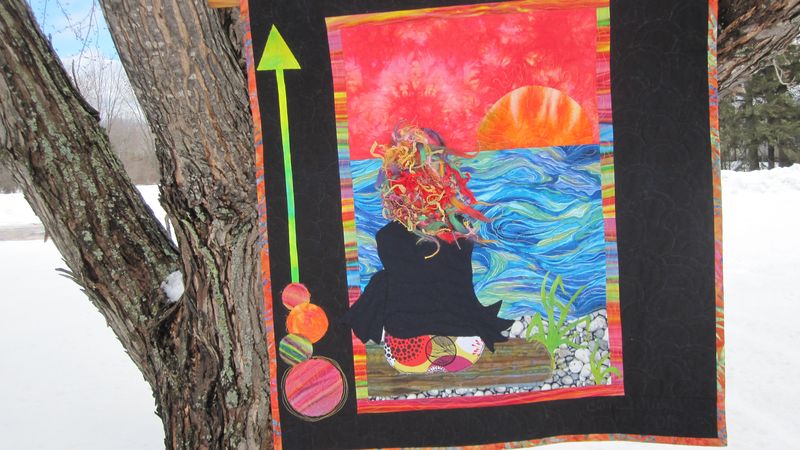
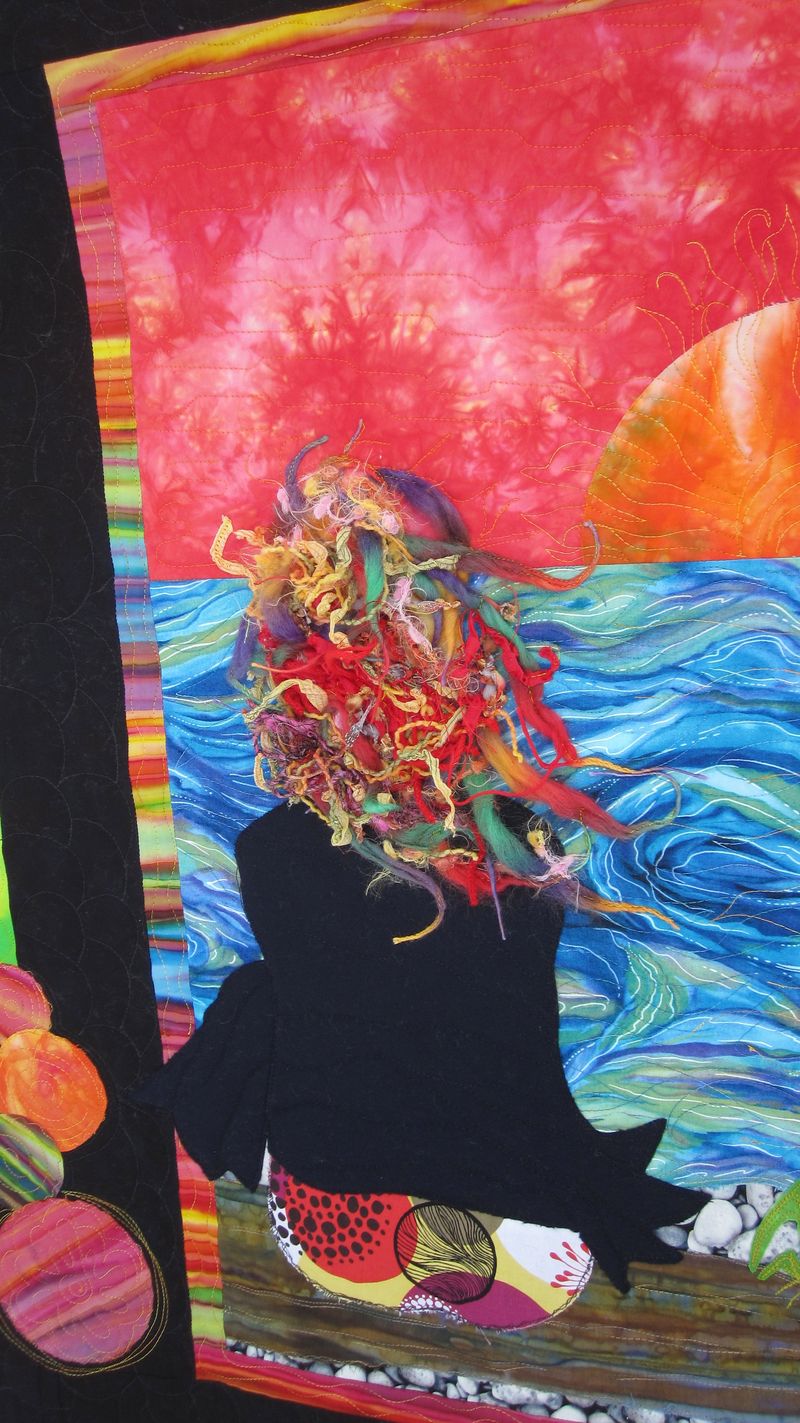
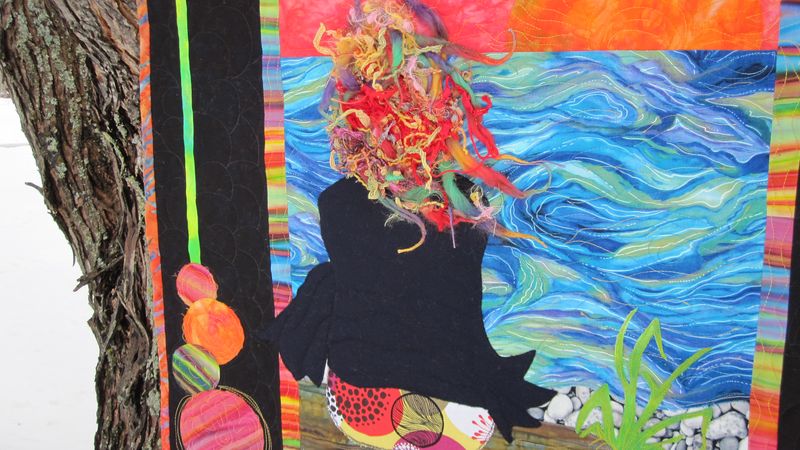
    Here is the completed quilt for the 2013 Dial Help's Spring Gala.  

    I love how she turned out, and can't wait to see who she goes home with.  Tickets are still available by calling dial help.  


    IMG_9728
    I just realized I have not named her.  I will have to see if something comes to mind, I feel her energy, the peace of sitting and letting her mind go, of being infused by nature's sounds and the sights.  It reminds me of my time spent at the beach house in the days when I was a stay at home mom…with time to take in life or to be with life.  It is far different when I am working, I feel the pace has definitely picked up.

    Days by the shore of Lake Superior are few and far between…a treat.  One that I guess I am at fault for not going more.  Maybe this summer I will make a committment to sit on the shores…to move more artfully outside.

    IMG_9726

    I love how my ladies look in nature…

    IMG_9729

    Art and Nature both are both important to a whole life!

  • Having None.

    I love what Brene Brown has to say about setting boundaries and its impact or perhaps byproduct…compassion.  

    Boundaries and Compassion

    "One of the greatest (and least discussed) barriers to compassion practice is the fear of setting boundaries and holding people accountable. I know it sounds strange, but I believe that understanding the connection between boundaries, accountability, acceptance and compassion has made me a kinder person.  Before the breakdown, I was sweeter – judgmental, resentful, and angry on the inside – but sweeter on the outside. Today, I think I'm genuinely more compassionate, less judgmental and resentful, and way more serious about boundaries.  I have no idea what this combination looks like on the outside, but it feels pretty powerful on the inside."

    "Before this research, I knew a lot about each one of these concepts, but I didn't understand how they fit together. During interviews, it blew my mind when I realized that many of the truly committed compassion practioners were also the most boundary-conscious people in the study. compassionate people are boundaried people.  I was stunned."

    "Here is what I learned: The heart of compassion is really acceptance.  The better we are at accepting ourselves and others, the more compassionate we become. Well, it's difficult to accept people when they are hurting us or taking advantage of us or walking all over us.  This research taught me that if we really want to practice compassion, we have to start by setting boundaries and holding people accountable for their behavior."

     "Setting boundaries and holding people accountable is a lot more work than shaming and blaming.  But it's also much more effective. Shaming and blaming without accountability is toxic to couples, families, organizations, and communities.  First, when we shame and blame, it moves the focus from the original behavior in question to our own behavior.  By the time this boss is finished shaming and humiliating his employees in front of their colleagues, the only behavior in question is his."

     "Additionally, if we don't follow through with appropriate consequences, people learn to dismiss our requests – even if they sound like threats or ultimatums. If we ask our kids to keep their clothes off the floor and they know that the only consequence of not doing it is a few minutes of yelling, it's fair for them to believe that it's really not that important to us."

    "It's hard for us to understand that we can be compassionate and accepting while we hold people accountable for their behaviors. We can, and, in fact, it's the best way to do it. We can confront someone about their behavior, or fire someone, or fail a student, or discipline a child without berating them or putting them down. The key is to separate people from their behaviors – to address what they're doing, not who they are. It's also important that we can lean into the discomfort that comes with straddling compassion and boundaries.  We have to stay away from convincing ourselves that we hate someone or that they deserve to feel bad so that we can feel better by holding them accountable.  That's where we get into trouble. When we talk ourselves into disliking someone so we're more comfortable holding them accountable, we're priming ourselves for the shame and blame game."

    "When we fail to set boundaries and hold people accountable, we feel used and mistreated.  This is why we sometimes attack who they are, which is far more hurtful than addressing a behavior or choice.  For our own sake, we need to understand that it's dangerous to our relationships and our well-being to get mired in shame and blame, or to be full of self-righteous anger.  It's also impossible to practice compassion from a place of resentment. If we're going to practice acceptance and compassion, we need boundaries and accountability."  Brene Brown 

    In my experience her research and findings are true.  I may have appeared to be sweeter before I set boundaries, but inside my feelings were not so sweet.  Now my insides do feel much softer, kinder, more accepting…because I have set up boundaries.

    People no longer mistreat me.  Not because they have changed, but because I have set up boundaries as to what I will accept and what I will not.

    I have requirements and standards as to how people treat me and I hold them accountable for their behaviors.  And, I am the one they blame for having the audacity to put on standards, and not themselves for not being able to meet the mark.

    Putting up boundaries WILL mean that some folks will not make the cut, some will have to change in order to continue in the relationship with you….and in my experience, most will take the easy road of blame and shame….and put all the responsibility on me, hold me accountable for 'wrecking' the relationship, when in fact, I am the one who is responsible for raising the bar.

    I raised the bar and set up boundaries to ward of mistreatment, to stop the cycle of abuse.  Most will put all their focus on the perpetrator and never see what it is they allow…without boundaries.

    So many in my family have raged at me for doing what I am doing, for holding folks accountable, like who do I think I am?  How can I call it loving or kind or anywhere near healed, to do such a thing?  Where is my compassion and loving heart?  

    I know Brene is right, the practioners of compassion are the most boundary conscious.  I am very aware of what hurts me, of what upsets my insides, of what I will allow and what I will not.  I love that this makes me more compassionate and less judgmental….for it has felt that way for the past 8 years.

    I am much more accepting of others and know the power of boundaries.

    Without them I would be filled with rage, blame, shame and resentful….with them, I am compassionately at peace… With who I am, and what I am accountable for, and I give back to others what is their responsibility.

    They blame me for having boudaries, instead of blaming themselves for having none.


  • It is the Lady who Stands behind it.

    I was asked by a woman of the OALC, if I believed in the Bible, when I was challenging her on how her church dealt with abuse…that somehow it is my lack of believing in the right book that has me acting differently…and it has her actions not only protected but sanctioned by the Holy Book.

    Her silence, secrets and not leaving the confines of her religious beliefs and reporting child abuse to the law is somehow supported by the bible.

    Now, if this is true, if this is the way they, her church and religion are interpeting the bible, than I guess I don't believe in that bible.

    I don't believe in the morals and values of the church that will willingly and knowingly allow pedophiles to ask forgiveness and to remain free to abuse again…that allows and knows of their actions and does nothing to protect the victims.

    Nope, I don't believe in that book.  And, by giving up your responsibility and blaming the book instead of your actions, seems odd to me.  Perhaps it isn't me that needs to question my beliefs, but you.

    What scares me is that she is not alone. She is one of many who will justify their actions or the lack thereof…by placing herself behind the bible.

    No, I guess I don't have issues with the bible.  The book isn't keeping secrets, being silent and not reporting, it is the lady who stands behind it.


  • Body’s view of the world

    I found a very interesting article in The Sun magazine, written by Amnon Buchbinder about an interview he did with Philip Shepherd titled, "Out of Our Heads."

    Philip's book is titled, "New Self, New World: Recovering our senses in the 21st Century.

    "New Self, New World explores the implications of the little known fact that we have two brains; in addition to the familiar cranial brain in the head, there is a "second brain" in the gut.  This is not a metaphor. Scientists recognize the web of neurons lining the gastrointestinal tract as an independent brain, and a new field of medicine – neurogastroenterology – has been created to study it."

    Buchbinder: You've said that we have a misguided cultral story about what it means to be human. What does that story tell us?

    Shepherd: It tells us that the head should be in charge, because it knows the answers, and the body is little more than a vehicle for transporting the head to its next engagement.  It tells us that doing is the primary value, while being is secondary. It shapes our perceptions, actions and experiences of life. It separates us from the sensations of the body and alienates us from the world. And there is no escaping the story; it's embedded in our language, our architecture, our customs, and our hierachies.  It's like the ocean, and we are like fish who swim in it and barely notice it because we've lived with it since infancy."

    "By interpreting reality for us, stories frame and give meaning to our actions. But there's a danger to living by a story that you can't question, because you start to mistake story for reality.  And that's where my work starts – in formulating questions that can expose that story and hold it to account."

    Buchbinder:  Where did this story come from?

    Shepherd: It dates back to the Neolithic Revolution, which was underway in most of Europe by 6,000 BC and gave us a new way of living; agriculture, permanent settlements, domesticated animals. We started taking charge of our environment. When you domesticate an animal, you become like a god to it. You determine with whom it will mate, and you own its babies. You choose what it will eat and when. And you determine the moment of its death."

    "So at the start of the Neolithic Era humankind was radially altering its relationship with the world. The unforeseen consequence of that, which our culture hasn't yet begun to appreciate, is that we also began to take control of the self in ways that created within us the same divisions we were creating in our relationship with the world. If you go back to the Indo-European roots of the English language, which date from the Neolithic, you find that the word for the hub of the wheel came from the word navel. The hub is the center around which the wheel revolves. The metaphor suggests that the center of the self was located in the belly."

    "The idea of being centered in the belly shows up in many cultures – Incan, Maya. there is a Chinese word for belly that means "mind palace."  Japanese culture rests on a foundation of hara, which means "belly" and represents the seat of understanding. The Japanese have a host of expressions that use hara where we use head. We say "He's hotheaded." They say "His belly rises easily." We say, "He has a good head on his shoulders." They say, "He has a well-developed belly." 

    Buchbinder: This isn't just a semantic issue, is it?

    Shepherd: No, it's deeper. These cultural differences point out that we have lost some choice in how we experiene ourselves. Our culture doesn't recognize that hub in the belly, and most of us don't trust it enough to come to rest there.  Our story insists that our thinking happens exclusively in the head.  And we are stuck in the cranium, unable to open the door to the body and join its thinking. The best we can do is put our ear to the imaginary wall separating us from it and "listen to the body," a phrase that means well but actually keeps us in the head, gathering information from the outside. But the body is not outside. The body is you.  We are missing the experience of our own being."

    Further on in the article Buchbinder asks, "Why bring "male" and "female" into it?  Why associate "doing" with the male and "being" with the female?

    Shepherd: The terms are imperfect, certainly, because people will tend to hear "men" and "women" – but I'm not talking about men and women. I'm talking about the complementary opposites that exist in each of us. Whether you are a man or a woman, there is both a masculine aspect to your consciousness and a feminine aspect.  To come into wholeness is to realize the indivisible unity of these parts. At this point in our culture the male aspect has eclipsed the female aspect. I see this in both men and women. We have been taught to mistrust our bodies, to mistrust our intuition, to mistrust any information that is not analytical."

    "This head-based, masculine perspective gives rise to three serious misunderstandings that drive our culture; we misunderstand what intelligence is, what information is, and what thinking is. Take our understanding of intelligence. We think it's the ability to reason in an abstract fashion, something you can measure with an I Q test. So we remain blind to the impotence of reason in areas of vital concern to us.  You cannot reason your way into being present. You cannot reason your way into love. You cannot reason your way into fulfillment. If you wish to be present, you need to submit to the present, and suddenly you find yourself at one with it. You submit to love. There's a quote from the Persian mystic Rumi: "Your task is not to seek love, but merely to seek and find all the barriers within yourself that you have built against it."

    Buchbinder: If intelligence isn't abstract reasoning, what is it?

    Shepherd: It's sensitivity – specifically a grounded sensitivity, because a reactive sensitivity isn't able to integrate information. A sensitivity to music, to the flight of a swallow, to arithmetic relationship, to a child's tears – all of these are forms of intelligence. And your sensitivity isn't a static, permanent condition. Anything that increases it increases your ability to live more intelligently. Conversely, the constant noise and distractions of modern life have the opposite effect. The jackhammer you walk past on the street diminishes your intelligence by blunting your sensitivity."

    And another exchange I liked.

    "Buchbinder: So when we're confronted with tyranny, the solution you're prescribing is "self-achieved submission." But how do you deal with tyranny as a social reality? Surely the answer is not to give in to tyranny and let them have their way?"

    Shepherd: You're not surrendering to a political tyrant You are the tyrant who must descend from your fortified abode, reunite with the body's grounded sensitivity, and become aware of the world as it is, as opposed to your concept of it. The more sensitive you are to the world around you, the more responsive you are. That ability to respond is the basis of responsibility. And the actions it prompts will be a grounded means of addressing a human necessity, not a reflexive action goaded onward by an idea."

    "Ideas are seductive in their certainty and simplicity, but because any idea is a static construct, it stands independent of the present. To give your allegiance to an idea is to turn away from the connected intelligence of your being.  I think the most dangerous people in the world are those who feel their ideas about the world more keenly than they feel the world itself, because they will be disconnected from what is in front of them and can act only out of their fantasy. Holding fast to an idea, because it's frozen, also promises to excuse you from having to change. But harmony requires us to change along with the whole.  If you open yourself to the hum of the world – if you live in the present rather than in your idea of it – it will change you."

    Buchbinder: When I took your workshop. I found it interesting that, although many of the participants were teachers of practices like yoga or Pilates, they didn't necessarily have an easier time doing your exercises than I did.

    Shepherd: A lot of those wonderful body-work practices still emphasize how important it is to "listen" to the body. My work is not about "listening to the body." It's aobut listening to the world through the body. Once you come to rest in the body, you come to rest in the wholeness that is the trembling world itself…."

    What I love about this article is that it affirms my journey of finding my way via my insides…by gut instinct and feelings in my belly. That is all.

    I didn't have the intellectual ideas that I followed, and most often I had to toss out the previous 'intelligence' I had gone by, for it all was based upon something that wasn't found in reality.  If my belly felt upset or anxious or nervous or more often terrified and in fear, I moved away.  I let my body lead me and my mind often fought and argued with my body, but I had learned to respect my body's wisdom after failing to hear its cries of fear of my father.

    My experience is that reality is found listening to the body's view of the world.
  • I Had To Do It Myself.

    As a parent, I am always interested in how what we do or perhaps what we don't do impacts our children.  

    In reading Brene Brown's book, "Daring Greatly", she writes about the connections between parents behavior and how it affects the child.

    "There's no question that our behavior, thinking, and emotions are both hardwired within us and influenced by our environment. I wouldn't hazard a guess on the percentages, and I'm convinced that we'll never have a precise nature/nurture breakdown.  I have no doubt, however, that when it comes to our sense of love, belonging, and worthiness, we are most radically shaped by our families of origin – what we hear, what we are told, and perhaps most importantly, how we observe our parents engaging with the world."

    "As parents, we may have less control than we think over temperament and personality, and less control than we want over the scarcity culture. But we do have powerful parenting opportunities in other areas: how we help our children understand, leverage, and appreciate their hardwiring, and how we teach them resilience in the face of relentless "never enough" culture messages.  In terms of teaching our children to dare greatly in the "never enough" culture, the question isn't so much, "Are you parenting the right way?" as it is: "Are you the adult that you want your child to grow up to be?"

    "As Joseph Chilton Pearce writes, "What we are teaches the child more than what we say, so we must be what we want our children to become."  

    Here is a list that she wrote about raising Wholehearted children….

    "If Wholeheartedness is the goal, then above all else we should strive to raise children who:

    • Engage with the world from a place of worthiness
    • Embrace their vulnerabilites
    • Feel a deep sense of love and compassion for themselves and others
    • Value hard work, perserverance, and respect
    • Carry a sense of authenticity and belonging with them, rather than searching for it in external places
    • Have the courage to be imperfect, vulnerable and creative
    • Don't fear feeling ashamed or unlovable if they are different or if they are struggling
    • Move through our rapidly changing world with courage and a resilient spirit

    For Parents this means we are called upon to:

    • Acknowledge that we can't give our children what we don't have and so we must let them share in our journey to grow, change, and learn
    • Recognize our own armor and model for our children how to take it off, be vulnerable, show up, and let ourselves be seen and known
    • Honor our children by continuing on our own journeys toward Wholeheartedness
    • Parent from a place of "enough" rather than scarcity
    • Mind the gap and practice the values we want to teach
    • Dare greatly, possibly more than we've ever dared before

    "In other words, if we want our children to love and accept who they are, our job is to love and accept who we are. We can't use fear and shame, blame and judgment in our own lives if we want to raise courageous children.  Compassion and connection – the very things that give purpose and meaning to our lives – can only be learned if they are experienced.  And our families are the first opportunities to experience these things."  Brene Brown

    In the past few weeks, I have had the opportunity to visit with and observe mothers and daughters, and even women who shared their lives with me, and what is so striking is how they are expecting change to happen to the next generation; that they themselves are either unwilling to do that which they expect their children to do or expect more from their children then is possible for them to do.

    I can clearly see how legacy is created and handed down.

    When the generation that raises the child doesn't hold themselves responsible for how the way they live IMPACTS their children.  When it is the only place change happens.

    It happens with you.

    I have seen women lament about "when will this abuse end"….while holding tightly to the same "faith" of her mother…on one hand and passing it on to her daughters on the other.  A relay race of no change.

    Who will have the strength to change the legacy?

    Which generation will finally understand that change begins with me.

    To be a rebel and not grab the baton that is handed to you by your mother.

    The baton wrapped in generation upon generation of folks who didn't want to make waves, to stop blaming others and start acting different…to begin to begin seeing how and where the real responsibility lies.

    Knowing you are responsible for the outcome of your children by what you do, not what you say….by how you live in your own life…will be how they will live in theirs.

    I was in shock and awe to see generations of women blind to how they pass on their weaknesses…and not their strengths. Wanting strong daughters while being too weak to change.

    It has been the greatest, toughest, most terrifying thing to do, to go completely against my mother, but I am hopeful that I started to change the legacy for the women in my lineage…I intuitively knew and felt that IF I wanted this for my daughters, I had to do it myself.


  • Watching my Mind.

    What I learned about Meditation last night was that it wasn't about sitting still and having no thoughts, but to watch your thoughts.  To "tame" the mind so to speak…although, I believe it is more about taming ourselves.  She suggested that the more you can see your thoughts and not act upon them, the more choices you have to act….I agree.

    What I also heard was that we have been taught to follow the mind, and now we will unlearn that….by meditating and watching what our thoughts are saying…just watching them come and go and feeling how we feel with each thought.

    This makes more sense to me than my previous idea of meditation was to have no thoughts or to just be with your breath.  

    What I heard last night was to be with it all and be aware.

    I may start sitting with my thoughts and watching my mind.

March 2026
M T W T F S S
 1
2345678
9101112131415
16171819202122
23242526272829
3031  

I M Perfect, and it is impossible not to be.


Twenty Twenty-Five

email@example.com
+1 555 349 1806